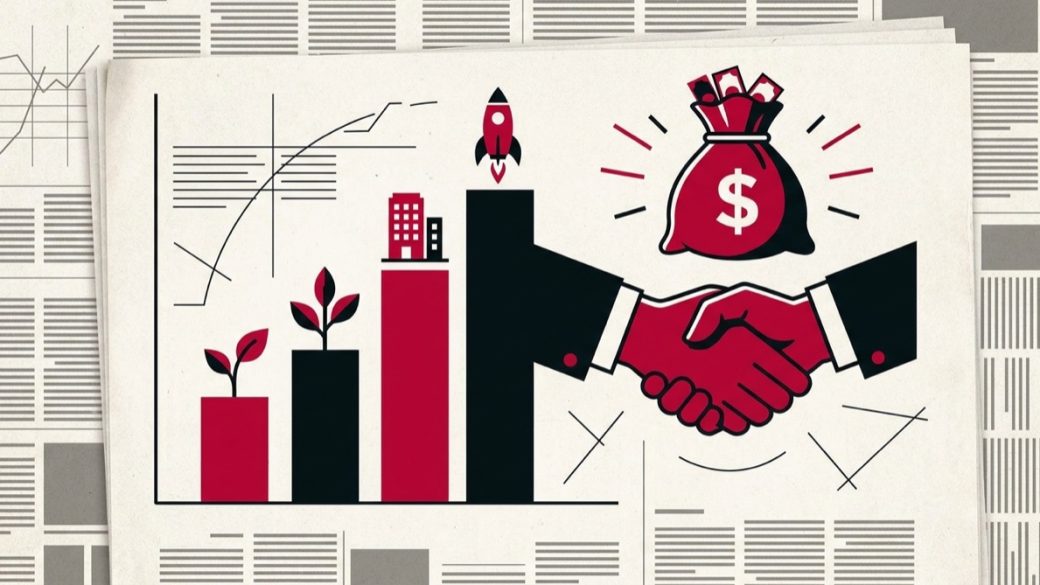
Startup funding is the money a company raises to start and grow, given out in stages that match how risky and how proven the business is. The usual ladder runs bootstrapping → pre-seed → seed → Series A, B, C (and beyond) → growth/late-stage rounds → an exit such as an IPO or acquisition. At each rung the founder typically sells a slice of equity (ownership) for cash, the company is worth more, and a different type of investor steps in. This guide explains every stage in plain language, with the Indian context for 2026.
What startup funding actually is ·
The funding stages at a glance ·
Bootstrapping & pre-seed ·
Seed funding ·
Series A, B, C and beyond ·
Bridge & growth rounds ·
IPO & other exits ·
Equity, valuation & dilution ·
Who invests at each stage ·
The India angle ·
FAQ
What startup funding actually is
Most startups burn cash long before they make a profit. They need to build a product, hire a team, acquire customers and survive years of losses. Startup funding is the external money that pays for that journey. In return, investors usually get one of two things: a piece of the company (equity) or a promise to be repaid (debt).
Equity funding for startups is the dominant model in the high-growth world. The founder sells shares to investors, who now own part of the business and profit only if the company grows in value. There is no monthly EMI and nothing to repay if the company fails — but the founder permanently gives up a slice of ownership and control. Debt (such as a bank startup business loan or venture debt) must be repaid with interest regardless of how the company does, but the founder keeps full ownership.
Funding does not arrive in one lump. It is raised in rounds — discrete fundraising events, each named for the stage of the company. Every round is sized to give the startup 12–24 months of “runway” (the time before the money runs out) so it can hit the next set of milestones, raise the next, larger round at a higher price, and repeat until it is either profitable or exits.
Before climbing the stage ladder, it helps to see the two fundamental ways a startup can be funded side by side.
| Equity funding | Debt funding | |
|---|---|---|
| What you give | Ownership shares in the company | A promise to repay with interest |
| Repayment | None — investors profit only if the company grows | Fixed schedule, regardless of performance |
| Risk to founder | Loss of ownership & some control; no debt burden | Full ownership kept, but repayment is owed even if you fail |
| Typical sources in India | Angels, VC firms, growth/PE funds, the public (IPO) | Banks (startup business loans), venture debt funds, NBFCs |
| Best when | High-growth, pre-profit, needs large capital | Predictable cash flow exists; founder wants to avoid dilution |
The funding stages at a glance
Think of funding as a staircase. Each step raises more money, at a higher valuation, from a different kind of investor, in exchange for a smaller percentage of the (now bigger) company. The diagram below shows the typical startup funding stages from idea to exit.
The table below is a quick reference. Cheque sizes and equity bands are typical ranges for Indian startups in 2026 — every deal is different, and figures vary widely by sector, team and market conditions.
| Stage | What it funds | Typical Indian cheque* | Equity sold (typical)* | Main investors |
|---|---|---|---|---|
| Bootstrapping | Idea, first prototype | Own savings | 0% (you keep all) | Founder, revenue |
| Pre-seed | MVP, first hires | ₹25 lakh – ₹2 crore | 5–15% | Friends & family, angels, micro-VCs |
| Seed | Product-market fit, early traction | ₹2 – ₹25 crore | 10–20% | Angels, seed funds, accelerators |
| Series A | Scale a working model | ₹25 – ₹150 crore | 15–25% | Venture capital (VC) firms |
| Series B | Expand market & team | ₹100 – ₹500 crore | 10–20% | Larger VCs, growth funds |
| Series C+ | Dominate, new lines, M&A | ₹500 crore+ | 5–15% | Growth equity, PE, sovereign funds |
| IPO / Exit | Liquidity for all owners | Public market / acquirer | New public float | Retail & institutional public |
*Indicative ranges to build intuition, not guarantees. Actual rounds differ by sector and stage.
Bootstrapping & pre-seed: the idea stage
Bootstrapping
Bootstrapping means building the company with your own money and the revenue it generates — no outside investors. Many of India’s most durable businesses started this way, and some never raise a single external rupee. The advantage is total control and 100% ownership; the constraint is that growth is limited by your own pocket and the cash the business throws off. Bootstrapping is ideal at the idea stage, when there is nothing yet for an outside investor to evaluate.
Pre-seed funding
Pre-seed is usually the first outside money. It is small, early and high-risk — often just an idea, a founding team and perhaps a basic prototype. Pre-seed funding for startups typically pays for building a Minimum Viable Product (MVP), the first one or two hires, and initial market testing. The classic sources are friends and family, angel investors and a growing class of micro-VCs and pre-seed funds.
Founders at this stage often raise on instruments that postpone setting a valuation, because the company is too young to value reliably. The two common ones are a convertible note (a loan that converts into equity at the next priced round) and a SAFE (Simple Agreement for Future Equity, a promise of future shares). Both let you raise quickly and decide the price later.
Seed funding: planting the company
Seed funding is the round most people picture when they hear “startup funding”. The metaphor is literal: this is the capital that lets a young plant take root. By the seed stage you usually have a product in the market and the first signs of demand. The goal of the round is to find product-market fit — clear evidence that customers want what you have built and will pay for it.
Seed money for startups is spent on product development, a small core team, and early customer acquisition to generate traction data. Seed capital for startups in India comes from angel investors, dedicated seed funds, and accelerators that write a cheque in exchange for equity and add mentorship. The government-backed Startup India Seed Fund Scheme (SISFS) also provides seed support to eligible DPIIT-recognised startups through approved incubators — a route worth checking for idea- and early-stage founders.
Series A, B, C and beyond: the scaling rounds
Once a startup has product-market fit, it enters the Series rounds — named alphabetically (A, then B, then C, and so on) because each corresponds to a class of preferred shares issued to investors. The flow below shows what each Series round is really for.
Series A — build a repeatable engine
Series A is the first big institutional round, led by venture capital firms. The startup has traction; now it must turn that into a repeatable, scalable business model — reliable customer acquisition, a real revenue engine and the early signs of unit economics that work. Investors scrutinise metrics far more heavily than at seed: retention, gross margin, the cost to acquire a customer versus the value that customer brings.
Series B — scale what works
By Series B the model is proven and the task is to scale: expand into new cities or segments, build out sales and marketing, deepen the team and harden operations. Cheques are larger and often include the Series A investors plus new, bigger funds.
Series C and beyond — dominate and prepare to exit
Series C and later rounds (D, E, and so on) fund market leadership: entering new geographies or product lines, acquiring competitors, and preparing the company for an exit. The risk to investors is now relatively low and the company is often a household name, so growth-equity funds, private equity (PE) and sovereign wealth funds participate. Many startups stop here; others raise several more rounds before going public.
Bridge & growth rounds: the in-between money
Bridge rounds
A bridge round is a smaller, often quick raise between two priced rounds — a “bridge” to the next milestone. Founders use it when they need a few more months of runway to hit the metrics that justify a strong Series A or B, or to get through a tough fundraising market. Bridges are frequently raised as convertible notes or SAFEs and may come from existing investors topping up their position.
Growth / late-stage rounds
“Growth” or “late-stage” capital is large funding (often Series C onwards) for companies that are already big, fast-growing and sometimes profitable. The aim is to scale aggressively before an IPO or to delay going public while staying private. Investors here include growth-equity firms, crossover funds and PE, all of whom accept lower percentage ownership because the company is large and comparatively de-risked.
IPO & other exits: the finish line
Investors and founders eventually want liquidity — a way to turn their shares into cash. That moment is the “exit”, and there are three main routes.
| Exit route | What happens | Who benefits |
|---|---|---|
| IPO (Initial Public Offering) | The company lists on a stock exchange (in India, the NSE/BSE) and sells shares to the public. Existing investors can sell over time. | Founders, employees with ESOPs, early investors, the public |
| Acquisition / M&A | A larger company buys the startup. Investors are paid in cash and/or the acquirer’s stock. | Founders, investors, employees |
| Secondary sale | Shares are sold privately to another investor without an IPO — common for early backers seeking partial liquidity. | Selling shareholders |
An IPO is the headline exit: it rewards everyone who took early risk, gives the company a public valuation and access to public capital, and lets employees finally cash in their ESOPs (Employee Stock Option Plans). But it also brings heavy regulation, quarterly scrutiny and the discipline of public-market expectations. In India, IPOs are regulated by the Securities and Exchange Board of India (SEBI). Not every startup reaches an IPO — an acquisition is a perfectly successful outcome, and many strong companies exit that way.
Equity, valuation & dilution: the founder’s maths
Every priced round involves three linked numbers. Valuation is what the company is judged to be worth. The “pre-money” valuation is the value before the new investment; add the new money and you get the “post-money” valuation. The investor’s ownership is simply their cheque divided by the post-money valuation.
Dilution is the catch. Because new shares are created for each new investor, every existing shareholder — including the founder — owns a smaller percentage after the round. The hope is that the slice gets smaller while the pie grows so much larger that each slice is worth more in absolute terms. The donut below shows a simplified, illustrative ownership split for a startup that has been through a couple of rounds.
This is why founders care about cap table hygiene: raise too much too early at a low valuation and you give away ownership cheaply; raise too little and you run out of runway. Smart founders raise enough to comfortably hit the next milestone and no more, protecting their stake for the rounds ahead.
Who invests at each stage
A simple rule governs the whole ladder: the earlier and riskier the stage, the smaller the cheque and the more individual the investor. As risk falls, cheque sizes rise and the investors become larger, more institutional pools of capital.
- Friends & family — the very first believers, usually at pre-seed.
- Angel investors — wealthy individuals (often ex-founders) writing personal cheques at pre-seed and seed. Indian angel networks and platforms make this an active asset class.
- Accelerators & incubators — programmes that give seed money, mentorship and networks for equity.
- Micro-VCs / seed funds — small funds specialising in early cheques.
- Venture capital (VC) firms — the engine of Series A–C, investing pooled money from limited partners.
- Growth equity & private equity — large, late-stage cheques for proven, scaling companies.
- Sovereign wealth & pension funds — the biggest pools, active in the largest pre-IPO rounds.
- The public — retail and institutional investors who buy shares at and after the IPO.
The India angle: funding a startup in 2026
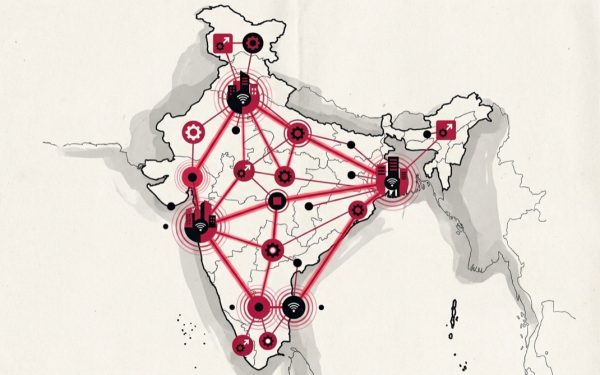
India is one of the world’s largest startup ecosystems, and the funding pathways above all operate here — with some local features worth knowing.
Government and non-dilutive support
Founders should map government routes before giving away equity. The Startup India programme offers recognition (via DPIIT), tax benefits for eligible startups, and the Startup India Seed Fund Scheme for early-stage capital through approved incubators. Various central and state grants and challenge funds add further non-dilutive options. These do not replace VC money but can extend runway without dilution.
Regulation and structure
Equity fundraising is governed by the Companies Act and SEBI regulations; foreign investment must follow FEMA rules and RBI reporting. Most venture-funded Indian startups are structured as private limited companies, and angel/VC investments commonly use priced equity, convertible notes or instruments such as CCPS (compulsorily convertible preference shares). Founders should always take qualified legal and financial advice on structure and the term sheet before signing.
What investors look for
Across stages, Indian investors weigh the founding team, the size of the market, evidence of traction, and a believable path to profitability. After the funding-winter corrections of recent years, the bar on unit economics and capital efficiency is higher than it was in the boom — growth still matters, but so does a credible route to making money.
Frequently asked questions
What is startup funding in simple terms?
Startup funding is money a company raises from outside sources to start and grow before it is profitable. It is given in stages (pre-seed, seed, Series A/B/C, growth) and is usually exchanged for equity — a share of ownership — or, less often, provided as debt that must be repaid.
What are the stages of startup funding in order?
The typical order is: bootstrapping (your own money), pre-seed, seed, Series A, Series B, Series C (and further letters such as D and E if needed), late-stage/growth rounds, and finally an exit through an IPO or acquisition. Bridge rounds can occur between any two priced rounds.
What is the difference between seed and Series A funding?
Seed funding pays a young company to find product-market fit — proof that customers want and will pay for the product. Series A is a larger round, led by VC firms, that funds turning that proof into a repeatable, scalable business model. Series A investors scrutinise metrics such as retention and unit economics far more closely than seed investors do.
What is dilution and why does it matter to founders?
Dilution is the reduction in your ownership percentage when a company issues new shares to new investors. Each round dilutes existing shareholders, including founders. It matters because raising too much too early at a low valuation gives away ownership cheaply; the goal is to raise just enough to reach the next milestone while keeping your stake.
Who invests at each startup funding stage?
Friends, family and angel investors fund pre-seed; angels, seed funds and accelerators fund seed; venture capital firms lead Series A through C; growth-equity, private equity and sovereign wealth funds handle large late-stage rounds; and the public invests at the IPO. The earlier the stage, the smaller the cheque and the more individual the investor.
How can a startup get government funding in India?
Eligible startups can seek DPIIT recognition under Startup India and apply for the Startup India Seed Fund Scheme through approved incubators, plus various central and state grants and challenge funds. These are non-dilutive (no equity given up) but are competitive and rule-bound, so check eligibility and read the scheme documents carefully.
Is an IPO the only way to exit a startup?
No. An IPO — listing on a stock exchange — is the highest-profile exit, but acquisition by a larger company (M&A) is just as valid and far more common. Early investors can also achieve partial liquidity through secondary sales of their shares before any IPO.
Disclaimer: This article is for educational purposes only and is not investment/financial advice. Read all scheme/offer documents and consult a SEBI-registered adviser where relevant.