A unicorn is a privately held startup valued at $1 billion or more, and India is one of the world’s top three unicorn hubs — with well over 100 such companies built since 2011, spanning fintech, e-commerce, SaaS, edtech and consumer brands. Names like Flipkart, Zomato, Swiggy, Razorpay, BYJU’S, PhonePe and Nykaa have become household words. This guide explains what a unicorn (and a soonicorn or decacorn) actually is, how India became a unicorn powerhouse, and the biggest $1B+ Indian startups sorted by sector.
What is a unicorn startup? ·
Soonicorn, unicorn, decacorn & hectocorn ·
How India became a unicorn hub ·
India’s unicorn timeline ·
From startup to unicorn ·
Biggest Indian unicorns by sector ·
India’s decacorns ·
Where are unicorns based? ·
Valuations: a reality check ·
FAQ
What is a unicorn startup?
A unicorn is a privately held startup company with a valuation of $1 billion or more. The term was coined in 2013 by American venture capitalist Aileen Lee, who picked the mythical creature precisely because such companies were then so rare. A little over a decade later, unicorns are far more common — there are now more than 1,200 worldwide — but the $1B threshold has stuck as the industry’s headline marker of a breakout startup.
Three things are worth understanding right away. First, a unicorn’s valuation is a private, on-paper number: it is set by what investors pay in a funding round, not by a public stock price. Second, the “$1 billion” figure is denominated in US dollars, not rupees, which is why you will see Indian unicorns described in dollar terms. Third, valuation is not the same as profit — many unicorns are loss-making, and a high valuation reflects investor expectations about future growth, not current earnings.
Why the $1 billion club matters
Reaching unicorn status is a signal, not a finish line. For founders it makes hiring senior talent and raising the next round easier. For employees it can make ESOPs meaningfully valuable. For a country, a deep roster of unicorns signals a maturing startup ecosystem with risk capital, talent and exit routes. But the title is also fragile: in a funding downturn, a startup can become a “fallen unicorn” if a later round values it below $1 billion (a so-called down round).
How is a unicorn valuation actually set?
The number is not pulled from thin air, but it is also not as precise as it looks. When a startup raises money, investors negotiate a price per share. Multiply that share price by the total number of shares the company has, and you get the post-money valuation. If that figure crosses $1 billion, the press declares a new unicorn. The catch is that only a sliver of the company actually changed hands at that price — the rest of the “billion” is an extrapolation. Read our explainer on how startups are valued for the full mechanics. The practical takeaway: a unicorn valuation tells you what a few investors paid for a small stake on one day, not what the whole company would fetch in a sale.
Soonicorn, unicorn, decacorn & hectocorn: the startup zoo
The unicorn vocabulary has expanded into a whole menagerie. Here is the plain-English version of the terms you will encounter when reading about Indian startups.
| Term | Valuation threshold (USD) | What it means |
|---|---|---|
| Minicorn | $1 million+ | An early-stage startup that has crossed a $1M valuation — the first rung. |
| Soonicorn | Approaching $1 billion | A “soon-to-be unicorn” — a fast-growing startup widely expected to reach $1B. |
| Unicorn | $1 billion+ | A private startup valued at $1 billion or more. |
| Decacorn | $10 billion+ | A unicorn that has grown 10x past the threshold — rare and elite. |
| Hectocorn | $100 billion+ | An ultra-rare “super-unicorn”; almost all are public companies by this stage. |
The SVG below maps the ladder so you can see the jumps in scale. Note how steep each step is: a decacorn is worth as much as ten unicorns, and a hectocorn as much as a hundred.
How India became one of the world’s top unicorn hubs
For most of the 2010s, India minted unicorns slowly. Then the pace exploded. In the 2021 funding boom alone, India added dozens of unicorns in a single year — at times more than one a week — vaulting it firmly into the global top three behind the United States and China. By the mid-2020s India had built a cumulative roster of well over 100 unicorns. So what changed?
The five forces behind India’s unicorn surge
- A massive digital user base. Cheap mobile data after 2016 and the spread of smartphones brought hundreds of millions of Indians online, creating a huge addressable market for consumer apps.
- Public digital infrastructure. The “India Stack” — Aadhaar identity, UPI payments and e-KYC — let startups onboard and transact with users at very low cost, supercharging fintech in particular.
- A flood of global risk capital. Sovereign funds, US and Chinese investors and a maturing domestic venture capital industry poured money into Indian startups, especially during 2020–2021.
- A deep engineering and SaaS talent pool. India’s IT-services heritage produced a generation of founders who could build global software — the engine behind its B2B SaaS unicorns.
- Policy tailwinds. The Startup India initiative, tax incentives and a friendlier regulatory posture helped formalise and accelerate the ecosystem.
India’s unicorn timeline at a glance
India’s first unicorn was widely recognised as InMobi, the Bangalore-based mobile advertising company, around 2011. From there the herd grew — slowly at first, then in a rush. The timeline below sketches the key milestones.
The 2021–2022 surge was followed by a sharp “funding winter” as global interest rates rose. New unicorn creation slowed dramatically in 2023–2024, valuations were marked down, and investors shifted from chasing growth-at-all-costs to demanding a clear path to profitability. Several profitable Indian startups — including a fresh crop in 2024–2025 — still crossed the $1B line, showing the herd kept growing, just more selectively.
The journey from startup to unicorn
No company launches as a unicorn. It climbs there through successive rounds of startup funding, each one larger and at a higher valuation than the last (in a good market). Understanding these stages explains why unicorn status usually arrives years — not months — after a company is founded, and why it is treated as such a milestone.
| Stage | Typical purpose | Rough valuation band |
|---|---|---|
| Pre-seed / Seed | Build the product, find early customers | Up to a few crore to ~$5–10M |
| Series A | Prove the model works and can scale | ~$10M–$50M |
| Series B / C | Scale aggressively, expand into new markets | ~$50M–$500M |
| Series D and beyond | Dominate the category; prepare for IPO | $500M–$1B+ (unicorn territory) |
| IPO / exit | List publicly or get acquired | Set by the public market or buyer |
Two patterns stand out in India. First, the fastest unicorns — companies like Mensa Brands and a handful of fintech and quick-commerce names — have reached $1B in well under two years, an extraordinary pace driven by the 2021 capital glut. Second, the path increasingly ends in a public listing: a wave of Indian startups has chosen to go public rather than stay private indefinitely, which is healthy for the ecosystem because it gives early investors and employees a real exit.
The biggest Indian unicorns by sector
India’s unicorns cluster in a handful of sectors. Below are well-known examples grouped by industry. These are illustrative, widely recognised names; the exact unicorn list changes over time as companies list publicly, merge, or are reclassified, so treat any single snapshot as a moment in time.
Fintech & financial services
Powered by UPI and India Stack, fintech is one of the densest unicorn sectors. Well-known fintech unicorns include Razorpay and PhonePe (payments), Paytm (now publicly listed), CRED (credit-card rewards and payments), Pine Labs and BharatPe (merchant payments), Groww and Zerodha (investing — Zerodha notably bootstrapped and profitable), PolicyBazaar (insurtech, now listed) and slice.
E-commerce, consumer & D2C
This was where it started. Flipkart is India’s bellwether e-commerce unicorn (majority-owned by Walmart). Others include Meesho (social/value commerce), Nykaa (beauty, now listed), Lenskart (eyewear), FirstCry (baby products, listed), boAt (audio & wearables) and quick-commerce/food names like Zomato (listed), Swiggy (listed) and Zepto.
SaaS & enterprise software
India’s B2B software unicorns sell to the world. They include Freshworks (now listed on Nasdaq), Zoho (bootstrapped and profitable), Postman (API platform), BrowserStack (testing), Chargebee (subscription billing), Druva (data protection) and Icertis (contract management).
Edtech, mobility, logistics & more
In edtech, BYJU’S was once India’s most valuable startup before a dramatic decline; Unacademy and upGrad are other names. In mobility and logistics there are Ola (and Ola Electric, now listed), Delhivery (listed), Rivigo and BlackBuck. Other notable unicorns span gaming (Dream11, Games24x7, Mobile Premier League), hospitality (OYO) and SaaS-enabled services across many niches.
| Sector | Well-known Indian unicorns (illustrative) | What they do |
|---|---|---|
| Fintech | Razorpay, PhonePe, CRED, Groww, Pine Labs, BharatPe, slice | Payments, lending, investing, insurance |
| E-commerce & D2C | Flipkart, Meesho, Lenskart, boAt, Zepto | Online retail, brands, quick commerce |
| SaaS | Zoho, Postman, BrowserStack, Chargebee, Druva | Software sold to businesses globally |
| Food & mobility | Swiggy, Zomato, Ola, Delhivery | Delivery, ride-hailing, logistics |
| Edtech & gaming | BYJU’S, Unacademy, Dream11, MPL | Online learning, real-money & mobile gaming |
Several of the most famous names above — Zomato, Swiggy, Nykaa, Paytm, PolicyBazaar, Delhivery, FirstCry, Ola Electric, Freshworks — have since gone public. Once a company lists on a stock exchange, analysts usually stop counting it as a “unicorn” (a private-company label), even though it crossed the $1B mark on its way there. That is a big reason cumulative and “currently private” unicorn counts differ.
India’s decacorns: the $10B+ club
A handful of Indian startups have reached decacorn status — a private valuation of $10 billion or more — though membership shifts with funding rounds, public listings and markdowns. Companies that have at various points been valued in the decacorn range include Flipkart, BYJU’S (at its peak, before steep markdowns) and the payments major PhonePe. Others such as Swiggy and Paytm approached or crossed similar valuations around their public listings.
Where are India’s unicorns based?
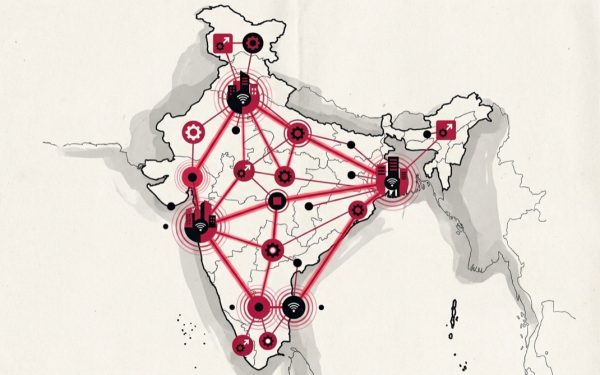
India’s unicorns are heavily concentrated in a few metros. Bengaluru (Bangalore) is the clear leader and is often called India’s Silicon Valley, followed by the Delhi NCR region (Gurugram and Noida) and Mumbai. Pune, Chennai and Hyderabad round out the major hubs. The donut below shows the rough geographic split as commonly reported — exact shares vary by tracker and year.
Valuations: a reality check
It is tempting to read a unicorn list like a leaderboard, but valuations deserve scepticism. Here is what to keep in mind.
- Valuations are estimates, not facts. A private valuation is whatever the latest investors agreed to pay. It can be inflated by “hot” market conditions or by clever term-sheet clauses (like liquidation preferences) that protect investors and flatter the headline number.
- They change constantly. Down rounds, markdowns by mutual-fund investors, secondary sales and IPOs all move the number. A company can be a unicorn one year and not the next.
- Valuation ≠ profitability. Many Indian unicorns have been deeply loss-making. The post-2022 era rewards startups with real revenue and a credible route to profit, and a few profitable unicorns (Zoho, Zerodha) never raised much outside money at all.
- Counts depend on definitions. “How many unicorns does India have?” has no single answer — it depends on whether you count cumulative vs. currently-private companies, and which valuation date a tracker uses.
Frequently asked questions
How many unicorns does India have?
India has built a cumulative total of well over 100 unicorns since 2011, making it one of the world’s top three unicorn nations alongside the United States and China. The exact number quoted at any time varies between trackers — some count cumulative unicorns (including those that later listed publicly), while others count only companies that are still privately valued above $1 billion. Because of listings, markdowns and differing cut-off dates, treat any single figure as an approximation that changes over time.
Which was the first unicorn in India?
InMobi, a Bengaluru-based mobile advertising technology company, is widely recognised as India’s first unicorn, having reached a $1 billion valuation around 2011. It was followed in the mid-2010s by e-commerce pioneers such as Flipkart, which became the face of India’s first big unicorn wave.
What is the difference between a unicorn, a soonicorn and a decacorn?
A unicorn is a private startup valued at $1 billion or more. A soonicorn is a “soon-to-be unicorn” — a fast-growing startup widely expected to cross the $1B mark shortly. A decacorn is a unicorn that has grown to a valuation of $10 billion or more. Above that sits the very rare hectocorn at $100 billion+.
What are the biggest fintech unicorns in India?
Well-known Indian fintech unicorns include Razorpay and PhonePe (payments), CRED (credit-card payments and rewards), Groww (investing), Pine Labs and BharatPe (merchant payments) and slice. Paytm and PolicyBazaar also crossed $1B as startups but are now publicly listed. Fintech is one of India’s densest unicorn sectors, powered by UPI and the India Stack.
Are unicorn startups profitable?
Not necessarily. A unicorn valuation reflects what investors are willing to pay based on expected future growth, not current profit, so many unicorns are loss-making. That said, the post-2022 funding environment rewards profitability, and some Indian unicorns — notably bootstrapped firms like Zoho and Zerodha — have been profitable for years.
Which is the most valuable startup in India?
The “most valuable” title changes with funding rounds and listings. Flipkart has long been among the most valuable Indian startups, and BYJU’S briefly held the crown at its peak before steep markdowns. Because rankings shift constantly and several top companies have gone public, there is no permanent answer — the leaderboard is a moving target.
Where are most Indian unicorns located?
Bengaluru is home to the largest share of India’s unicorns and is often called the country’s startup capital, followed by Delhi NCR (Gurugram and Noida) and Mumbai. Pune, Chennai and Hyderabad are other notable hubs.
Disclaimer: This article is for educational purposes only and is not investment/financial advice. Valuations and unicorn counts are approximate and change over time. Read all scheme/offer documents and consult a SEBI-registered adviser where relevant.