Venture capital (VC) is money invested in young, high-growth private companies in exchange for an equity stake. Specialist firms pool capital from large investors into a fund, back a portfolio of startups they believe can grow many times over, and aim to earn outsized returns when those companies are later sold or go public. Because most startups fail, VC is a high-risk, high-reward business built around a handful of huge winners.
- What is venture capital?
- How a VC fund actually works: LPs, GPs & the fund cycle
- What VCs look for in a startup
- VC vs angel investors vs private equity
- Funding stages: from seed to growth
- The term sheet: key clauses explained
- Returns and the power law
- Venture capital in India
- Frequently asked questions
What is venture capital?
Venture capital is a form of private financing in which professional investors provide capital to startups and early-stage companies that are too young, too risky, or too unproven to raise money from banks or public stock markets. In return, the investors receive shares (equity) in the company. The aim is straightforward: buy a stake while the company is small, help it grow rapidly, and sell that stake years later for far more than was paid.
The word “venture” captures the spirit of the activity. These are ventures into the unknown — companies building new products, new markets, or new technology, where the outcome is genuinely uncertain. A bank lends money expecting steady repayment with interest. A venture capitalist instead takes on the risk of failure in exchange for a share of the upside if the company succeeds. If the startup goes to zero, the VC loses the money invested; if it becomes the next large public company, the returns can be enormous.
VC sits inside the broader world of private capital, alongside angel investing and private equity. What sets it apart is its focus on growth-stage, scalable, usually technology-driven businesses and its willingness to fund companies that are still losing money, as long as they are growing fast and building something defensible.
How a VC fund actually works: LPs, GPs & the fund cycle
A common misconception is that a venture capitalist invests their own money. In reality, a VC firm mostly invests other people’s money, gathered into a pooled investment vehicle called a fund. Understanding who provides that money and who manages it is the key to understanding the whole industry.
Limited Partners (LPs): where the money comes from
Limited Partners, or LPs, are the investors who supply the capital. They are typically large institutions and wealthy individuals: pension funds, insurance companies, university endowments, sovereign wealth funds, banks, family offices, and high-net-worth individuals. In India, domestic LPs increasingly include large family offices, corporates, and funds backed by institutions such as SIDBI, alongside global investors. LPs are called “limited” because their liability is limited to the money they commit, and they are passive — they do not pick the startups or run the fund day to day.
General Partners (GPs): who runs the fund
General Partners, or GPs, are the people who actually run the VC firm. They raise the fund from LPs, source and evaluate deals, decide which startups to back, negotiate terms, sit on boards, and eventually sell the holdings. GPs are the investors whose names you see — the partners at the firm. They are paid in two ways, often summarised as the “2 and 20” model:
- Management fee: typically around 2% of the fund per year, used to pay salaries and run the firm.
- Carried interest (“carry”): typically around 20% of the profits the fund generates, paid only after LPs get their original capital back. This is how successful GPs make most of their money.
The fund cycle
A VC fund is not permanent. It is a fixed-life vehicle, usually structured to run for about 10 years, sometimes with short extensions. The life of a fund moves through clear phases:
- Fundraising: The GPs pitch LPs and secure commitments. When enough is raised, the fund “closes” and is ready to deploy.
- Investment period (roughly years 1–4): The GPs make most of their new investments, building the portfolio.
- Follow-on and management (roughly years 4–7): The fund reserves capital to invest more into its best-performing companies in later rounds, and supports the portfolio.
- Harvesting / exits (roughly years 7–10): The fund seeks to sell its holdings — through acquisitions or IPOs — and returns the proceeds to LPs.
Capital is not handed over all at once. LPs commit a total amount, and the GPs “draw down” (call) that capital in instalments as deals are made. Successful firms raise a new fund every few years, so a large VC firm may run several funds at different stages simultaneously.
What VCs look for in a startup
VCs reject the vast majority of companies they see. Because their model depends on finding rare outliers, they are not looking for a safe, modestly profitable business — they are looking for one that could become very large. A few factors dominate their decision:
1. A large and growing market
VCs want a big total addressable market (TAM). A great team solving a small problem cannot generate a fund-returning outcome. The opportunity must be large enough that the company could one day be worth hundreds of crores or far more.
2. The founding team
At the earliest stages, there is little data, so investors back people. They look for founders with deep insight into the problem, the ability to attract talent and customers, resilience, and “founder–market fit” — a genuine reason this team is the right one to win.
3. Product and traction
Evidence that customers actually want the product — revenue growth, usage, retention, or strong early demand — dramatically de-risks an investment. The further along a startup is, the more traction investors expect before they commit.
4. A defensible edge and a path to scale
Investors look for a “moat”: something that makes the business hard to copy, such as technology, network effects, brand, or proprietary data. They also want a business model that can scale — where growth does not require costs to rise just as fast.
5. A credible exit
Since VCs only make money when they sell, they think from day one about how the investment might eventually be realised — through an acquisition or a public listing.
VC vs angel investors vs private equity
Venture capital is often confused with angel investing and private equity. All three buy equity in private companies, but they operate at different stages, with different money and different goals.
| Feature | Angel investor | Venture capital | Private equity (PE) |
|---|---|---|---|
| Whose money | Their own personal wealth | A fund pooled from LPs | A fund pooled from LPs |
| Company stage | Idea / very early | Early to growth stage | Mature / established |
| Typical company | Pre-revenue or tiny | High-growth, often loss-making | Profitable, stable cash flows |
| Stake taken | Minority | Minority | Often majority / full buyout |
| Use of debt | No | Rarely | Often uses significant debt |
| Cheque size | Small | Medium to large | Large to very large |
| Main goal | Back founders early | Fund rapid growth to a big exit | Improve & resell a mature business |
In short: angels are individuals who get in first with their own money; VCs are firms that fund the high-growth scaling phase using investors’ capital and take minority stakes; and private equity firms buy into mature, profitable companies, frequently taking control and using debt to amplify returns. A single successful company may travel through all three over its life.
Funding stages: from seed to growth
Startups usually raise money in a series of rounds, each named by stage. Every round typically values the company higher than the last (an “up round”) and sells a fresh slice of equity to new and existing investors.
| Stage | Purpose | Typical investors |
|---|---|---|
| Pre-seed | Turn an idea into an early product; first hires | Founders, friends & family, angels |
| Seed | Build the product, find product–market fit, early customers | Angels, seed funds, early-stage VCs |
| Series A | Scale a proven model; build a repeatable go-to-market | Venture capital firms |
| Series B | Expand the team, markets and product after clear traction | Venture capital firms |
| Series C and beyond | Aggressive growth, new markets, acquisitions, pre-IPO scaling | Late-stage VCs, growth & PE funds |
| Exit (IPO / acquisition) | Early investors and founders realise their returns | Public markets / acquirers |
Each round is also a checkpoint. To raise the next round at a higher valuation, a startup must hit meaningful milestones — growth, revenue, or product progress. Companies that stall often struggle to raise again, which is one reason failure is common even after early success. With every round, founders sell more equity, so their ownership percentage shrinks (gets “diluted”), even as the value of their remaining stake can grow.
The term sheet: key clauses explained
When a VC decides to invest, the deal begins with a term sheet — a short, mostly non-binding document setting out the proposed terms before lawyers draft the final contracts. It covers two big questions: the economics (who gets what money) and control (who gets to decide what). A few clauses matter most.
| Clause | What it means |
|---|---|
| Valuation (pre & post-money) | Pre-money is the company’s value before the investment; post-money adds the new money. This sets how much equity the VC receives. |
| Liquidation preference | Decides who gets paid first if the company is sold. A “1x” preference returns the VC’s investment before others share the rest. |
| Anti-dilution | Protects investors if a later round is raised at a lower price (a “down round”) by adjusting their effective price. |
| Board seats & control | Sets board composition and which major decisions need investor approval (“protective provisions”). |
| ESOP pool | A reserved block of equity for employees, usually expanded as a condition of the round. |
| Pro-rata rights | Lets an investor put in more money in future rounds to maintain their ownership percentage. |
| Vesting | Founders earn their shares over time (often four years), so leaving early forfeits unvested equity. |
Returns and the power law
The defining feature of venture capital returns is the power law: returns are not spread evenly across a portfolio. Instead, a very small number of investments generate the overwhelming majority of the gains, while many investments return little or nothing.
A VC fund might invest in 20–30 companies expecting that a large share will fail or merely return the original capital, a few will do moderately well, and perhaps just one or two will be huge “home runs” that pay for the entire fund — and then some. Because a single great outcome can dwarf everything else, VCs deliberately seek companies with the potential to return the whole fund on their own, even knowing most will not get there.
Performance is measured with a few standard metrics that founders and aspiring investors should know:
- Multiple / MOIC: how many times the invested capital is returned (for example, 3x).
- IRR (internal rate of return): the annualised return, which accounts for how long money was invested.
- DPI vs TVPI: DPI is cash actually returned to LPs; TVPI also counts the paper value of holdings not yet sold.
Crucially, returns are mostly illiquid and back-loaded. Startups take years to mature, so LPs may wait most of a fund’s life before meaningful cash comes back — the so-called “J-curve”, where a fund shows losses early (fees and write-downs) before winners deliver gains later.
Venture capital in India
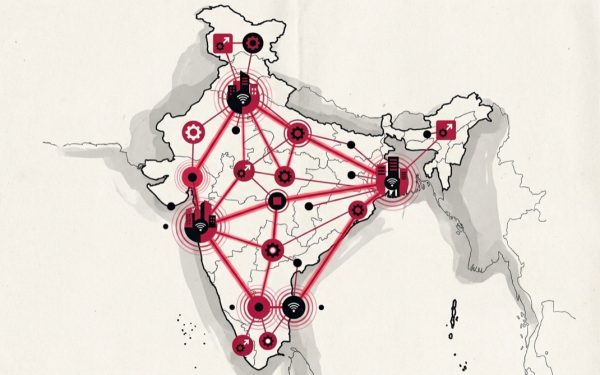
India has become one of the world’s most active startup and venture markets, home to a large base of unicorns (startups valued at over $1 billion) across fintech, software-as-a-service (SaaS), consumer internet, e-commerce, deep tech, and more. After the funding boom of 2021 and a sharper, more disciplined “funding winter” in the years that followed, Indian VC has matured: investors place greater weight on a clear path to profitability, sound unit economics, and strong governance rather than growth at any cost.
Who funds Indian startups
The Indian ecosystem includes home-grown VC firms, India-focused arms of global funds, and prominent angel networks. Well-known names active in Indian venture investing include firms such as Peak XV Partners (formerly Sequoia Capital India), Accel, Blume Ventures, Elevation Capital, Nexus Venture Partners, Lightspeed, Matrix (now Z47), Kalaari Capital, and corporate or strategic investors. Many global crossover and growth investors also participate in later rounds. (Firm names and structures change over time, so always verify current details before approaching an investor.)
How VC is regulated in India
In India, venture capital and private equity funds are most commonly set up as Alternative Investment Funds (AIFs) registered with the Securities and Exchange Board of India (SEBI). Early-stage and venture funds typically fall under SEBI’s AIF categories (Category I and II), which sit alongside rules for foreign investment and taxation. This regulatory framework governs how funds raise money from investors and how they operate. Founders and investors should treat the specifics — categories, thresholds, and tax treatment — as matters to confirm with qualified professionals, as they are updated periodically.
Government support
Policy initiatives such as Startup India and government-backed “fund of funds” structures (which invest into VC funds rather than directly into startups, channelled through institutions like SIDBI) have aimed to deepen the pool of domestic capital available to Indian founders. Combined with a growing number of Indian LPs and family offices, this has gradually reduced the ecosystem’s earlier heavy dependence on foreign capital.
Frequently asked questions
What is venture capital in simple terms?
Venture capital is money that professional investors put into young, high-growth companies in exchange for an ownership stake (equity). The investors accept a high risk of failure in return for the chance of very large gains if the company succeeds and is later sold or goes public.
How do venture capitalists make money?
VCs make money in two ways: a management fee (commonly around 2% of the fund each year) and “carried interest” (commonly around 20% of the profits), which is paid only after the fund’s investors get their original capital back. The bulk of a successful VC’s earnings comes from carry on big winners.
What is the difference between venture capital and private equity?
Venture capital backs early- and growth-stage startups, usually taking minority stakes in fast-growing, often unprofitable companies. Private equity invests in mature, profitable businesses, frequently buying a majority or the whole company and often using debt to boost returns.
What do VCs look for before investing?
They look for a large and growing market, a strong founding team, real customer traction, a defensible competitive edge, a scalable business model, and a credible path to a large exit. Because returns follow a power law, they favour companies with the potential to become very large.
How much equity does a VC usually take?
It varies by stage and negotiation, but VCs typically take a minority stake in each round. Across multiple rounds, founders progressively sell more equity, so their percentage ownership falls (dilution) even as the company’s overall value rises.
How is venture capital regulated in India?
In India, VC and PE funds are usually set up as Alternative Investment Funds (AIFs) registered with SEBI, with venture funds generally falling under Category I and II. The framework, along with rules on foreign investment and taxation, is updated periodically, so confirm current specifics with qualified professionals.
Disclaimer: This article is for educational purposes only and is not investment/financial advice. Read all scheme/offer documents and consult a SEBI-registered adviser where relevant.