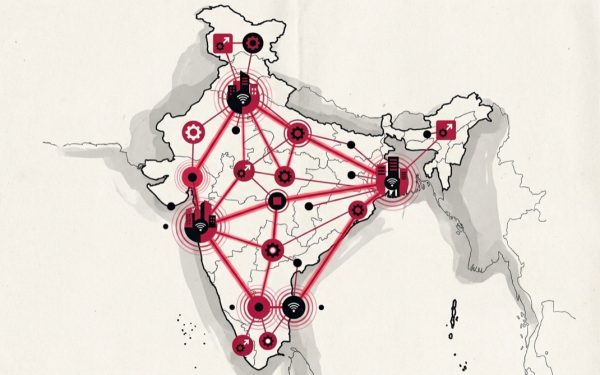
Startup India registration means getting your company recognised as a “startup” by the DPIIT (Department for Promotion of Industry and Internal Trade) on the official startupindia.gov.in portal. It is free, fully online, and takes only a few working days once your company is incorporated. DPIIT recognition unlocks a 3-year income-tax holiday, angel-tax relief, faster patent and trademark filing, easier access to government tenders, and self-certification under labour and environmental laws.
What the Startup India Scheme is ·
DPIIT recognition eligibility ·
Benefits: tax, IPR & tenders ·
Step-by-step registration process ·
Documents & fees ·
Fund of Funds & funding support ·
Common rejection reasons ·
FAQ
If you are building a new company in India, “Startup India” is probably the first government programme you will hear about. Launched on 16 January 2016, the Startup India initiative is the Government of India’s flagship effort to build a strong ecosystem for innovation and entrepreneurship. At its heart sits a simple but valuable status: DPIIT recognition. This single recognition is the key that opens the door to almost every tax break, compliance relaxation, and funding scheme the programme offers.
This guide explains, in plain language, what the scheme is, exactly who is eligible, the real benefits worth chasing, how to complete the startup india registration online from start to finish, and the mistakes that get applications rejected. It is written for Indian founders, students, and first-time entrepreneurs as of 2026.
What the Startup India Scheme is
Startup India is an umbrella programme run primarily by the DPIIT under the Ministry of Commerce and Industry. It bundles together policy support, tax incentives, easier compliance, intellectual-property assistance, and access to capital. The programme is delivered through the startupindia.gov.in portal, which acts as a single window for recognition, learning resources, and connecting startups with investors, mentors, and incubators.
It is important to separate two things that beginners often confuse:
Incorporation vs. DPIIT recognition
Incorporation is the legal act of creating your business entity — a Private Limited Company with the MCA (Ministry of Corporate Affairs), a Limited Liability Partnership (LLP), or a Registered Partnership Firm. DPIIT recognition is a separate, free certificate you apply for after incorporation, which formally labels your already-registered entity as a “startup” eligible for scheme benefits. You cannot get DPIIT recognition without first incorporating a qualifying entity.
DPIIT recognition eligibility criteria
To be recognised as a startup by DPIIT, your entity must satisfy every condition below. These criteria are defined in the Government of India notification that governs the scheme, and the portal checks them during your application.
1. Type of entity
You must be one of these three: a Private Limited Company (under the Companies Act, 2013), a Limited Liability Partnership (under the LLP Act, 2008), or a Registered Partnership Firm (under the Partnership Act, 1932). Sole proprietorships and one-person setups that are not incorporated as one of these do not qualify — this is why “startup india registration for proprietorship” usually means first converting to a Pvt Ltd or LLP.
2. Age of the entity
The entity must be up to 10 years old, measured from the date of incorporation/registration. Once you cross 10 years, you are no longer eligible for fresh recognition.
3. Annual turnover
Turnover for any financial year since incorporation must not have exceeded ₹100 crore. If you have already crossed this threshold in any year, the entity is no longer treated as a startup.
4. Innovation, improvement or scalability
The entity should be working towards innovation, development or improvement of products, processes or services, or have a scalable business model with high potential for employment generation or wealth creation. A plain trading or consulting business with no innovation angle is harder to justify.
5. Not formed by splitting or reconstruction
The entity must not have been formed by splitting up or reconstructing an already existing business. This rule stops established companies from re-labelling old operations as a new “startup” to grab benefits.
| Condition | Requirement |
|---|---|
| Legal form | Private Limited Company, LLP, or Registered Partnership Firm |
| Maximum age | Up to 10 years from incorporation |
| Turnover ceiling | Has not crossed ₹100 crore in any year |
| Nature of business | Innovation, improvement, or a scalable model |
| Origin | Not formed by splitting/reconstructing an existing business |
| Cost of recognition | Free (no government fee for DPIIT recognition) |
Benefits of Startup India: tax, IPR & tenders
DPIIT recognition is worth the effort because of the concrete benefits attached to it. Below are the most valuable ones for a typical early-stage Indian startup.
1. Three-year income-tax holiday (Section 80-IAC)
A DPIIT-recognised startup can apply for an exemption from income tax on its profits for any three consecutive financial years out of its first ten years, under Section 80-IAC of the Income Tax Act. This is a separate application (beyond basic recognition) reviewed by an inter-ministerial board, and it is available only to entities incorporated as a Private Limited Company or LLP. The tax holiday lets a young, profit-making startup reinvest more of its earnings into growth.
2. Angel-tax relief (Section 56)
“Angel tax” historically refers to tax on the premium at which startups raised equity from investors above fair market value, under Section 56(2)(viib). DPIIT-recognised startups have been given exemptions and relief on this front, and in the Union Budget 2024 the angel-tax provision was abolished for all investor classes from FY 2024-25. For founders, the practical effect is that raising capital at a high valuation no longer triggers the old “excess premium” tax worry it once did — a major relief for fundraising.
3. Faster, cheaper intellectual property (IPR) protection
Recognised startups get strong support on patents, trademarks, and designs:
- Fast-track patent examination so applications are processed more quickly than the normal queue.
- An 80% rebate on patent filing fees and roughly a 50% rebate on trademark filing fees compared with other companies.
- Access to a panel of government-empanelled facilitators who handle the filing; the startup pays only the statutory fees while the facilitator’s professional charges are borne by the government under the SIPP (Startups Intellectual Property Protection) scheme.
4. Easier access to government tenders & public procurement
Recognised startups enjoy relaxations when bidding for government work. They are typically exempt from the “prior experience” and “prior turnover” criteria in public tenders (subject to meeting quality requirements), and from Earnest Money Deposit (EMD) in many cases. Startups can also list and sell to government buyers through the GeM (Government e-Marketplace) portal, opening up a large customer base that was previously hard for new firms to reach.
5. Self-certification & simpler compliance
Recognised startups can self-certify compliance under 6 labour laws and 3 environmental laws through the Startup India portal. This means reduced inspection burden in the early years — for labour laws there is generally no inspection for the first few years unless a credible complaint is filed, letting founders focus on building rather than paperwork.
6. Faster & easier exit (winding up)
Under the Insolvency and Bankruptcy Code framework, eligible startups can be wound up within a much shorter timeframe (a fast-track process) compared with ordinary companies, making it less painful to close down a venture that did not work out.
Step-by-step Startup India registration process
Here is the full startup india registration process, from incorporating your company to downloading the DPIIT Recognition Certificate. The recognition part itself is free and done entirely online.
Step 1 — Incorporate your entity
First, legally register your business as a Private Limited Company or LLP with the MCA, or as a Registered Partnership Firm. You will receive a Certificate of Incorporation (or LLP/partnership registration), a PAN, and a Corporate Identity Number (CIN) or LLPIN. This step has government and professional fees and is the only mandatory paid part of the journey.
Step 2 — Create an account on the Startup India portal
Go to startupindia.gov.in and register as a user with your name, email, and mobile number. Verify via OTP. This gives you access to the dashboard from where recognition is applied for.
Step 3 — Fill the DPIIT recognition application
From your dashboard, open the “DPIIT Recognition” / “Apply Now” section. You will enter:
- Entity details: name, type, CIN/LLPIN, incorporation date, and registered address.
- Full address and authorised representative details.
- Director/partner details with PAN.
- Information about your business: industry, sector, and a clear description of what is innovative or scalable about your product, process, or service.
Step 4 — Upload documents & self-certify
Attach the required documents (listed below), confirm that the entity meets all eligibility conditions, and self-certify the declarations. A strong, specific description of your innovation here greatly improves approval odds.
Step 5 — Receive your DPIIT Recognition Certificate
After submission, the application is reviewed. If everything is in order, you receive the Certificate of Recognition with a unique DPIIT Recognition Number (often called the “DIPP number”), downloadable from your dashboard. With this in hand, you can then separately apply for Section 80-IAC tax exemption, IPR benefits, and tender relaxations.
Important: Recognition and tax exemption are two different applications. Getting the DPIIT Recognition Certificate does not automatically give you the 3-year tax holiday — you must apply separately for Section 80-IAC after recognition.
Documents required & fees
Documents you need
| Document | Why it is needed |
|---|---|
| Certificate of Incorporation / Registration | Proof the entity legally exists (Pvt Ltd, LLP, or partnership) |
| PAN of the entity | Identity and tax linkage |
| Directors’/partners’ details | Names, PAN, and addresses of the people running it |
| Brief write-up / description | Explains the innovation, improvement, or scalability |
| Supporting proof (optional but useful) | Website, pitch deck, patents, awards, funding letters, MVP screenshots |
What it costs
The DPIIT recognition itself is free — there is no government fee to apply for or receive the Certificate of Recognition. The only unavoidable costs come earlier, at the incorporation stage, and depend on your structure and authorised capital. Beware of agents who advertise high “startup india registration fees”; the recognition portal charges nothing. You may choose to pay a professional (CA/CS) to handle paperwork, but that is optional, not a government charge.
| Item | Indicative cost |
|---|---|
| DPIIT recognition (the actual “startup india registration”) | Free |
| Company / LLP incorporation (MCA + professional) | Varies by entity type & capital (paid) |
| Section 80-IAC tax-exemption application | Free (separate online application) |
| Optional consultant/CA assistance | Optional, market-driven |
Fund of Funds & funding support
One of the biggest pillars of Startup India is improving access to capital. The government does this mainly through two schemes, plus seed support.
Fund of Funds for Startups (FFS)
The Fund of Funds for Startups (FFS) was set up with a corpus of ₹10,000 crore, operated by SIDBI (Small Industries Development Bank of India). Crucially, the government does not invest directly in startups. Instead, FFS invests in SEBI-registered Alternative Investment Funds (AIFs) — the venture-capital funds — which then invest that money (along with their own) into startups. This “fund of funds” structure multiplies the impact, because each rupee of government money helps unlock several rupees of private VC capital.
Startup India Seed Fund Scheme (SISFS)
The Startup India Seed Fund Scheme provides early-stage capital to startups for proof of concept, prototype development, product trials, market entry, and commercialisation. It is delivered through approved incubators across India, which disburse the funds as grants and as convertible debentures/debt. This is aimed at very young startups that find it hard to raise their first cheque from banks or VCs.
Credit Guarantee Scheme for Startups (CGSS)
The Credit Guarantee Scheme for Startups (CGSS) provides a government-backed guarantee on loans extended by banks and financial institutions to DPIIT-recognised startups. By covering part of the lender’s risk, it makes collateral-free debt more accessible to startups that lack assets to pledge.
Common reasons applications get rejected
Most DPIIT recognition rejections happen for avoidable reasons. Knowing them in advance dramatically improves your chances.
1. Weak or vague innovation description
The single biggest reason for rejection or queries is a generic, copy-pasted description that fails to explain what is genuinely innovative, improved, or scalable about the business. “We sell products online” is not enough — explain the problem, your unique approach, and why it is scalable.
2. Wrong entity type
Applying as a sole proprietorship or an unregistered partnership leads to rejection because only Pvt Ltd companies, LLPs, and registered partnership firms qualify. Convert first, then apply.
3. Looks like a reconstruction of an existing business
If the entity appears to be an old business split up or repackaged as a new company purely to claim benefits, it will be rejected under the “not formed by reconstruction” rule.
4. Eligibility thresholds breached
Being older than 10 years or having turnover above ₹100 crore in any year disqualifies the entity. Always check these before applying.
5. Document mismatches & errors
Mismatched names, wrong CIN/PAN, blurred uploads, or details that do not match the Certificate of Incorporation cause queries and delays. Double-check every field against your official documents.
| Reason for rejection | How to avoid it |
|---|---|
| Vague innovation write-up | Write a specific, problem-solution-scalability narrative |
| Ineligible entity type | Incorporate as Pvt Ltd, LLP, or registered partnership first |
| Appears to be a reconstruction | Ensure it is a genuinely new venture, not a relabelled old one |
| Crossed age/turnover limits | Confirm ≤10 years and ≤₹100 crore before applying |
| Document/detail mismatch | Match every field to incorporation papers; upload clear files |
Frequently asked questions
Is Startup India registration free?
Yes. DPIIT recognition — the actual “startup india registration” on startupindia.gov.in — is completely free; there is no government fee. The only paid step is incorporating your company or LLP beforehand. Be cautious of agents quoting large “registration fees” for the recognition itself.
What is the eligibility criteria for startup india registration?
Your entity must be a Private Limited Company, LLP, or registered partnership firm; be up to 10 years old; have turnover under ₹100 crore in every year since incorporation; be working on innovation, improvement, or a scalable model; and not be formed by splitting or reconstructing an existing business.
How long does the startup india registration process take?
Once your entity is incorporated and you submit a complete DPIIT recognition application with a clear innovation description and correct documents, recognition is typically granted within a few working days. Incomplete or vague applications take longer because they trigger queries.
What is a DPIIT recognition number (DIPP number)?
It is the unique identification number printed on your Certificate of Recognition. You quote this DPIIT (formerly DIPP) number when applying for tax exemption, IPR benefits, tenders, and other scheme benefits to prove you are a recognised startup.
Does DPIIT recognition give me the income-tax exemption automatically?
No. Recognition makes you eligible, but the 3-year income-tax holiday under Section 80-IAC is a separate application reviewed by an inter-ministerial board, available to Pvt Ltd companies and LLPs. You must apply for it after getting recognition.
Can a proprietorship get startup india registration?
Not as a proprietorship. Only Private Limited Companies, LLPs, and registered partnership firms qualify. A sole proprietor must first convert into one of these eligible structures and then apply for DPIIT recognition.
Does the government invest directly in my startup?
No. Under the Fund of Funds for Startups, the government (via SIDBI) invests in SEBI-registered venture-capital funds (AIFs), which then invest in startups. Recognised startups can also access seed funding through incubators and collateral-free loans via the Credit Guarantee Scheme.
Disclaimer: This article is for educational purposes only and is not investment/financial advice. Scheme rules, thresholds, and tax provisions change over time. Read all scheme/offer documents on the official startupindia.gov.in portal and consult a qualified professional or SEBI-registered adviser where relevant.