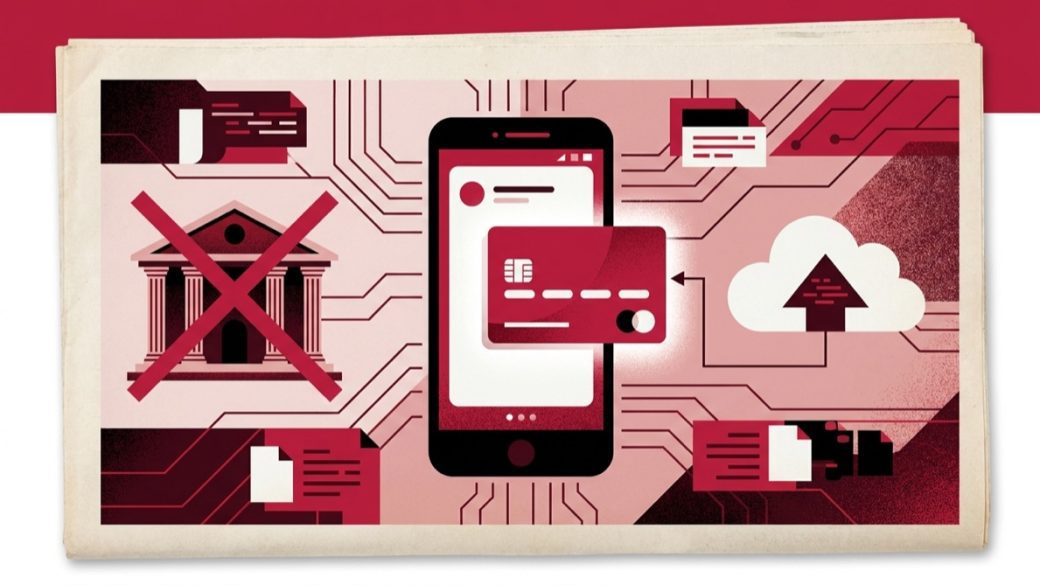
A neobank is a 100% digital bank that runs entirely through an app or website, with no physical branches. In India, neobanks are not licensed banks themselves — the Reserve Bank of India (RBI) does not yet issue a separate “neobank licence”, so they partner with a licensed bank or NBFC that actually holds your money, while the neobank builds the slick app, onboarding and features on top.
- What is a neobank?
- How neobanks actually work in India
- Neobank vs traditional bank vs digital bank
- How do neobanks make money?
- Neobanks in India: the licensing reality
- Major neobanks operating in India
- Pros and cons of using a neobank
- Who should (and shouldn’t) use a neobank
- Frequently asked questions
What is a neobank?
A neobank (sometimes written “neo bank” or “neo-bank”) is a financial technology company that delivers banking-style services — accounts, payments, cards, savings tools and sometimes credit — through a fully digital experience. The word “neo” simply means “new”: a neobank is a new-age, branchless, mobile-first alternative to the bank branch your parents queued up at.
The defining feature is that there is no physical branch and usually no physical paperwork. You download an app, complete a video-based or paperless KYC (Know Your Customer) check, and you are operational in minutes. Everything after that — opening the account, sending money, getting a card, viewing analytics, raising a support ticket — happens on your phone.
It helps to think of a neobank as an experience layer sitting on top of the regulated banking system. The neobank designs the interface, the features and the customer journey; a licensed partner bank holds the deposits and clears the transactions in the background. That distinction is the single most important thing to understand about neobanks in India, and we will return to it in detail below.
Where the idea came from
Neobanks emerged globally in the mid-2010s, led by names like Revolut, N26, Monzo and Chime, as smartphone adoption made a branch visit feel unnecessary for everyday banking. India’s version of the story is shaped by two local forces: the explosion of UPI (Unified Payments Interface), which made real-time digital payments free and ubiquitous, and the India Stack — Aadhaar-based identity, eKYC and digital onboarding — which made it cheap to acquire and verify customers online.
Put those two together and you get the perfect launchpad for app-only banking: a customer can be identified, verified and transacting within minutes, and money can move instantly and for free over UPI rails that the neobank does not have to build itself. That is a very different starting point from Western markets, where neobanks often had to construct payment plumbing from scratch. In India, the rails already existed, so neobanks competed mainly on experience, design and niche features rather than on the basic ability to move money.
How neobanks actually work in India
Because Indian neobanks are not licensed banks, they cannot legally hold your deposits on their own books. Instead they use a partnership (or “bank-led”) model. Understanding this flow removes most of the confusion around the question “is my money actually with the neobank?”
The typical journey, step by step
- You download the app and start onboarding — usually paperless, using PAN, Aadhaar and a selfie/video for KYC.
- The neobank opens an account for you with its partner bank (or links to an existing account). The account is technically a partner-bank account that you operate through the neobank’s interface.
- You get a virtual debit card instantly and can fund the account via UPI, IMPS or NEFT.
- Day-to-day banking happens in the app: payments, transfers, spend analytics, sub-accounts, bill splitting, and so on.
- The partner bank clears transactions and keeps the regulated ledger. Deposit insurance, if applicable, comes through that partner bank.
This is why neobanks can launch fast and feel modern — they don’t carry the cost of branches or legacy core-banking systems — but it is also why the partner bank matters so much for your safety.
Two flavours: “front-end only” vs deeper integration
Not all neobank partnerships are equal. Some neobanks are essentially a front-end: they put a beautiful app over a standard partner-bank account, and most banking logic still runs on the partner’s systems. Others build deeper, API-level integrations that let them launch their own card programmes, lending flows and sub-account structures more flexibly. From a customer’s point of view the difference is mostly invisible, but it affects how much the neobank can innovate and how quickly it can fix problems — and, importantly, it does not change the fact that the regulated deposit relationship still sits with the licensed partner.
Neobank vs traditional bank vs digital bank
Three terms get mixed up constantly: neobank, traditional bank, and the “digital banking unit” or app of a traditional bank. They are not the same thing.
| Feature | Neobank | Traditional bank | A traditional bank’s app |
|---|---|---|---|
| Holds a banking licence? | No (uses a partner) | Yes | Yes (it’s the bank itself) |
| Physical branches | None | Yes, extensive | Yes (parent bank) |
| Account opening | Minutes, in-app | Branch or app, slower | App or branch |
| Core strength | User experience & features | Trust, scale, full products | Established brand + digital |
| Who is regulated | The partner bank | The bank | The bank |
| Typical user | Digital-first users, SMEs, startups | Everyone | Existing customers |
The crucial nuance: the app of a traditional bank (say a large private or public-sector bank’s mobile app) is the bank, fully licensed and insured. A neobank’s app is a third party that connects you to a partner bank. Both can feel equally “digital” on the surface, but the legal entity behind your money is different.
How do neobanks make money?
A fair question, since most neobanks advertise “zero balance” accounts and free UPI. They don’t earn the way a branch bank does (largely from the spread between deposit and lending rates). Neobank revenue is more diversified and fee/partnership-led.
The main revenue streams
- Interchange and card fees: Every time you swipe a debit or prepaid card, the merchant’s bank pays a small interchange fee, a slice of which can flow to the neobank.
- Subscription / premium plans: Many neobanks offer paid tiers (better limits, metal cards, lounge access, higher rewards, dedicated support) that generate recurring revenue.
- Lending and credit referrals: Neobanks earn commission by distributing loans, credit lines, “buy now, pay later” or credit cards from partner lenders, or by lending through an in-house or partner NBFC.
- Value-added services: Cross-selling insurance, investments (mutual funds, fixed deposits), forex, payroll and expense-management tools — especially for business neobanks.
- B2B / SaaS fees: Business-focused neobanks charge for accounting integrations, GST and tax tools, vendor payouts, corporate cards and API banking.
This mix explains a key strategic difference: consumer neobanks often chase scale and monetise later, while business (SME and startup) neobanks tend to earn more directly from software fees and transaction volumes — which is why several Indian neobanks deliberately focus on businesses rather than individuals.
Neobanks in India: the licensing reality
This is the section most people get wrong, so let’s be precise. As of 2026, the RBI does not grant a dedicated “neobank licence” or “digital bank licence” in India. There is no regulatory category called “neobank”. The RBI has historically maintained a cautious stance and has emphasised that banking must remain anchored to licensed, supervised entities with a physical presence.
That has two important consequences:
- Every Indian neobank must operate through a regulated partner — a scheduled commercial bank, a small finance bank, or an NBFC. The neobank itself is typically registered as a technology or financial-services company, not as a bank.
- Neobanks cannot, on their own, accept deposits, issue cheque books as a “bank”, or call themselves a “bank” in the strict regulatory sense. The RBI has cautioned the public to deal only with entities authorised to carry on banking, and fintechs must clearly disclose the partner bank behind the product.
So is your money safe?
Your money’s safety depends primarily on the partner bank, not the neobank app. When your funds are held as deposits with an RBI-licensed bank, they fall under that bank’s regulatory protections — including DICGC deposit insurance, which (as a long-standing rule) covers deposits up to ₹5 lakh per depositor per bank in the event the bank fails. Crucially, this insurance is tied to the licensed bank, so it is essential to know which bank actually holds your account.
Where to be careful: some neobank products are prepaid wallets or payment instruments rather than full bank deposits. The protections for those can differ, and balances in a prepaid instrument are not the same as an insured bank deposit. Before you park significant money, always check the fine print on which licensed entity holds your funds and in what form.
Where Indian neobank regulation is heading
The conversation about a formal “digital banking licence” framework has been ongoing in Indian policy circles (including a much-discussed think-tank proposal), but no full-fledged standalone digital-bank licensing regime has been operationalised by the RBI as of 2026. The practical takeaway for readers: treat any neobank as a fintech-plus-partner-bank arrangement, and verify the partner before relying on it.
Major neobanks operating in India
India’s neobank space splits broadly into consumer-focused players and business/SME-focused players. Several of the best-known business neobanks were founded specifically because the RBI’s stance pushed innovation toward serving businesses, freelancers and startups, where software and workflow value is high.
| Neobank | Primary focus | Typical offering |
|---|---|---|
| Jupiter | Consumers | Savings-linked digital account, spend insights, rewards |
| Fi (Fi Money) | Consumers | Digital savings account, automation, investing features |
| RazorpayX | Businesses / startups | Current-account banking, payouts, payroll, vendor payments |
| Open | SMEs / businesses | Banking + accounting, invoicing, expense management |
| Niyo | Consumers / travellers | Salary accounts, zero-forex travel cards |
| Freo / others | Consumers / credit | Credit-led products, savings, BNPL-style features |
Each of these works with one or more licensed partner banks behind the scenes. Product features, partner banks and availability change over time, so always confirm current terms directly with the provider before opening an account.
A useful related concept is the rise of bank-built digital platforms (large banks launching their own app-first banking experiences). These look like neobanks but are run by the licensed bank itself — another reminder to check who actually holds the licence.
Pros and cons of using a neobank
Neobanks are genuinely useful for the right person, but they are not a wholesale replacement for a full-service bank for everyone. Here is an honest, balanced view.
The advantages
- Speed and convenience: Open an account in minutes, fully online, with instant virtual cards.
- Better software: Clean apps, real-time spend categorisation, budgeting, sub-accounts and automation that legacy apps often lack.
- Lower friction and fees: Many offer zero-balance accounts and free UPI; business neobanks bundle payouts and accounting that would otherwise need extra tools.
- Purpose-built for niches: Travellers (zero-forex cards), startups (current accounts + payroll), freelancers (invoicing) are well served.
The drawbacks
- No independent licence: You are ultimately relying on a partner bank you may not have chosen consciously.
- Cash and physical service: Depositing cash, getting a locker, or sitting across from a relationship manager for a complex problem is hard or impossible.
- Product depth: Large home loans, business credit at scale, trade finance and specialised services are typically beyond a neobank’s own offering.
- Dependence on the app: If the app or a partner integration has downtime, you can be locked out of your money temporarily.
- Wallet vs deposit confusion: Not every “balance” is an insured bank deposit — read the terms.
Who should (and shouldn’t) use a neobank
The right answer is usually “use a neobank for what it’s great at, alongside a full-service bank for everything else,” rather than choosing one and abandoning the other.
| Good fit for a neobank | Better served by a traditional bank |
|---|---|
| Digital-first individuals who live on UPI and cards | People who deal heavily in cash deposits/withdrawals |
| Freelancers wanting invoicing + clean analytics | Those needing large home/business loans or lockers |
| Startups & SMEs needing payouts, payroll, expense tools | Customers who value in-person relationship banking |
| Frequent travellers (zero-forex travel cards) | Anyone uncomfortable with app-only support channels |
| Anyone who wants a fast secondary “spends” account | Large savers wanting a single insured deposit relationship |
Frequently asked questions
What is a neobank in simple words?
A neobank is a fully digital, app-only bank with no physical branches. You open and operate the account entirely on your phone. In India, the neobank provides the app and experience, while a licensed partner bank holds your money and handles the regulated side of banking.
Is a neobank a real bank?
Not on its own in India. Neobanks are fintech companies, not licensed banks. They deliver banking-style services in partnership with an RBI-licensed bank or NBFC that actually holds deposits and carries the banking licence. So while you get a real bank account, the licence belongs to the partner bank, not the neobank brand.
Are neobanks RBI-approved or regulated?
There is no separate “neobank licence” from the RBI as of 2026. Neobanks are not directly licensed as banks. They are regulated indirectly through their partner banks/NBFCs, which are RBI-supervised. Always check which licensed entity sits behind a neobank before trusting it with significant money.
Is my money safe in a neobank?
It depends on how and where your money is held. If your funds are deposits with the RBI-licensed partner bank, they enjoy that bank’s protections, including DICGC deposit insurance of up to ₹5 lakh per depositor per bank. If the balance is a prepaid wallet or payment instrument, protections can differ. Confirm which it is in the terms.
What is the difference between a neobank and a digital bank?
A “digital bank” usually means a licensed bank that operates primarily through an app, or a bank’s own app — the bank itself is regulated and insured. A neobank is a third-party fintech that connects you to a partner bank. The interfaces look similar, but the entity legally responsible for your money is different.
How do neobanks make money if accounts are free?
Mainly through card interchange fees, premium subscription plans, commissions on loans/credit/insurance/investments they distribute, and (for business neobanks) software and transaction fees for payouts, payroll, accounting and API banking. The “free account” is often a customer-acquisition strategy, with revenue earned elsewhere.
Which are the popular neobanks in India?
Well-known consumer neobanks include Jupiter, Fi and Niyo, while business/SME-focused players include RazorpayX and Open, among others. Each works with one or more licensed partner banks. Offerings and partners change over time, so verify current details with the provider before opening an account.
Disclaimer: This article is for educational purposes only and is not investment/financial advice. Read all scheme/offer documents and consult a SEBI-registered adviser where relevant.