Geopolitics is the study of how geography, power and rivalry between nations shape global events — and for business, it matters because wars, sanctions, trade disputes and shifting alliances move the price of oil, the value of the rupee, the cost of supply chains and the direction of stock markets. When a conflict erupts in the Middle East or two large economies clash over tariffs, the effects reach an Indian factory’s input bill, a startup’s chip supply and an investor’s portfolio within days. This guide explains the channels through which global conflicts affect markets, how sanctions work, how investors typically react, and where India sits in the new geopolitical order.
- What geopolitics means for business
- The main channels: oil, trade, supply chains, markets
- Oil & energy: the fastest shock
- Trade, tariffs & supply chains
- Sanctions explained
- How markets and investors react
- Case studies: how shocks played out
- India’s positioning in a multipolar world
- What it means for businesses & investors
- FAQ
What Geopolitics Means for Business
Geopolitics looks at how a country’s location, resources, military strength, alliances and economic weight shape its behaviour on the world stage — and how the resulting rivalries play out. It is the lens that connects a map to money. A nation that sits astride a shipping lane, holds large oil reserves, dominates a critical technology, or controls a chokepoint can use those advantages as leverage. When that leverage is contested through war, sanctions, blockades or trade barriers, the cost and availability of goods, money and energy change for everyone — including companies and investors far from the conflict.
For a business, geopolitics is not an abstract foreign-policy topic. It shows up as a higher diesel bill, a delayed shipment, a sudden export ban on a raw material, a weaker rupee that inflates the cost of imported components, or a stock market that swings on a single headline. Understanding the mechanics helps managers and investors separate genuine, lasting shifts from short-lived noise.
Why it matters more now
For roughly three decades after the Cold War, globalisation expanded with relatively few large-power conflicts disrupting trade. That backdrop has changed. The world is increasingly described as multipolar — with the United States, China, the European Union, and rising powers such as India each pursuing their own interests. Trade is being re-routed around politics through ideas like “friend-shoring” (sourcing from allied countries) and “de-risking” (reducing dependence on a single supplier nation). For Indian readers, this reshaping is both a risk and an opportunity.
The Main Channels: How Conflict Reaches the Economy
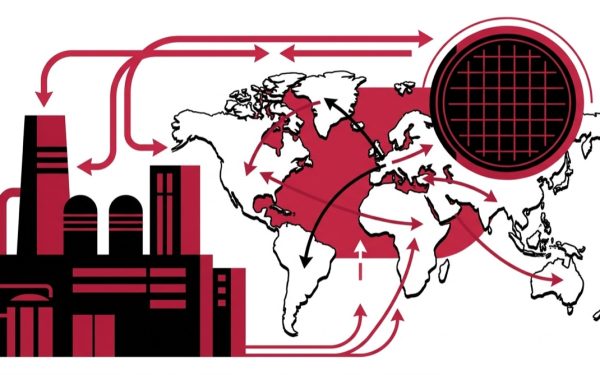
Global conflicts rarely affect markets directly. Instead, the impact travels through a handful of well-understood channels. The diagram below shows the typical transmission path from a geopolitical event to your portfolio and your business costs.
The table below summarises each channel, the typical effect, and why it matters specifically for India.
| Channel | What happens | Why it matters for India |
|---|---|---|
| Energy / oil | Conflict near oil regions or shipping lanes raises crude and gas prices | India imports the bulk of its crude oil, so prices feed straight into fuel, inflation and the import bill |
| Trade flows | Tariffs, export bans and blockades redirect or shrink trade | Affects exporters (IT, pharma, textiles, engineering) and importers of components |
| Supply chains | Factories, ports and chokepoints disrupted; lead times lengthen | Hits electronics, autos, and any firm reliant on imported chips or parts |
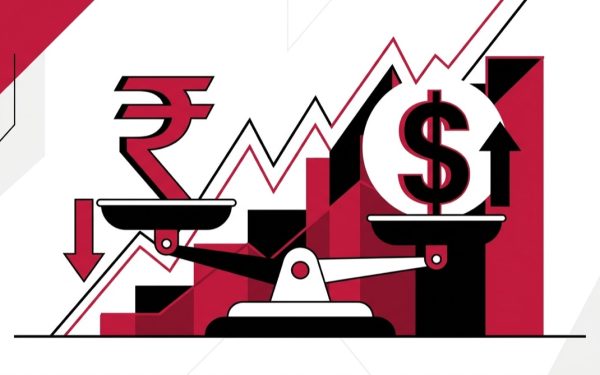
| Currency | Safe-haven flows strengthen the US dollar; risk currencies weaken | A weaker rupee raises the cost of imports and dollar-denominated debt |
| Sentiment / capital flows | Investors sell risky assets; foreign money exits emerging markets | Foreign portfolio outflows can pull down Sensex and Nifty in the short term |
Oil & Energy: The Fastest Shock
Energy is usually the first and sharpest channel through which geopolitics hits the economy. Much of the world’s oil and gas is produced in, or shipped through, politically sensitive regions. A large share of seaborne crude passes through narrow maritime chokepoints — the Strait of Hormuz between the Persian Gulf and the open sea is the most important, and the Suez Canal and the Strait of Malacca also carry enormous volumes. When conflict threatens any of these, traders price in the risk of disruption immediately, and crude can jump within hours.
For India, this matters more than for almost any large economy because the country imports the overwhelming majority of the crude oil it consumes. Higher oil prices ripple outward in a predictable sequence:
Winners and losers within India
An oil shock does not hit every business equally. Companies that consume a lot of energy or transport — airlines, paint and tyre makers, logistics firms, and oil marketing companies whose margins are squeezed when they cannot fully pass on costs — tend to suffer. On the other side, upstream oil and gas producers, and some energy exporters, can benefit from higher prices. This is why a single oil headline can send different stocks in opposite directions on the same day.
Trade, Tariffs & Supply Chains
The second major channel is trade. Governments use economic tools — not just armies — to pursue geopolitical aims. The most common are tariffs (taxes on imports), quotas (limits on quantities), export controls (bans or licences on selling sensitive goods abroad), and subsidies (state support to favour domestic industry). When two large economies impose these on each other — a “trade war” — global supply chains have to adjust.
Why supply chains are the slow-burn risk
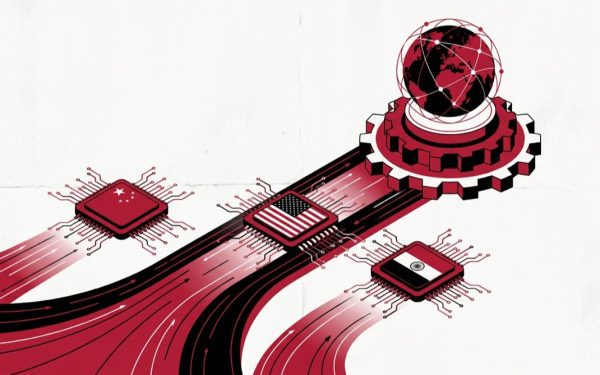
A modern product is rarely made in one country. A smartphone or a car may contain parts and materials from dozens of nations. That efficiency comes with fragility: if one critical input is concentrated in a country that becomes a geopolitical rival, a single export restriction can stall an entire industry. Semiconductors are the classic example — advanced chip manufacturing is highly concentrated, so any tension involving the leading chip-making regions raises alarm worldwide. Critical minerals used in batteries, magnets and electronics are similarly concentrated and have become a strategic pressure point.
In response, companies and governments are pursuing several strategies, summarised below.
| Strategy | What it means | Trade-off |
|---|---|---|
| Friend-shoring | Sourcing from politically aligned countries | More resilient, but often higher cost than the cheapest global source |
| De-risking | Reducing over-dependence on any single country | Diversification adds complexity and duplicate suppliers |
| Reshoring | Bringing production back to the home country | Greater control, but usually higher wages and slower scale-up |
| China-plus-one | Keeping China capacity but adding a second hub (often India or Vietnam) | Spreads risk; India is a frequent beneficiary |
| Stockpiling | Holding strategic reserves of energy or minerals | Buffers shocks, but ties up capital |
For India, the “China-plus-one” trend and the push to build domestic manufacturing (through programmes encouraging local production and electronics assembly) are direct opportunities. As multinationals diversify away from a single manufacturing base, India is one of the countries competing to absorb that shifting capacity.
Sanctions Explained
Sanctions are penalties one or more countries impose on another country, company or individual to change behaviour without going to war. They are among the most powerful peacetime tools in geopolitics, and they directly reshape markets by cutting off buyers, sellers, money or technology.
The main types of sanctions
- Trade sanctions / embargoes: banning or restricting the import or export of certain goods (for example, weapons, oil, or advanced technology).
- Financial sanctions: freezing assets, blocking access to the global banking system, or cutting a country off from international payment networks so it struggles to settle cross-border transactions.
- Targeted (“smart”) sanctions: aimed at specific individuals or entities — freezing their assets and banning travel — rather than a whole population.
- Secondary sanctions: penalties on third-party companies or countries that continue doing business with the sanctioned target, effectively forcing others to choose sides.
- Price caps: a newer tool that limits the price at which a sanctioned country can sell a commodity such as oil, aiming to reduce its revenue while keeping supply flowing.
What sanctions mean for India
India follows an independent foreign policy and weighs each situation on its own merits. In practice, this has meant continuing to buy discounted commodities from sanctioned or pressured sellers when it serves the national interest, while navigating the risk of secondary sanctions and maintaining ties with multiple partners. For Indian businesses, the practical risks are compliance (ensuring you are not dealing with a sanctioned entity), payment (cross-border settlement can become harder), and reputational exposure with Western partners. Firms with global customers usually build sanctions screening into their procurement and finance processes.
How Markets and Investors React
Financial markets are, in part, a real-time vote on the future. When a geopolitical shock hits, investors rapidly reprice risk. A few patterns repeat across most crises.
The classic “risk-off” move
In the first hours and days of a serious conflict, investors typically rush from riskier assets to perceived safety — a behaviour called “risk-off.” Money tends to flow toward traditional safe havens such as gold, the US dollar, and government bonds of large stable economies, while equities — especially in emerging markets — often fall. This is why the Indian rupee can weaken and the Sensex and Nifty can dip when a distant war breaks out: global funds reduce risk everywhere at once.
The historical pattern: sharp but often short
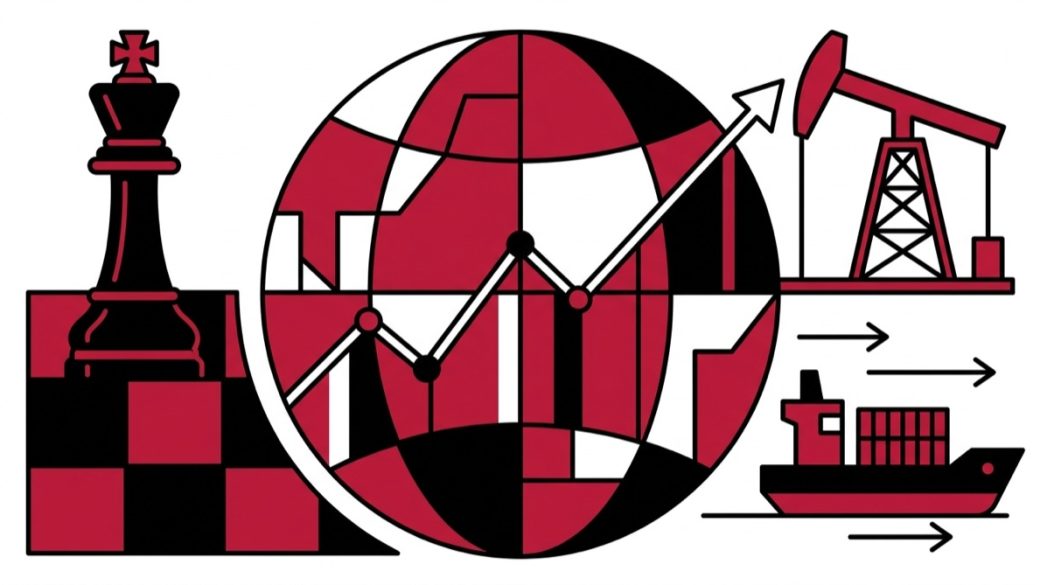
One of the most important lessons from market history is that the initial reaction to a geopolitical shock is frequently sharper than the lasting one. Many conflicts cause a quick sell-off followed by a recovery once investors judge that the broader economy and corporate earnings are not permanently impaired. The exceptions are shocks that cause durable economic damage — for instance, a sustained spike in oil prices that feeds persistent inflation, or a disruption that permanently breaks a critical supply chain. The chart below contrasts these two typical patterns.
Sectors that move
Geopolitical stress reliably rotates money between sectors. Defence, energy producers, and commodity miners often gain when tensions rise, while import-dependent manufacturers, airlines, and consumer-discretionary businesses can come under pressure. Gold and gold-linked assets tend to attract buyers as a hedge. Recognising these rotations helps investors understand why the headline index figure can hide large moves underneath.
Case Studies: How Shocks Have Played Out
History offers a useful, general guide to how markets digest geopolitical events. The patterns below are described in broad terms rather than with precise figures, because the exact numbers vary and should be checked against current data.
Oil-supply shocks
Episodes where war or an embargo threatened a large share of global oil supply have historically produced the most damaging market reactions, because they combined a financial shock with a real economic one: higher energy costs raised inflation and squeezed growth simultaneously. These are the events that tend to leave a lasting mark rather than a quick dip.
Regional conflicts away from key resources
Conflicts that do not threaten major commodity supplies or critical trade routes have often caused only brief market wobbles. Investors price in the human and political seriousness, but if corporate earnings and global growth look intact, markets tend to stabilise and recover.
Trade wars and tariff escalations
Tariff disputes between large economies create a different, slower pattern: bouts of volatility tied to each round of announcements and negotiations, rather than a single sharp crash. The lasting effect is structural — companies redesign supply chains, which can benefit alternative manufacturing hubs such as India over several years.
Pandemics and systemic disruptions
A global health crisis is not a conventional conflict, but it behaves like a geopolitical shock for markets: it disrupts supply chains, closes borders, and triggers a sharp risk-off move, often followed by a strong recovery once policy support arrives and economies reopen. It is a reminder that “geopolitical” risk, in market terms, includes any large cross-border disruption.
India’s Positioning in a Multipolar World
India enters this era of geopolitical competition with a distinctive position. It is a large, fast-growing economy with a vast domestic market, an independent foreign policy, and relationships across rival blocs. Several structural features shape how global conflicts affect — and sometimes benefit — India.
Strategic strengths
- Strategic autonomy: India maintains working relationships with multiple, sometimes opposing, powers, giving it room to act in its own interest rather than being locked into one camp.
- A large home market: Strong domestic demand cushions the economy against external trade shocks more than a small, export-dependent country could manage.
- China-plus-one beneficiary: As companies diversify manufacturing, India is a leading candidate to attract relocating production, especially in electronics and assembly.
- A services and talent base: India’s IT, software and services exports are less exposed to physical supply-chain chokepoints than goods trade.
Key vulnerabilities
- Energy import dependence: Reliance on imported crude oil is India’s single biggest geopolitical exposure — any sustained oil spike hurts.
- Critical-technology gaps: Dependence on imported advanced semiconductors and certain critical minerals leaves some industries exposed to export controls.
- Capital-flow sensitivity: As an emerging market, India can see foreign investors pull money out quickly during global risk-off episodes, pressuring the rupee and equities.
India’s policy response has emphasised reducing these vulnerabilities — diversifying energy sources, building domestic manufacturing and electronics capacity, securing critical minerals, and deepening trade ties with a wide range of partners. For investors and entrepreneurs, the strategic message is that India aims to be a stabiliser and a beneficiary of supply-chain diversification, even as it remains exposed to energy and capital-flow swings.
What It Means for Businesses & Investors
You cannot predict the next conflict, but you can build resilience to geopolitical risk. The principles below apply to both companies and long-term investors.
For businesses
- Map your dependencies. Know where your critical inputs, suppliers and customers are concentrated, and identify single points of failure.
- Diversify suppliers. A second source in a different country — even at slightly higher cost — is insurance against disruption.
- Hedge key exposures. Currency and commodity hedging can smooth the impact of sudden price moves on imports and exports.
- Build buffers. Strategic inventory of critical components reduces the damage from a sudden shortage.
- Screen for compliance. Maintain sanctions and trade-control checks so you do not inadvertently deal with restricted parties.
For investors
- Avoid panic-selling on headlines. History suggests most geopolitical dips recover; selling into a panic often locks in losses.
- Diversify across assets and geographies. A mix of equities, fixed income, and a hedge such as gold reduces the impact of any single shock.
- Watch the real economy, not just the news. The key question is whether a shock will durably raise inflation or break growth — that, not the headline drama, determines lasting market direction.
- Keep an emergency buffer and a long horizon. Staying invested through volatility, with cash set aside for needs, is usually wiser than timing crises.
Frequently Asked Questions
What is geopolitics in simple terms?
Geopolitics is the study of how geography, natural resources, military power and alliances shape the way countries behave and compete on the world stage. In business terms, it explains how events like wars, sanctions and trade disputes change the price of oil, the value of currencies, the flow of goods and the direction of stock markets.
How do global conflicts affect the stock market?
Conflicts usually trigger a “risk-off” reaction: investors move money from riskier assets like shares toward safe havens such as gold, government bonds and the US dollar. This can cause a quick fall in equity markets, including India’s Sensex and Nifty. Historically, most of these dips are short-lived and recover unless the shock causes lasting economic harm, such as a sustained spike in oil prices.
Why do oil prices rise during geopolitical tensions?
A large share of the world’s oil is produced in or shipped through politically sensitive regions and narrow maritime chokepoints. When conflict threatens these supplies or routes, traders price in the risk that supply could be disrupted, pushing crude prices up quickly — often before any actual disruption occurs.
How do sanctions affect business and markets?
Sanctions are penalties — such as trade bans, asset freezes or restrictions on the banking system — used to pressure a country without going to war. They reshape markets by removing a major buyer or seller, which can raise prices or create discounts, and by rerouting trade toward countries still willing to deal with the sanctioned party. Businesses must screen suppliers and customers to stay compliant.
How does geopolitics affect India specifically?
India’s biggest exposure is energy: it imports most of its crude oil, so an oil spike raises inflation, widens the trade deficit and pressures the rupee. India is also sensitive to foreign capital outflows during global risk-off episodes. On the upside, India benefits from the “China-plus-one” trend as companies diversify manufacturing, and its large domestic market cushions external shocks.
Should I sell my investments when a war breaks out?
For most long-term investors, panic-selling on geopolitical headlines is risky, because markets have historically recovered from most short-lived shocks. A diversified portfolio, an emergency cash buffer and a long time horizon usually serve better than trying to time crises. The key question is whether the event will cause lasting economic damage — not how dramatic the headline is. This is general information, not personal advice.
What is “China-plus-one” and why does it matter for India?
“China-plus-one” is a strategy where global companies keep some manufacturing in China but add a second production hub elsewhere to reduce dependence on a single country. India is one of the leading destinations for this shifting capacity, especially in electronics and assembly, making it a structural beneficiary of supply-chain diversification driven by geopolitics.
Disclaimer: This article is for educational purposes only and is not investment/financial advice. Read all scheme/offer documents and consult a SEBI-registered adviser where relevant.