A recession is a significant, broad-based decline in economic activity that lasts more than a few months — visible in falling output (GDP), shrinking incomes, weaker spending, slowing trade and rising job losses. The popular shorthand is “two consecutive quarters of negative GDP growth,” but economists judge a recession by its depth, breadth and duration across the whole economy, not by that rule alone. This guide explains what a recession is, why recessions happen, the warning signs to watch (from an inverted yield curve to layoffs), how a recession differs from a depression and a slowdown, the big historical examples, what it means for India, and how to prepare your own finances.
What a recession actually means ·
Why recessions happen: the main causes ·
Warning signs of a recession ·
The business cycle: boom to bust ·
Recession vs depression vs slowdown ·
Major recessions in history ·
Impact of a recession on India ·
How to prepare your finances ·
FAQ
What a recession actually means
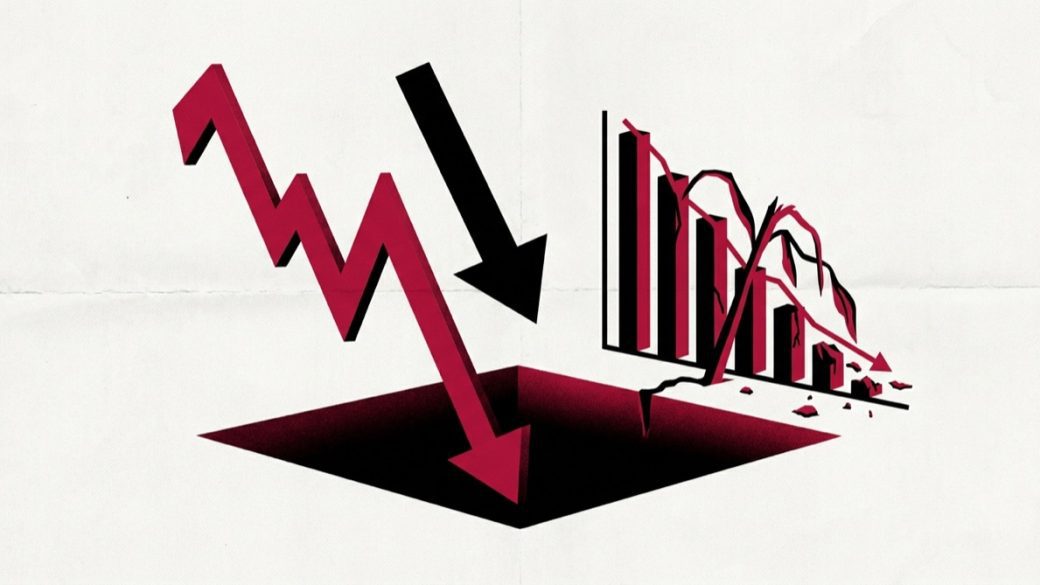
In plain terms, a recession is a period when the economy shrinks instead of grows. Businesses sell less, so they produce less; as production falls, they hire fewer people or cut jobs; as incomes fall, households spend less; and that weaker spending feeds back into still-lower sales. This self-reinforcing downward loop — the opposite of a boom — is the essence of an economic recession.
The popular definition vs the technical definition
You will often hear that a recession is “two consecutive quarters of negative GDP growth.” This technical recession rule is a useful, easy-to-apply benchmark, and many countries (and the financial press) treat it as the working definition. But it is a rule of thumb, not the whole story. A single quarter can be distorted by one-off events, and an economy can suffer real pain without printing two neat negative quarters.
That is why bodies like the United States’ National Bureau of Economic Research (NBER), the semi-official arbiter of US recessions, define a recession more carefully as “a significant decline in economic activity that is spread across the economy and lasts more than a few months.” They look at several indicators together — real income, employment, industrial production, and sales — and weigh depth, diffusion and duration (the “three Ds”). India does not have an official recession-dating committee; analysts here typically watch quarterly GDP/GVA data published by the Ministry of Statistics (MoSPI), alongside the Reserve Bank of India’s (RBI) assessments.
Why recessions happen: the main causes
Recessions rarely have a single cause. Usually several pressures build up and then a trigger tips a slowing economy into contraction. Here are the most common drivers.
1. Demand shocks
When households and businesses suddenly spend and invest less — because of fear, falling wealth, or tighter credit — total demand drops. Factories run below capacity, firms cut output and jobs, and the cycle turns down. The COVID-19 lockdowns of 2020 were an extreme, sudden demand (and supply) shock.
2. Supply shocks (including oil)
A sharp rise in a critical input — most classically crude oil — raises costs across the economy, squeezes margins and household budgets, and can choke growth. The oil shocks of the 1970s are the textbook case. For an oil-importing economy like India, a sustained crude spike is a meaningful recession risk channel.
3. Tight monetary policy and high interest rates
Central banks raise interest rates to fight inflation. Higher rates make borrowing costlier, cool housing and business investment, and slow demand — which is the intended effect. But if rates stay high for too long, the slowdown can deepen into a recession. Much of the recession-watching in the US in 2023–2024 was about whether the Federal Reserve’s rapid rate hikes would tip the economy over.
4. Financial crises and asset-price bubbles
When asset prices (housing, stocks, crypto) inflate on cheap credit and then crash, balance sheets are damaged, banks pull back lending, and a credit crunch follows. The 2008 Global Financial Crisis, triggered by the US subprime mortgage collapse, is the defining modern example.
5. External and geopolitical shocks
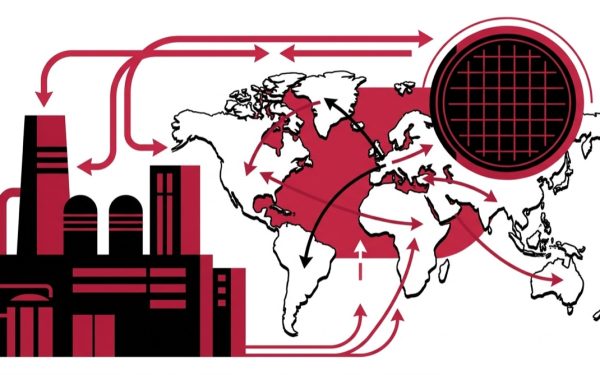
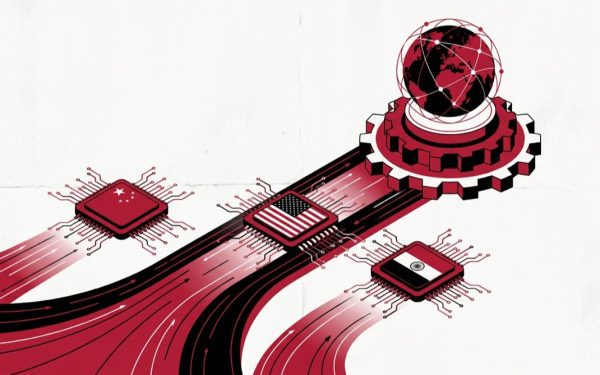
Wars, pandemics, trade wars and sudden tariff increases can disrupt supply chains, raise prices and dent confidence worldwide. Because economies are interlinked, a recession in a large economy (the US, the EU, China) can spread to trading partners through weaker exports and tighter global finance.
Warning signs of a recession
No single indicator predicts a recession perfectly, but economists and investors watch a basket of leading indicators that tend to weaken before a downturn arrives. Here are the most-watched warning signs.
The inverted yield curve
Normally, long-term government bonds pay a higher interest rate than short-term ones, because lenders want more for locking money up longer. When this flips — short-term yields rising above long-term yields — the curve is “inverted.” An inverted yield curve signals that markets expect weaker growth and rate cuts ahead. In the US, an inverted yield curve has preceded most recessions of the past several decades, which is why it is treated as a classic (though not infallible) recession alarm.
Rising layoffs and unemployment
A steady climb in job losses, hiring freezes and rising unemployment claims is one of the clearest signs that businesses expect tougher times. Globally, large-scale tech-sector layoffs in 2022–2024 were widely read as a recession-risk signal. Note, though, that unemployment is partly a lagging indicator — it often keeps rising even after a recession has technically begun.
Other red flags
- Falling manufacturing activity — a Purchasing Managers’ Index (PMI) below 50 signals contraction in factory output.
- Slumping consumer confidence — worried households cut back on big purchases like cars and homes.
- Weak retail sales and auto sales — a real-time read on demand.
- A credit crunch — banks tighten lending and loans become harder to get.
- Stock-market sell-offs — equities often fall ahead of an expected earnings slump, though markets can also give false alarms.
| Indicator | What it measures | Recession signal | Type |
|---|---|---|---|
| Yield curve | Long vs short bond yields | Inversion (short > long) | Leading |
| Unemployment / layoffs | Job losses & hiring | Sustained rise | Lagging |
| PMI (manufacturing) | Factory activity | Reading below 50 | Leading |
| Consumer confidence | Household sentiment | Sharp, sustained fall | Leading |
| Real GDP growth | Total output | Two negative quarters | Coincident |
| Credit growth | Bank lending | Tight, falling credit | Leading |
The business cycle: from boom to bust and back
Recessions are one phase of the business cycle — the natural up-and-down rhythm of any market economy. Understanding the full cycle helps you see where a recession fits and why recoveries follow.
The four phases
- Expansion: growth, rising jobs, investment and confidence.
- Peak: the economy tops out; pressures (inflation, debt, overheating) build.
- Contraction / recession: activity falls, jobs are cut, demand weakens.
- Trough & recovery: the low point, after which growth resumes and a new expansion begins.
Because the cycle repeats, recessions are a recurring — if painful — feature of capitalism, not a one-off accident. Governments and central banks use policy (rate cuts, government spending, tax measures) to soften downturns and shorten them.
Recession vs depression vs slowdown
These three terms are often mixed up. They describe very different severities of economic weakness.
Recession vs slowdown
A slowdown (or “growth recession”) is when the economy still grows, but more slowly than before — say GDP growth easing from 8% to 5%. Activity is still expanding; it is just expanding less. A recession is when the economy actually shrinks (negative growth). For a fast-growing emerging economy like India, the realistic risk in most years is a sharp slowdown rather than an outright contraction, because the long-run growth rate is high to begin with.
Recession vs depression
A depression is a rare, extreme and prolonged recession — far deeper and longer, with mass unemployment and a collapse in output that can last years. There is no precise numerical cut-off, but the Great Depression of the 1930s — with output falling by roughly a quarter and unemployment in the US reaching around one in four workers — remains the benchmark. Ordinary recessions, by contrast, typically last months to about a year and a half and are followed by recovery.
| Feature | Slowdown | Recession | Depression |
|---|---|---|---|
| Growth | Positive but lower | Negative | Sharply negative |
| Typical duration | Variable | Months to ~1.5 years | Several years |
| Job market | Slower hiring | Rising unemployment | Mass unemployment |
| Severity | Mild | Moderate to serious | Severe & rare |
| Example | India 2019–20 slowdown | US 2008–09 | Great Depression 1930s |
Major recessions in history
Looking at past recessions shows the range of causes — from financial bubbles to pandemics — and reminds us that recoveries always followed.
| Event | Period | Main trigger | India’s experience |
|---|---|---|---|
| The Great Depression | 1929–1930s | Stock crash, banking collapse, policy errors | Colonial India hit via collapsing farm prices & trade |
| Oil shock recessions | 1970s | Crude oil price spikes | High inflation; balance-of-payments stress |
| India BoP crisis | 1991 | Foreign-exchange reserves nearly exhausted | Triggered landmark 1991 economic reforms & liberalisation |
| Dot-com bust | 2000–2001 | Tech / internet stock bubble burst | Limited direct hit; IT exports affected |
| Global Financial Crisis | 2008–2009 | US subprime mortgage & banking crisis | Growth slowed but stayed positive; strong policy response |
| COVID-19 recession | 2020 | Pandemic lockdowns (demand + supply shock) | India’s GDP contracted in FY2020–21, then rebounded |
Two patterns stand out for Indian readers. First, in 2008–09, India was not immune — growth slowed and markets fell — but unlike the US and Europe, India avoided a full-blown recession, helped by a large domestic market, a banking system with limited subprime exposure, and aggressive fiscal and monetary stimulus. Second, the COVID-19 shock of 2020 produced India’s sharpest modern contraction as activity froze during lockdown, but it was followed by a strong recovery as restrictions eased.
Impact of a recession on India
India is one of the world’s fastest-growing major economies, but it is also deeply connected to the world through trade, capital flows, services exports and commodity imports. A global recession affects India through several channels — even when India itself avoids a technical recession.
How a global recession hits India
- Exports fall: Weak demand in the US and Europe hurts India’s merchandise and services exports, including IT/software, which is sensitive to Western corporate budgets.
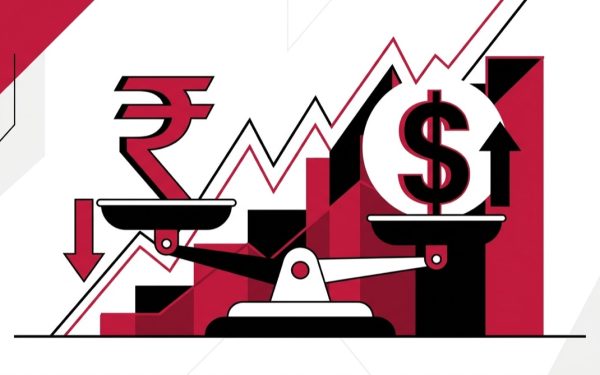
- Capital outflows & a weaker rupee: In a global risk-off mood, foreign investors pull money from emerging markets, pressuring the stock market and the rupee against the dollar.
- Jobs & hiring freezes: Export-linked and startup/tech sectors slow hiring; layoffs rise, as seen during the global tech downturn.
- Remittances & oil: A global slump can dent remittances from Indians abroad, while crude oil prices — a major Indian import — swing with global demand.
What cushions India
India also has real shock absorbers. A large domestic consumption base means growth is less dependent on exports than many peers. The RBI holds substantial foreign-exchange reserves to defend the rupee and manage volatility. And policymakers have room to respond through interest-rate cuts and government spending. This is why, in episodes like 2008–09, India slowed sharply but kept growing.
How to prepare your finances for a recession
You cannot control the economy, but you can recession-proof your personal finances. The goal is simple: stay liquid, reduce risky debt, protect your income, and keep investing through the cycle. Here is a practical checklist for Indian readers.
1. Build an emergency fund
Keep at least 3–6 months of essential expenses (more if your income is irregular) in a safe, liquid place — a savings account, sweep-in fixed deposit, or liquid fund. This is your buffer if income stops during layoffs.
2. Cut high-interest debt
Prioritise paying down expensive debt like credit-card balances and personal loans before a downturn squeezes your cash flow. Lower fixed obligations make a job loss far less dangerous.
3. Protect and diversify your income
Strengthen your job security by upskilling, and consider a side income so you are not dependent on a single source. Keep your professional network and skills current.
4. Keep investing — don’t panic-sell
Recessions and market falls often create long-term buying opportunities. Continuing a disciplined SIP (Systematic Investment Plan) lets you buy more units when prices are low (rupee-cost averaging). Avoid panic-selling quality investments at the bottom and locking in losses. Match your asset mix to your time horizon and risk appetite.
5. Get adequate insurance and avoid over-leverage
Health and term life insurance protect your family from shocks that often hit hardest in bad times. Avoid taking on large new EMIs you could not service if your income dropped.
| Step | Why it matters | Quick action |
|---|---|---|
| Emergency fund | Survives income loss | 3–6 months expenses, kept liquid |
| Reduce debt | Lowers fixed burden | Clear credit cards & costly loans first |
| Protect income | Reduces single-point risk | Upskill; build a side income |
| Keep investing | Buys low, compounds | Continue SIPs; don’t panic-sell |
| Insure & de-leverage | Caps downside shocks | Health + term cover; avoid big new EMIs |
Frequently asked questions
What is a recession in simple words?
A recession is when the economy shrinks for a sustained period instead of growing — businesses sell and produce less, incomes and spending fall, and unemployment rises. The popular rule of thumb is two back-to-back quarters of falling GDP, but economists judge it by the depth, breadth and duration of the decline across the whole economy.
What causes a recession?
Recessions are usually caused by a mix of factors: a sharp drop in demand, supply shocks (such as an oil-price spike), high interest rates used to fight inflation, financial crises and bursting asset bubbles (like 2008), or external shocks such as wars, pandemics and trade wars. Often several pressures build up and a trigger tips a slowing economy into contraction.
What is the difference between a recession and a depression?
A recession is a significant but usually temporary decline in activity, typically lasting from a few months to about a year and a half. A depression is a far rarer, deeper and longer downturn — with mass unemployment and a collapse in output lasting years. The Great Depression of the 1930s is the classic example; there is no fixed numerical cut-off, but a depression is much more severe.
Is an inverted yield curve a reliable recession signal?
An inverted yield curve — when short-term bond yields rise above long-term yields — has preceded most US recessions of recent decades, so it is treated as a classic warning sign. But it is not infallible: it can give false alarms, the lag before a recession varies, and it should be read alongside other indicators like PMI, layoffs and consumer confidence rather than on its own.
How does a global recession affect India?
A global recession reaches India mainly through weaker exports (including IT services), foreign capital outflows that pressure the stock market and the rupee, slower hiring and layoffs in export-linked and tech sectors, and swings in remittances and oil prices. India is partly cushioned by its large domestic consumption base, sizeable foreign-exchange reserves, and room for policy support — which is why it slowed but kept growing during the 2008–09 crisis.
Has India ever had a recession?
India avoided an outright recession during the 2008–09 Global Financial Crisis — growth slowed sharply but stayed positive. Its clearest modern contraction came in 2020, when COVID-19 lockdowns froze activity and GDP fell, followed by a strong rebound. India also faced a severe balance-of-payments crisis in 1991, which triggered its landmark economic reforms.
How should I prepare my money for a recession?
Build an emergency fund of 3–6 months of expenses, pay down high-interest debt like credit cards, protect and diversify your income through upskilling or a side income, keep investing through SIPs instead of panic-selling, and make sure you have adequate health and term insurance while avoiding heavy new EMIs.
Disclaimer: This article is for educational purposes only and is not investment/financial advice. Read all scheme/offer documents and consult a SEBI-registered adviser where relevant.