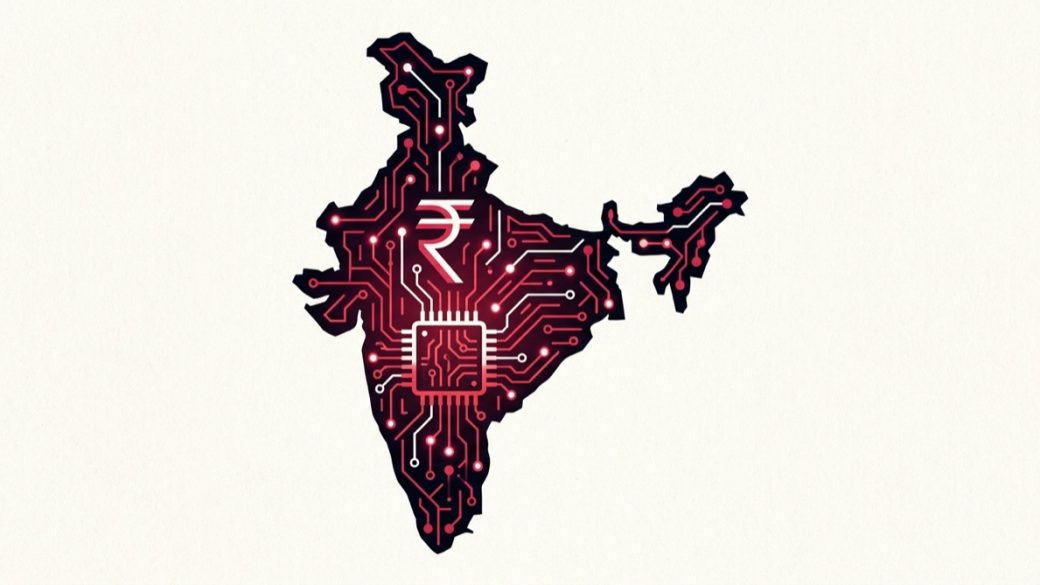
AI in India is moving from pilots to production: the country combines the world’s largest pool of AI talent and developers with a flagship national programme — the IndiaAI Mission — that subsidises GPU compute, builds open datasets, and funds homegrown foundation models. The result is a fast-growing ecosystem where global cloud giants, Indian conglomerates, and a new wave of AI startups are all racing to build “AI for Bharat.”
The state of AI in India (2026) ·
The IndiaAI Mission explained ·
Compute, datasets & foundation models ·
Indian AI startups & sectors ·
Big-tech investments in India ·
AI in IT, BFSI & manufacturing ·
Talent & skilling ·
Challenges & risks ·
FAQ
The state of AI in India (2026)
India has become one of the most closely watched artificial intelligence markets in the world, and for good reason. It is the second-largest internet market on the planet, has a deep bench of engineering talent, and runs population-scale digital systems — Aadhaar, UPI, and the broader India Stack — that generate the kind of data and rails on which AI services can be built and distributed cheaply.
What changed over 2024–2026 is the shift in tone. Earlier, “AI in India” largely meant Indian engineers building AI for foreign companies, or enterprises piloting chatbots. Now there is a serious, funded national push to build sovereign capability: India’s own compute, its own datasets, and its own foundation models tuned for Indian languages and contexts. The umbrella for most of this is the IndiaAI Mission, approved by the Union Cabinet in March 2024 with an outlay of roughly ₹10,371 crore (about US$1.25 billion) over five years.
At the same time, adoption is broadening fast. Generative-AI tools such as ChatGPT, Google’s Gemini, and Anthropic’s Claude have huge Indian user bases, and Indian IT services firms — TCS, Infosys, Wipro, HCLTech — have retrained hundreds of thousands of employees on generative AI to deliver it to global clients. India is consistently among the top countries for developer activity on AI projects and for downloads of major AI apps.
“AI for Bharat”: why language is the centre of gravity
India has 22 official languages and hundreds of dialects, and most of its next billion users are not comfortable in English. So a defining feature of AI in India is the focus on Indic languages — voice and text models that work in Hindi, Tamil, Telugu, Bengali, Marathi, Kannada and more. Initiatives like AI4Bharat (housed at IIT Madras) and startups such as Sarvam AI have made open Indian-language datasets and models a national priority, because that is where the genuinely India-specific value lies.
The IndiaAI Mission explained
The IndiaAI Mission is the central government’s flagship programme to build the country’s AI ecosystem. It is implemented by IndiaAI, an Independent Business Division under the Digital India Corporation, within the Ministry of Electronics and Information Technology (MeitY). Rather than one project, it is a set of connected “pillars,” each tackling a different bottleneck.
What each pillar is trying to fix
- Compute: Build a large shared pool of GPUs so Indian startups, researchers and government can train and run AI without owning hugely expensive hardware. Access is offered to approved users at a subsidised per-hour rate.
- Datasets (AIKosha): A national data platform — branded AIKosha — to make non-personal datasets, models and tools available to developers in one place, so they are not starting from a blank slate.
- Foundation models: Fund the development of India’s own large language and multimodal models, especially ones strong in Indian languages.
- Skilling: Expand AI courses, fellowships and labs (including in smaller towns) through the FutureSkills programme and partner institutions.
- Startup financing & applications: Support AI startups and seed real-world applications in priority sectors like healthcare, agriculture and governance.
- Safe & Trusted AI: Fund tools, frameworks and research for responsible AI — bias testing, watermarking, deepfake detection and governance.
Compute, datasets & foundation models
Three ingredients decide whether a country can build, not just use, AI: compute (GPUs), data, and models. India is pushing on all three at once.
Compute: the GPU pool
Training and serving modern AI needs graphics processing units (GPUs) — chips, largely made by Nvidia, that cost a fortune and are in short supply globally. India’s answer under the IndiaAI Mission is to aggregate tens of thousands of GPUs through empanelled private cloud and data-centre partners, then offer access to startups, researchers and public projects at a heavily discounted rate. The headline goal announced by the government was a pool in the order of tens of thousands of GPUs (initial targets cited around 10,000 and later expanded), making it one of the larger publicly backed AI compute initiatives anywhere.
Data: AIKosha and India Stack
India’s structural advantage is data scale and digital rails. AIKosha is the mission’s datasets-and-models platform; alongside it, India’s digital public infrastructure (DPI) — Aadhaar identity, UPI payments, DigiLocker documents, ONDC commerce — creates standardised, consent-based pipes that AI applications can plug into. The policy emphasis is on using non-personal and anonymised data, and on consent frameworks, to keep this compatible with privacy law.
Models: India’s own foundation models
Under the mission, the government invited and selected Indian teams to build indigenous foundation models. The best-known early winner is Sarvam AI, tasked with building a sovereign, India-first large language model with strong Indic-language ability. Other startups and labs (including Soket AI and others selected across rounds) are building models, voice systems and domain-specific AI. The aim is not necessarily to beat GPT-class models on every benchmark, but to have capable, affordable, India-controlled models — especially for the 22 official languages.
| Building block | India’s approach | Why it is hard |
|---|---|---|
| Compute (GPUs) | Shared, subsidised GPU pool via empanelled cloud partners under IndiaAI | GPUs are costly, import-dependent and globally scarce |
| Data | AIKosha datasets platform + India Stack (Aadhaar, UPI, ONDC) as rails | Privacy, quality, and Indic-language data are limited |
| Models | Funded indigenous foundation models (e.g. Sarvam AI) tuned for Indian languages | Frontier training is expensive; talent competes globally |
Indian AI startups & sectors
India’s AI startup scene has matured from “AI-enabled” wrappers to companies building genuine models, infrastructure and vertical applications. A few names recur across funding rounds and policy discussions in 2025–2026.
Notable Indian AI companies
- Sarvam AI — building sovereign Indic LLMs and voice agents; selected under the IndiaAI Mission to build a foundation model.
- Krutrim — the AI venture from Ola’s founder, building Indic LLMs, cloud and AI chips; one of the first Indian AI firms to reach unicorn status.
- AI4Bharat — an open-source research lab at IIT Madras producing widely used Indic-language datasets and models (a non-profit anchor for the ecosystem).
- Gan.ai, Gnani.ai, Yellow.ai — voice, conversational and synthetic-media AI used by enterprises in India and abroad.
- Soket AI and others — teams selected across IndiaAI rounds to build models and tooling.
(Company status, funding and selection lists change quickly — always verify the latest before citing.)
Where AI is being applied in India
The most active sectors are those with large data, repetitive decisions, and a clear cost or access problem to solve.
Sector snapshots
Healthcare: AI is used for medical-imaging triage (e.g. screening chest X-rays and retinal scans), diagnostics support and hospital operations. India’s scale and doctor shortage make AI screening especially valuable in smaller towns.
Agriculture: Computer vision for crop and pest detection, satellite-and-weather analytics for advisories, and voice assistants in local languages help farmers — a natural fit for “AI for Bharat.”
Education & skilling: AI tutors, language tools and assessment platforms are expanding, supported by government skilling schemes.
Governance: AI-powered translation (e.g. Bhashini-style language tools), grievance handling and document processing are being piloted to make services multilingual and faster.
Big-tech investments in India
India is now a strategic AI bet for every major global technology company — both as a talent base and as a market. Through 2024–2026, the big cloud and AI providers expanded India operations sharply.
- Microsoft announced large multi-year investments to expand cloud and AI infrastructure and to skill millions of Indians in AI.
- Google has deepened AI research and product localisation in India (including Indic-language work in Gemini) and runs major skilling and startup programmes.
- Amazon Web Services (AWS) committed multi-billion-dollar investments into Indian cloud infrastructure through the decade.
- Nvidia partnered with Indian conglomerates (including Reliance and the Tata group) to bring AI computing infrastructure and GPUs into the country.
- OpenAI, Anthropic and other model labs treat India as one of their largest user markets and have moved to expand local presence.
Indian conglomerates are matching this. Reliance (via Jio) is building large AI data-centre capacity in Gujarat, and the Tata group is investing in AI infrastructure and an AI cloud — both working with chipmakers like Nvidia.
| Player | Type | Main AI role in India |
|---|---|---|
| IndiaAI / MeitY | Government | Funds compute pool, datasets, models, skilling, safety |
| Microsoft, Google, AWS | Global cloud | Cloud + AI infrastructure, localisation, skilling at scale |
| Nvidia | Chips | GPUs and AI computing partnerships with Indian firms |
| Reliance Jio, Tata group | Indian conglomerates | AI data centres, AI cloud, infrastructure build-out |
| Sarvam, Krutrim, AI4Bharat | Startups / labs | Indic foundation models, voice, open datasets |
| TCS, Infosys, Wipro, HCLTech | IT services | Deliver enterprise AI to global clients; reskill talent |
AI in IT services, BFSI & manufacturing
IT services: India’s biggest AI export
India’s IT services industry is, in many ways, the country’s largest AI business — not by building frontier models, but by deploying AI for thousands of global enterprises. TCS, Infosys, Wipro and HCLTech have built generative-AI practices, partnered with model providers and cloud platforms, and retrained large parts of their workforces. The near-term productivity gains are concentrated in software development (AI coding assistants), customer support, testing, and back-office automation.
BFSI: banking, financial services & insurance
BFSI is one of the heaviest AI adopters in India. Use cases include fraud detection on UPI and card transactions, credit underwriting using alternative data, AI chat and voice for customer service in multiple languages, and document processing for loans and KYC. The combination of UPI’s transaction volume and India’s lending boom makes real-time AI risk and fraud systems essential rather than optional.
Manufacturing: from “Make in India” to “Make with AI”
Manufacturing AI is earlier-stage but growing under the push for domestic production (Make in India and PLI schemes). Applications include predictive maintenance, computer-vision quality inspection, supply-chain forecasting and energy optimisation. As India scales electronics and semiconductor assembly, factory-floor AI and robotics are expected to expand.
Talent & skilling
India’s single biggest AI asset is people. The country produces a very large share of the world’s STEM and software graduates, ranks among the top nations for AI developer activity on platforms like GitHub, and supplies AI talent to companies worldwide. The flip side is a skills gap at the frontier — there is far more demand for senior machine-learning, MLOps and AI-safety expertise than supply, and top researchers are heavily recruited abroad.
To close the gap, India is leaning on a mix of government and private programmes:
- FutureSkills and IndiaAI skilling — courses, fellowships and data/AI labs, including in non-metro cities.
- Big-tech skilling pledges — Microsoft, Google and others have committed to training millions of Indians in AI fundamentals and tools.
- Academic capacity — the IITs, IIITs and IISc run AI research and degree programmes; IIT Madras anchors AI4Bharat.
- Online learning — a massive Indian audience on global and local platforms is reskilling into AI roles.
Challenges & risks
India’s AI ambition is real, but so are the constraints. Understanding them is essential to a clear-eyed view of the landscape.
| Strengths | Challenges |
|---|---|
| Huge talent and developer base | Shortage of frontier / senior AI researchers; brain drain |
| Population-scale digital public infrastructure (Aadhaar, UPI) | Compute and advanced-chip dependence on imports |
| Large, fast-growing user market | Limited high-quality Indic-language training data |
| Active government mission & funding | Funding for frontier models still small vs US/China |
| Strong IT-services distribution engine | Data-privacy, bias, deepfake and job-disruption risks |
The big watch-items
Compute and chips: India largely imports advanced GPUs and lacks leading-edge chip fabrication, which is a strategic vulnerability the semiconductor mission is trying to address over the long term.
Funding scale: India’s public AI outlay, while significant, is a fraction of what the United States and China spend. India’s bet is on efficiency, open models and applications rather than out-spending rivals on frontier training.
Regulation and safety: India has so far favoured a light-touch, pro-innovation stance over a hard AI law, while building safety tooling and advisories (deepfake and misinformation are live concerns, especially around elections). Expect rules to tighten gradually. (See our explainer on AI regulation and ethics in India.)
Inclusion: The whole “AI for Bharat” thesis can fail if benefits stay concentrated in metros and English speakers. Language coverage, affordable access and digital literacy are the make-or-break factors.
Frequently asked questions
What is the current state of AI in India?
India is in a rapid build-and-adopt phase. It has one of the world’s largest AI talent and developer pools, huge usage of generative-AI tools, and a funded national programme (the IndiaAI Mission) to build sovereign compute, datasets and Indian-language foundation models. Adoption is strongest in IT services, banking and finance, healthcare and retail, and is now spreading into agriculture, manufacturing and government.
What is the IndiaAI Mission?
The IndiaAI Mission is the central government’s flagship AI programme, approved in March 2024 with an outlay of about ₹10,371 crore over five years and run under MeitY. It funds a subsidised GPU compute pool, a national datasets platform (AIKosha), indigenous foundation models, AI skilling, startup support, sectoral applications, and a Safe & Trusted AI pillar.
Which are the top AI companies in India?
Frequently cited Indian AI players include Sarvam AI and Krutrim (foundation models and Indic LLMs), AI4Bharat at IIT Madras (open Indic datasets and models), and voice/conversational firms like Gnani.ai, Gan.ai and Yellow.ai. On the services side, TCS, Infosys, Wipro and HCLTech run very large enterprise-AI practices. Always verify the latest funding and status, as the list changes quickly.
Is the government of India building its own AI model?
Yes. Through the IndiaAI Mission, the government selected Indian startups and teams to build indigenous foundation models with strong Indian-language abilities — Sarvam AI being the best-known early selection. The goal is capable, affordable, India-controlled models for the country’s 22 official languages, rather than necessarily a single frontier model.
How is AI used in India today?
Common uses include fraud detection and credit underwriting in banking, AI coding and customer-support automation in IT services, medical-imaging and diagnostics support in healthcare, crop and pest detection in agriculture, multilingual translation and grievance handling in government, and recommendation and logistics in e-commerce.
What are the biggest challenges for AI in India?
The main constraints are a shortage of senior/frontier AI researchers and brain drain, heavy dependence on imported advanced chips and compute, limited high-quality Indian-language training data, public funding that is small compared with the US and China, and risks around data privacy, bias, deepfakes and job disruption.
Is India a leader in artificial intelligence?
India is a major AI power on talent, adoption and digital infrastructure, and a fast-rising one on policy and homegrown models — but it still trails the United States and China on frontier model development, advanced chips and total funding. India’s distinctive strength is large-scale, multilingual, low-cost AI deployment on top of its digital public infrastructure.
This article is for educational purposes only and is general information about technology and policy, not investment, legal or career advice. Figures and programme details (including the IndiaAI Mission outlay and company selections) can change — verify the latest official sources before relying on them for decisions.