📚 New to this topic? Read our full guide: Indian Economy Explained.
PM MITRA Textile Parks: Bids Near for Rs 20,000 Crore Lucknow and Vansi Projects
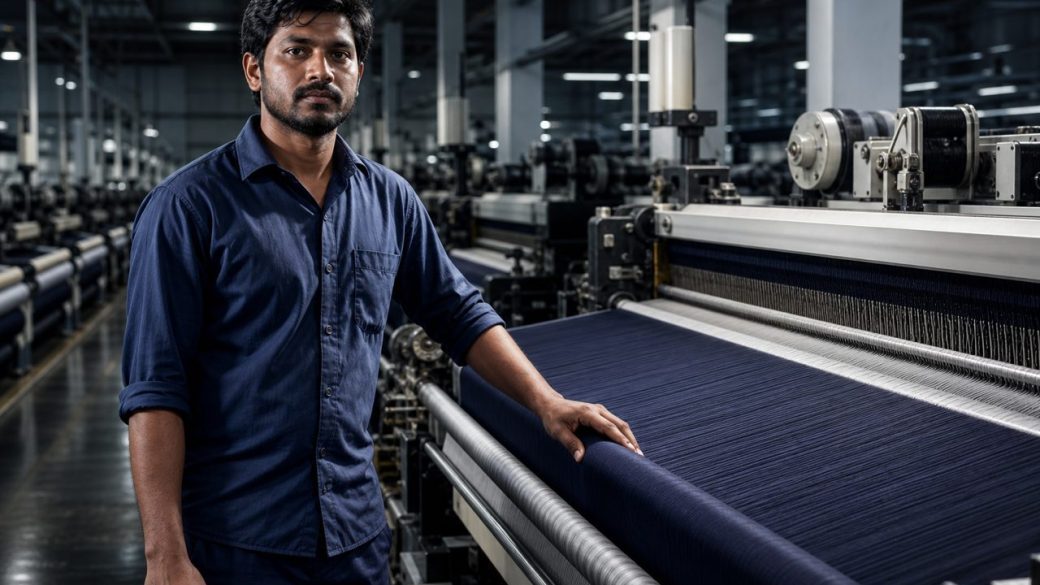
India is about to start the bidding for two big PM MITRA textile parks. A textile park is a large, planned area where many cloth and clothing factories sit next to each other. They share the same roads, power and water. PM MITRA is a central government plan to build such modern cloth-making areas across India.
Together, the two new parks could bring in about Rs 20,000 crore of investment. Investment means money that companies put in to build and grow a business. The two parks will come up at Lucknow in Uttar Pradesh and at Vansi in Gujarat’s Navsari district.
A government group called the PPPAC has cleared the bid papers for both parks. PPPAC is short for the Public Private Partnership Appraisal Committee. It checks deals where the government and private companies work together. This clearance is the “green light” needed before companies can start bidding. Bidding is when companies compete and offer to do the work. This news comes from Financial Express.
What was approved
The PPPAC has just approved the bid papers for the two parks. This opens the door to bidding. In bidding, private builders compete to win the job of building and running each park.
Both parks are “greenfield” projects. Greenfield means they are built from scratch on empty land. They are not added to an old site.
Both parks will use a plan called DBFOT. DBFOT is short for Design, Build, Finance, Operate and Transfer. In simple words, a private company plans the park, pays to build it, and runs it for many years. After that, it hands the park back to the government. The company can keep running it for up to 50 years.
Key facts at a glance
| Detail | Lucknow park (UP) | Vansi park (Gujarat) |
|---|---|---|
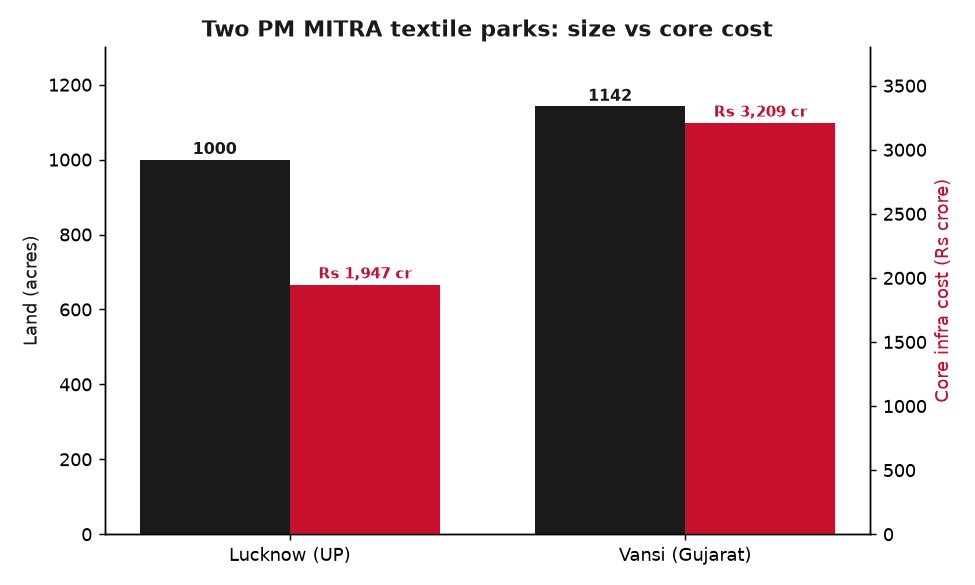
| Land size | About 1,000 acres | About 1,142 acres |
| Core infrastructure cost | Rs 1,946.92 crore | Rs 3,209 crore |
| Ownership of the SPV | Centre 49%, UP 51% | Centre and Gujarat (joint venture) |
| Expected investment each | Around Rs 10,000 crore | Around Rs 10,000 crore |
| Jobs expected each | ~100,000 direct and ~200,000 indirect jobs | |
| Agreement period | Up to 50 years | |
The table mentions an SPV. SPV means “special purpose vehicle.” It is a separate company set up only to build and run one project. Here, the central and state governments own that company together.
How big are these parks?
The Lucknow park will cover about 1,000 acres. It will be built by a special company owned by the Centre and the Uttar Pradesh government together. The Centre will own 49% and the state will own 51%. The main building work is expected to cost Rs 1,946.92 crore.
That money will pay for roads, power, water, housing and logistics. Logistics means moving and storing goods. It will also build ready-to-use “plug-and-play” factory spaces. Plug-and-play means a factory can move in and start work fast. The factory does not have to build everything from scratch.
The Gujarat park at Vansi will be even bigger, at about 1,142 acres. It will also be built by a joint company of the Centre and Gujarat. It is expected to cost Rs 3,209 crore. This money will pay for building work, power, shops and logistics. It will also pay for a shared plant to clean effluent. Effluent is the dirty waste water that factories let out.
Each park is expected to draw about Rs 10,000 crore of investment. Each one should create nearly 100,000 direct jobs and 200,000 indirect jobs. Direct jobs are jobs inside the park. Indirect jobs are extra jobs created around it, like shops and transport.
What the committee asked for
Before clearing the papers, the PPPAC asked for some changes to make the deals stronger. These changes covered who can bid, and checks on the builder’s work along the way. They also covered how land is priced, and what happens if a deal ends early.
The committee also wanted clear rules for the shared waste-water plants. It asked for “zero-liquid discharge” systems. These systems recycle water so that almost none is wasted.
The committee warned about one problem called “front-loading.” This is when a builder makes quick money early by selling land, and then loses interest in finishing the park. The new rules want the builder to keep working steadily for the full 50 years. The project teams agreed to many of these ideas.
Why it matters (especially for India and founders)
Textiles give jobs to a huge number of people in India. They are very important for less-skilled workers and for women. Two new top-quality parks could bring hundreds of thousands of jobs. They could also help India sell more clothes abroad and compete with countries like Bangladesh and Vietnam. Exports means goods that one country sells to other countries. Each park is expected to hold around 500 factory units, big and small.
This is also the first time PM MITRA parks will use the public-private model. In this model, private money pays to build the main roads, power and water. For founders and small factory owners, plug-and-play units make it cheaper and safer to start. (A founder is a person who starts a business.) You just rent a ready space. You do not have to buy land and build from zero. This is part of a bigger plan to make more goods in India. It is the same push behind tech wins like DCM Shriram’s Jhagadia plant joining the WEF Global Lighthouse Network.
There is a worry too. Big building projects can run late. The committee’s warning about “front-loading” shows this risk. Steady money will matter a lot. And smaller players in India still find it hard to raise funds. We saw this in how smaller microfinance lenders are asking the finance ministry for help. (Microfinance lenders give small loans to poor people and tiny businesses.)
FAQ
What is the PM MITRA scheme?
PM MITRA is a central government plan to build large, modern textile parks across India. Each park gives shared roads, power, water, housing and ready-to-use factory spaces. This helps attract cloth and clothing makers.
Where are the two new parks?
One park is at Lucknow in Uttar Pradesh. It will cover about 1,000 acres. The other is at Vansi in Gujarat’s Navsari district. It will cover about 1,142 acres.
How much investment and how many jobs?
Together, the two parks are expected to draw about Rs 20,000 crore. Each park alone should create nearly 100,000 direct jobs and 200,000 indirect jobs.
What is the DBFOT model?
DBFOT means Design, Build, Finance, Operate and Transfer. A private builder builds and runs the park for up to 50 years. After that, it hands the park back to the government.
The takeaway
The clearance for the Lucknow and Vansi parks moves a Rs 20,000 crore textile plan from paper to action. If the bidding goes well, India could get two large factory hubs. That could mean hundreds of thousands of jobs and a stronger place in the world clothing trade. The next test is the bidding itself. The big question is whether private builders will keep building for the long run, and not just chase the quick win.
Source: Financial Express (June 28, 2026).