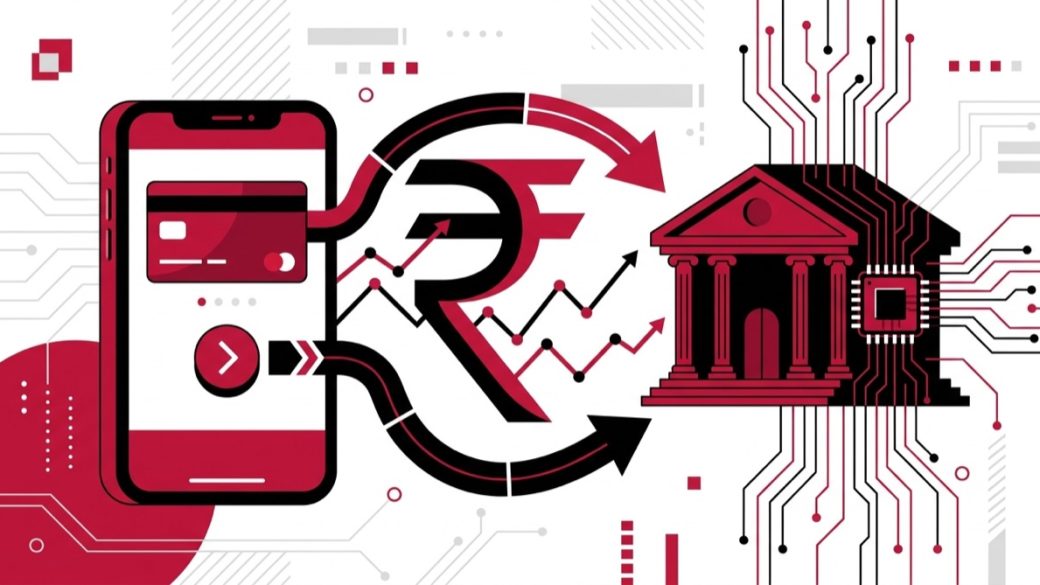
Fintech (short for “financial technology”) is the use of software, apps and digital infrastructure to deliver financial services — payments, lending, investing, insurance and banking — faster, cheaper and to more people than traditional banks can. In India, fintech has moved money from cash and bank branches onto the smartphone, powered by UPI, Aadhaar and a young, mobile-first population. This guide explains what fintech is, its main segments, how India became a global fintech leader, who the key players are, how it is regulated, and where it is heading.
- What is fintech? A simple definition
- The main segments of fintech
- India’s fintech story: UPI, Aadhaar & the JAM trinity
- How fintech companies actually work (and make money)
- Key fintech players in India
- How fintech is regulated: RBI & SEBI
- Trends shaping Indian fintech in 2026
- Frequently asked questions
What Is Fintech? A Simple Definition
Fintech is any technology that improves or automates the delivery and use of financial services. If you have paid a shopkeeper by scanning a QR code, bought a mutual fund inside an app, taken a “buy now, pay later” offer at checkout, or compared insurance policies online, you have used fintech. The word stitches together “financial” and “technology”, and it covers both nimble startups and the digital arms of established banks and insurers.
The simplest way to understand fintech is by contrast with the old way. Traditionally, financial services were delivered through physical branches, paper forms, cash, cheques and human gatekeepers. Fintech replaces those frictions with smartphones, the internet, cloud computing, application programming interfaces (APIs) and data. The result is services that are available 24×7, often instant, usually cheaper, and reachable by people a bank branch never served.
Why fintech matters for India
Fintech is not just a convenience story in India — it is a financial-inclusion story. For decades, hundreds of millions of Indians had little or no access to formal banking, credit or insurance. Mobile phones and digital identity changed the maths: it became viable to open an account, send money, or extend a small loan to a customer in a village without building a branch there. That is why fintech is often described as one of India’s most important pieces of digital public infrastructure, alongside roads and electricity.
The Main Segments of Fintech
Fintech is an umbrella term. Underneath it sit several distinct sub-industries, each solving a different financial need. Understanding these segments is the clearest way to make sense of the landscape, because most fintech companies specialise in one or two of them.
1. Payments and money transfer
The largest and most visible fintech segment. It covers digital wallets, QR-code payments, payment gateways for online merchants, and peer-to-peer transfers. In India this is dominated by the Unified Payments Interface (UPI), which lets you send money instantly between bank accounts using just a phone number or a virtual ID. Apps like PhonePe, Google Pay and Paytm sit on top of UPI.
2. Lending and credit (digital lending)
Fintech lenders use technology and alternative data to assess risk and disburse loans — often within minutes and entirely online. This includes personal loans, small-business loans, “buy now, pay later” (BNPL), and embedded credit offered inside shopping or ride-hailing apps. Many fintechs partner with banks or non-banking financial companies (NBFCs) that actually hold the loan on their books.
3. Wealthtech and investing
Wealthtech makes investing simple and low-cost: app-based stock broking, mutual-fund platforms, robo-advisory (algorithm-driven portfolio advice), and digital gold. By stripping out paperwork and high fees, these platforms brought first-time retail investors into markets in large numbers.
4. Insurtech
Insurtech digitises insurance — letting you compare, buy and claim policies online, and enabling new products like sachet-sized “micro-insurance” or usage-based motor cover. Aggregator platforms and digital-first insurers fall here.
5. Neobanks
Neobanks are digital-first banking experiences delivered entirely through an app, with no physical branches. In India, because a full banking licence is hard to obtain, most neobanks operate in partnership with a licensed bank that provides the underlying account, while the fintech builds the slick app and customer experience on top.
Other segments worth knowing
Beyond the big five sit regtech (technology for regulatory compliance and fraud detection), infrastructure / banking-as-a-service (the API “plumbing” that lets any company embed financial features), and cryptocurrency and blockchain platforms. The table below summarises the core segments.
| Segment | What it does | Everyday example |
|---|---|---|
| Payments | Move money digitally between people and businesses | Scanning a UPI QR code at a shop |
| Lending / digital lending | Assess and disburse loans online using data | An instant personal loan inside an app |
| Wealthtech | App-based investing and advice | Buying a mutual fund SIP on your phone |
| Insurtech | Compare, buy and claim insurance digitally | Buying term cover via an aggregator |
| Neobank | Branchless, app-only banking experience | Opening an account without a branch visit |
| Regtech / infra | Compliance, fraud checks and financial APIs | Digital KYC verification in seconds |
India’s Fintech Story: UPI, Aadhaar & the JAM Trinity
India did not become a fintech powerhouse by accident. It was built on a deliberate stack of public digital infrastructure, often called “India Stack”, and a famous policy combination known as JAM.
The JAM trinity
JAM stands for Jan Dhan (a financial-inclusion drive that opened bank accounts for hundreds of millions of previously unbanked Indians), Aadhaar (a unique digital identity number that enables paperless, biometric verification), and Mobile (cheap smartphones and some of the world’s lowest mobile-data prices). Together, JAM gave a vast population an account, a verifiable identity, and an internet-connected device — the three ingredients a fintech needs to serve a customer remotely.
UPI: the engine of the revolution
The single biggest catalyst was the Unified Payments Interface, launched in 2016 by the National Payments Corporation of India (NPCI). UPI is a real-time payment system that connects bank accounts and lets money move instantly, around the clock, for free for most users. Crucially, it is interoperable — a sender on one app can pay a receiver on any other — and it is open, so any developer can build on it. That openness is why UPI scaled from nothing to billions of transactions a month and turned QR codes into a fixture at everything from malls to roadside tea stalls.
The supporting cast: eKYC, DigiLocker and account aggregators
Other layers compounded the effect. Paperless electronic Know Your Customer (eKYC) made onboarding a customer take minutes instead of days. DigiLocker put official documents in the cloud. The Account Aggregator framework lets you securely share your financial data, with consent, so a lender can underwrite you instantly. Each layer removed a friction that previously made serving small customers uneconomic.
How Fintech Companies Actually Work (and Make Money)
A common question from readers and founders alike is: if a payment app is free to use, how does the business survive? Fintech business models are varied, but most rely on one or more of the revenue streams below.
Common fintech revenue models
| Revenue model | How it earns | Used by |
|---|---|---|
| Merchant fees | A small fee per transaction charged to businesses, not consumers | Payment gateways, card networks |
| Commissions | A cut for distributing a third party’s product | Insurance aggregators, mutual-fund platforms |
| Interest / spread | The gap between lending and borrowing rates | Digital lenders, BNPL providers |
| Subscriptions | Recurring fee for premium features | Neobanks, broking apps |
| Interchange & float | Card interchange and returns on customer balances held | Wallets, neobanks |
Importantly, many fintechs do not hold a banking or lending licence themselves. They partner with regulated entities — a bank for accounts, an NBFC for loans, an insurer for policies — and focus on what they do best: a great app, smart underwriting models, and customer acquisition. This “partnership” model is central to how Indian fintech is structured and regulated.
Key Fintech Players in India
India’s fintech ecosystem spans large listed companies, well-funded private players and the public institutions that build the rails. Below is a non-exhaustive map by segment, intended as orientation rather than a recommendation.
| Segment | Notable Indian players |
|---|---|
| Payments | PhonePe, Google Pay, Paytm, Razorpay (online payments), BharatPe |
| Wealthtech & broking | Zerodha, Groww, Upstox, Angel One |
| Insurtech | PB Fintech (Policybazaar), Acko, Digit |
| Lending / BNPL | Various NBFC-backed apps and bank partnerships |
| Public infrastructure | NPCI (operates UPI), UIDAI (Aadhaar) |
A useful distinction is between B2C fintechs that serve consumers directly (a payments or investing app) and B2B fintechs that sell infrastructure to other businesses — payment processing, banking-as-a-service, KYC and fraud tools. Both are large, fast-growing parts of the market.
How Fintech Is Regulated: RBI & SEBI
Fintech in India is not lightly regulated — it sits squarely under the country’s existing financial regulators, each owning a slice of the map. Understanding who regulates what is essential, because it determines what a fintech can and cannot legally do.
The Reserve Bank of India (RBI)
The RBI is the central bank and the primary regulator for payments, digital lending, wallets, NBFCs and banks. It sets rules on KYC, data localisation (storing payment data in India), and how fintechs may partner with lenders. The RBI’s digital-lending guidelines, for example, require that loan money flows directly between the borrower and a regulated lender, with transparent disclosure of fees — a direct response to earlier abuses by unregulated lending apps. The RBI also runs a regulatory sandbox that lets firms test innovations under supervision.
The Securities and Exchange Board of India (SEBI)
SEBI regulates the securities markets, so it governs wealthtech, stock-broking apps, investment advisers and mutual-fund distribution. A broking or robo-advisory fintech must comply with SEBI’s registration, disclosure and conduct rules.
Other regulators and bodies
Insurance fintechs answer to the Insurance Regulatory and Development Authority of India (IRDAI). Pension products fall under the PFRDA. NPCI, while not a regulator, sets the operating rules for UPI and other retail payment systems under RBI oversight. The table below summarises the split.
| Regulator / body | What it oversees in fintech |
|---|---|
| RBI | Payments, wallets, digital lending, NBFCs, banks, the Digital Rupee |
| SEBI | Broking, wealthtech, investment advice, mutual-fund distribution |
| IRDAI | Insurance and insurtech products |
| PFRDA | Pension and retirement products |
| NPCI | Operates UPI and retail payment rails (under RBI) |
For consumers, the practical takeaway is simple: prefer apps and lenders that clearly disclose which regulated bank, NBFC or insurer stands behind them. That disclosure is both a legal requirement and a good safety signal.
Trends Shaping Indian Fintech in 2026
Fintech is a moving target. As of 2026, several forces are reshaping the sector in India.
UPI goes global and gets credit features
India has been signing arrangements to let UPI work for payments in other countries, and credit lines are increasingly being linked to UPI — letting users tap small, pre-approved credit at the point of payment rather than only paying from a bank balance.
The Digital Rupee (CBDC)
The RBI’s central bank digital currency — the Digital Rupee — has moved from pilot toward wider use. Unlike private crypto, it is sovereign money in digital form, and it could reshape how payments and settlement work over time.
AI, account aggregators and embedded finance
Artificial intelligence is being used for credit scoring, fraud detection and customer support. The Account Aggregator network is making consent-based data sharing mainstream, enabling more accurate, lower-cost underwriting. And “embedded finance” — putting payments, credit or insurance directly inside non-finance apps like e-commerce and mobility — is becoming the default way many Indians encounter financial products.
From growth to profitability and tighter rules
After years of growth-at-all-costs, investors now reward sustainable unit economics, and the RBI has tightened oversight of lending, data and partnerships. The maturing phase favours compliant, well-capitalised players over those chasing scale alone.
Frequently Asked Questions
What is fintech in simple words?
Fintech is technology that delivers financial services — like payments, loans, investing and insurance — through apps and the internet instead of physical bank branches and paperwork. Paying by UPI QR code or buying a mutual fund in an app are everyday examples of fintech.
What are the main types of fintech?
The main segments are payments and money transfer, lending (digital lending and BNPL), wealthtech and investing, insurtech, and neobanks. Supporting categories include regtech (compliance and fraud), financial infrastructure or banking-as-a-service, and crypto/blockchain platforms.
How do fintech companies make money if their apps are free?
Even when consumer use is free, fintechs earn through merchant transaction fees, commissions for distributing products, the interest spread on loans, premium subscriptions, card interchange, returns on balances held, and data or infrastructure services sold to other businesses.
Is fintech safe to use in India?
Reputable fintechs operate under RBI, SEBI or IRDAI regulation and partner with licensed banks, NBFCs or insurers. To stay safe, use well-known apps, check which regulated entity backs the service, never share OTPs or PINs, and be cautious of unregulated lending apps that promise instant loans with hidden charges.
What is the difference between fintech and a bank?
A bank is a licensed institution that holds deposits and lends money under strict capital rules. A fintech is usually a technology company that builds the app and customer experience, often partnering with a bank or NBFC that actually holds the money or the loan. Some functions overlap, but most Indian fintechs are not banks themselves.
Why is India considered a global fintech leader?
India combined open public digital infrastructure — Aadhaar identity, Jan Dhan bank accounts, cheap mobile data and the interoperable UPI payment system — with a vast, young population. This “public rails, private innovation” model let fintechs serve hundreds of millions of people quickly and cheaply, a model other countries now study.
Disclaimer: This article is for educational purposes only and is not investment/financial advice. Read all scheme/offer documents and consult a SEBI-registered adviser where relevant.