Key takeaways
- The US debt crisis is the fear that America may owe too much money.
- That debt did not always weaken the country. Early leaders used it to build trust.
- Alexander Hamilton pushed the federal government to take over war debts in the 1790s.
- That move helped create a market for US bonds, which are government IOUs.
- Today, the same system still matters because global investors treat US debt as a safe place.
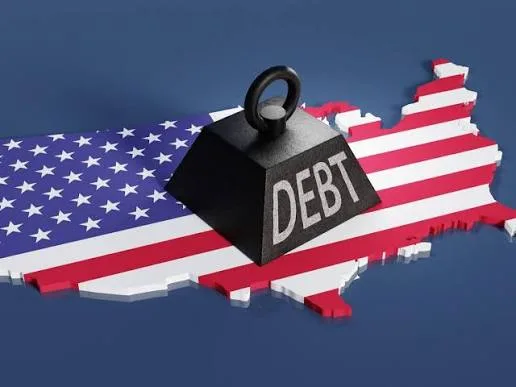
The US debt crisis is the worry that the United States may borrow so much that it risks trust, higher costs, or political chaos. But debt is not just a danger. In early US history, debt also became a tool that helped turn a fragile new country into a financial power.
Why are people talking about the US debt crisis now?
People use the phrase US debt crisis when they fear the government owes too much and may struggle to manage it. The US government borrows by selling bonds. Bonds are basically IOUs that promise repayment later, with interest.
Right now, America carries debt above $35 trillion. That number is huge, so it grabs attention. Also, interest costs have climbed as rates rose, which means the government pays more just to service old borrowing.
There is another reason for the noise. Congress often fights over the debt ceiling. The debt ceiling is a legal cap on federal borrowing. If lawmakers delay action, markets get nervous because the US could miss payments by accident.
Still, history shows something surprising. Debt helped build the country’s power in the first place. That’s why the current US debt crisis debate is not just about numbers. It is also about trust.
How did Alexander Hamilton use debt to build the US?
After the Revolutionary War, the new United States was a mess financially. The national government owed money. States owed money too. Many soldiers and lenders had paper claims, but those claims traded at steep discounts because people doubted they would be paid.
Then Alexander Hamilton stepped in as the first Treasury secretary. The Treasury is the part of government that handles money. In 1790, he pushed a plan for the federal government to take over, or assume, state war debts.
That sounds dry, but it changed everything. Hamilton wanted one strong national credit system, not 13 shaky ones. Credit means trust that a borrower will pay back what it owes.
His idea angered some rivals, but it won support after a political bargain. In simple terms, the federal government would honor old debts in full. As a result, investors had a reason to trust the new nation.
That trust mattered more than the paper itself. Once people believed the government would pay, those debts became valuable assets. Assets are things with value that people can own or trade.
What changed after Hamilton’s debt plan?
Hamilton’s plan helped create a real market for US government bonds. A market is simply a place where people buy and sell. Investors at home and abroad began to see federal debt as safer than many other bets.
That gave the young country three big advantages. First, it could borrow again in emergencies. Second, it tied wealthy lenders to the success of the federal government. Third, it helped push power away from the states and toward Washington.
Think of it like this: if 13 kids each promise to pay you back, you may worry. But if one bigger, stronger team makes the promise, you feel better. That was the logic behind the move Hamilton made during an early US debt crisis.
Over time, the system grew. The US created deeper capital markets. Capital markets are places where money is raised for long-term use. Banks, businesses, and railroads later benefited because the government had set a basic rule: American promises should be trusted.
US debt story: then and now1790 planTodayDebt unified$35T+Scale
Does debt always make a country weaker?
No. That is the key lesson in this story. Debt can be harmful if investors stop trusting the borrower. But debt can also strengthen a country if it is managed well and backed by a strong economy.
The United States still enjoys that trust today. US Treasury bonds remain a global benchmark. A benchmark is a standard others use for comparison. Many banks, pension funds, and central banks hold them because they are seen as safe and easy to trade.
For example, foreign holders owned roughly $9 trillion in US Treasury securities in recent official data. Treasury securities are different types of US government debt. That is a giant vote of confidence, even while arguments over the US debt crisis keep growing louder.
But trust is not automatic. It depends on stable politics, regular payments, and a large economy. If those things weaken, borrowing gets more expensive. Then debt can snowball faster.
What makes today’s US debt crisis different from the 1790s?
Today’s America is far richer and more complex than the early republic. Its debt is also much larger in raw numbers. In 1790, the challenge was to build credibility from scratch. Now, the challenge is to protect credibility that already exists.
There is also a scale problem. Public debt held by investors is now more than 90% of US GDP in many estimates. GDP means gross domestic product, which is the total value of goods and services a country makes. That ratio helps people compare debt with the size of the economy.
Interest costs are rising too. In recent federal budget data, net interest has moved above $800 billion a year. That is money spent on past borrowing, not on roads, schools, or defense.
Meanwhile, the dollar remains the world’s top reserve currency. A reserve currency is the money countries keep for trade and savings. Because of that, the US can borrow more easily than most nations can. But that privilege is not a magic trick. It lasts only while trust lasts.
| Topic | 1790s | Today |
|---|---|---|
| Main problem | No national credit | Too much borrowing |
| Key asset | Assumed war debt | Treasury bonds |
| Main goal | Build trust | Keep trust |
| Political risk | State-federal fights | Debt ceiling standoffs |
Why does this matter outside the US?
The US debt crisis matters far beyond America because US bonds sit at the center of global finance. If investors panic, borrowing costs can jump around the world. Stocks can swing too, while currencies and commodity prices may move sharply.
India feels these waves as well. When US yields rise, global money often shifts back to dollar assets. Yields are the return investors earn on bonds. That can affect emerging markets, including India’s currency and capital flows.
If you want a simple example of why debt levels matter at home too, our report on household sector debt climbing to 45.5% of GDP shows how borrowing changes risk. And our story on HDFC Bank’s loan and deposit growth explains how credit expands in the real economy.
Energy markets can react as well because dollar moves affect trade and imports. You can see that in our coverage of how the US remained India’s largest LPG supplier. Trade ties matter too, as shown in our piece on India’s planned FTAs with Canada, Mexico, and Brazil.
So, is the US debt crisis a collapse story or a trust story?
It is both, but trust comes first. The clearest answer is this: the US debt crisis becomes dangerous only if investors stop believing the US will manage its finances and pay on time. That is the same truth Hamilton understood more than 200 years ago.
His lesson was simple. Debt is not just a bill. It is also a promise. If the promise holds, debt can support power. If the promise breaks, debt becomes a threat.
You can read the historical background at the US Treasury’s archive of Hamilton’s Report on Public Credit. For current debt totals, the US Treasury’s Fiscal Data portal tracks the numbers.
FAQs
What is the US debt crisis?
It is the fear that US government borrowing has become too large or too risky. People worry about higher interest costs and political fights over repayment.
How did Hamilton deal with early US debt?
He asked the federal government to take over state war debts and pay them in full. That helped build trust in the new nation’s finances.
Why do investors still buy US debt?
They believe the US will pay on time, and the market is huge and easy to trade. So Treasury bonds still act like a safe parking spot for money.
Get the day’s top stories in your inbox
One concise email. No spam, unsubscribe anytime.