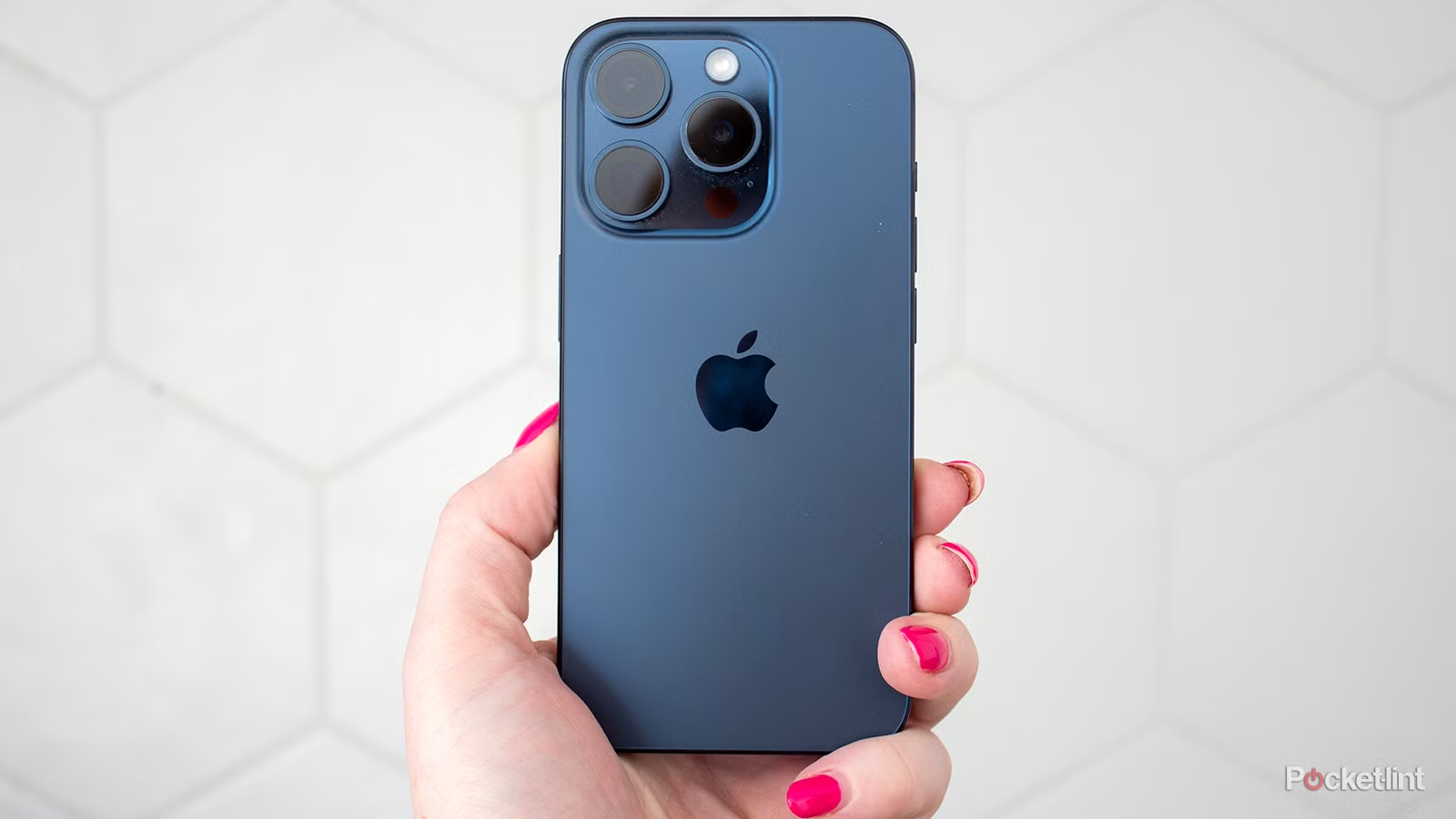
The iPhone 18 Pro price may go up if Apple tries to protect its margins. iPhone 18 Pro price is the amount buyers pay for Apple’s top phone. The big question is simple. Will loyal fans keep buying if the cost climbs again?
Key takeaways
- Apple may test a higher iPhone 18 Pro price to protect profit.
- Margins mean profit per phone after Apple pays its costs.
- Premium buyers often accept small increases, but there is a limit.
- Even a $100 rise can matter when millions of phones are sold.
Why is the iPhone 18 Pro price in focus?
Apple sells the iPhone as a premium product, which means a top-end device with a high price. That strategy works because many buyers trust the brand. They upgrade for the camera, chip, battery, and status. But trust is not endless, so price jumps always carry some risk.
The Forbes report points to a simple tension. Apple wants to keep margins healthy, but it also wants to avoid scaring away buyers. A margin is the money left after costs. If parts, wages, shipping, or tariffs rise, Apple has two choices. It can eat the cost, or pass some of it on.
This matters because the Pro line does a lot of heavy lifting. It often brings in more money per sale than the base iPhone. For example, a $100 increase on 10 million phones would add $1 billion in revenue. That does not all become profit, but it shows why pricing matters so much.
How does Apple think about margins?
Apple rarely talks about one phone’s exact profit. Still, investors watch gross margin very closely. Gross margin is the share of sales money left after making the product. If that number slips, Wall Street notices fast.
Let’s use a simple example. If Apple sells a phone for $1,000 and spends $600 to make and deliver it, the gross margin is 40%. If costs rise to $650, the margin falls to 35%. Apple can accept that hit, but many big firms don’t like shrinking margins.
That is why the iPhone 18 Pro price has become a real talking point. Apple may believe its richest and most loyal customers can handle a higher price. In fact, the Pro buyer is not the same as a bargain hunter. That group often pays more for storage, accessories, and service plans too.
Example: margin pressure on a $1,000 phone40%35%45%Old marginHigher costIf price rises
Would buyers really accept a higher iPhone 18 Pro price?
Some probably would, because Apple has trained customers to expect a premium feel. The Pro models stand above the regular versions. They usually get the best camera tricks and the flashiest materials first. That helps Apple argue that the extra money buys something special.
Still, there is a ceiling. A ceiling is the point where buyers say no. If a phone starts to feel too expensive, some people wait another year. Others buy the older model at a discount. That could hurt upgrade numbers, even if profit per phone improves.
The smartphone market is also more mature now. Mature means most people already own one, so growth slows down. In that kind of market, companies fight harder for each upgrade. A price move that worked in 2021 may not work the same way in 2026.
What numbers should readers watch?
The first number is the launch price itself. Many people watch for a jump of $50 or $100. That may sound small, but on a family plan it adds up fast. Buy two phones, and a $100 increase becomes $200 before tax.
The second number is storage. Apple often uses storage tiers to lift the final bill. A tier is a step in pricing. If the base Pro starts at one price but nudges buyers toward a higher storage option, the real average selling price can rise more than the headline suggests.
The third number is unit sales. Unit sales means how many phones Apple actually sells. If price rises 8% but sales fall 2%, Apple may still come out ahead. But if sales drop 10%, that higher sticker could backfire.
| Scenario | Phone price | Units sold | Revenue |
|---|---|---|---|
| Current example | $1,000 | 10 million | $10 billion |
| Price up $100 | $1,100 | 10 million | $11 billion |
| Price up $100, units down 10% | $1,100 | 9 million | $9.9 billion |
Why does this matter beyond Apple fans?
Apple often sets the mood for the whole phone market. When Apple pushes prices higher, rivals watch closely. Some copy the move. Others use it as a chance to look cheaper. Either way, the iPhone 18 Pro price can shape how the premium market behaves.
There is also a wider consumer lesson here. Big brands test loyalty when costs rise. We’ve seen that in other sectors too, from finance to transport. For example, our report on HDFC Bank’s Q1 loan and deposit growth shows how closely markets track business momentum. And our story on the modified UDAN scheme shows how pricing and access can change who buys what.
Apple’s choice also lands at a time when shoppers already feel stretched. That’s why this story has a simple human angle. People don’t just ask what a phone can do. They ask whether it is worth one more chunk of their monthly budget.
What should buyers do if the iPhone 18 Pro price rises?
First, don’t panic. Launch rumours and strategy talk are not the same as a final price list. Wait for the official announcement from Apple. The company’s newsroom and investor material are the best places to check, such as Apple Newsroom and Apple Investor Relations.
Next, compare the Pro with last year’s model. Often, an older iPhone drops in price after a launch. That can be a smart buy, especially if the new features feel small. Also look at trade-in deals, because those can soften the blow.
It helps to think in plain numbers. If the iPhone 18 Pro price rises by $100 and you keep the phone for 36 months, that is about $2.78 more per month. For some people, that feels fine. For others, it is the moment to skip the upgrade.
This debate fits a bigger pattern in tech. Companies keep adding premium layers to protect profits. We have seen similar pressure in software and AI too, including our coverage of Microsoft’s latest Copilot overhaul and Kling AI’s big funding round. The products change, but the question stays the same. How much more will customers pay?
What is the clearest takeaway on iPhone 18 Pro price?
Here is the plain answer readers can quote: if Apple believes loyal Pro buyers will stay, it may raise the iPhone 18 Pro price to defend margins. That means more profit per device, but also more risk if buyers finally push back.
So this is not just a gadget story. It is a test of brand power. Apple may learn that premium trust still holds strong. Or it may learn that even its biggest fans have a number they will not cross.
FAQs
What does iPhone 18 Pro price mean?
It means the retail price buyers pay for Apple’s iPhone 18 Pro. That is the sticker price before extras like tax or accessories.
Why would Apple raise the iPhone 18 Pro price?
Apple may do it to protect margins. Margins are profit after costs, and those costs can rise for parts, shipping, or tariffs.
How can buyers save money if the price goes up?
They can keep an older phone longer, buy last year’s model, or use a trade-in deal. Storage choice also matters, because bigger versions cost more.
Get the day’s top stories in your inbox
One concise email. No spam, unsubscribe anytime.