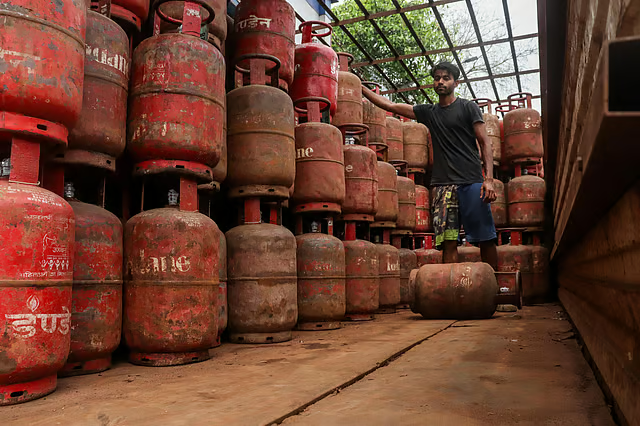
The United States firmly retained its position as India’s largest supplier of liquefied petroleum gas (LPG) in June 2026. The surge in American shipments highlights New Delhi’s rapid, strategic shift to diversify its energy basket away from traditional West Asian suppliers following geopolitical disruptions around the crucial Strait of Hormuz.
According to data from commodity analytics firm Kpler, India’s energy sourcing patterns underwent a major transformation during the month:
1. The June Import Numbers
The volume of cooking gas arriving from the US reached an all-time record high, heavily outpacing traditional Gulf exporters:
- US Inflow: India imported 773.78 thousand metric tonnes (TMT) of LPG from the US in June, marking a sharp 19.4% increase from May.
- Total Import Volume: Driven by the American influx, India’s overall LPG imports rose by 3% month-on-month to 1,191 TMT.
- The Gulf Footprint: The UAE held onto its spot as the second-largest supplier, with its shipments recovering slightly to 157 TMT (up from 134.7 TMT in May). Meanwhile, Saudi Arabia and Kuwait each contributed 64 TMT to the monthly mix.
2. Why Sourcing Patters Shifted So Quickly
Historically, India relied on West Asian producers to cover nearly 90% of its imported LPG requirements. However, the recent outbreak of conflict in West Asia and subsequent transit blockades exposed massive supply chain vulnerabilities.
To protect the domestic household cooking fuel supply, state-run oil marketing companies rapidly ramped up spot-market purchases from the US. This structural shift was further supported by a milestone long-term agreement signed in late 2025, which locks in 2.2 million tonnes of US LPG annually starting in 2026.
3. Broader Security Defenses: Expanding the Basket
While the interim opening of the Strait of Hormuz has stabilized near-term crude and fuel availability through August, Indian energy planners are treating the diversification strategy as a permanent policy.
Beyond the United States, India has aggressively expanded its sourcing network to pull in regular cargoes from alternative international players, including Oman, Argentina, Nigeria, Algeria, and Egypt. This distributed supply network ensures that even as regional tensions fluctuate, the world’s second-largest importer of LPG can successfully buffer its domestic consumption against sudden transit shocks.
Get the day’s top stories in your inbox
One concise email. No spam, unsubscribe anytime.