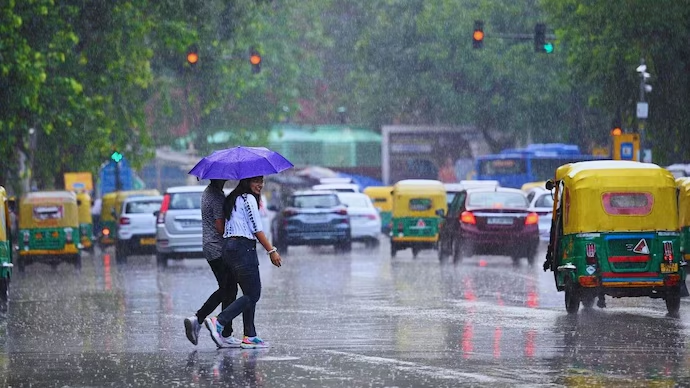
Monsoon deficit means India got less rain than usual in a key season. This year, the monsoon deficit in June reached about 40%, which is a big gap. That matters because June helps farmers start sowing. Now, July rain will decide how much of that loss India can make up.
Key takeaways
- India ended June with rainfall about 40% below the long-period average.
- June is the opening month of the main rainy season, so weak rain can delay sowing.
- July is the most important month now because it usually brings the biggest chunk of monsoon rain.
- Farmers, food prices, and reservoirs could all feel the impact if the monsoon deficit stays large.
Why is the monsoon deficit a big deal?
The southwest monsoon is India’s main rainy season. It usually runs from June to September. Those four months bring about 70% of India’s yearly rain, according to the India Meteorological Department.
So when June starts weak, people pay attention fast. Farmers need early rain to prepare fields and plant seeds. If rain arrives late or stays patchy, sowing can slow down.
A deficit means rainfall is below the long-period average. That is just the usual average built from many years. In plain words, India got much less rain than it normally does in June.
How bad was the June monsoon deficit?
The key number is 40%. That means June rainfall was around two-fifths below normal by the end of the month. Put simply, if a place expected 10 buckets of rain, it got only about 6.
That is a sharp shortfall for the first month of the season. June rain helps kick-start kharif sowing. Kharif crops are crops planted in the rainy season, like rice, soybean, cotton, and pulses.
India’s monsoon does not behave the same way everywhere. Some areas may get heavy bursts, but many others can stay dry. So a national monsoon deficit can still hide big state-by-state swings.
June monsoon pictureNormal rainfall100%Actual rainfall60%Deficit: 40%
Why does July matter more now?
July is often the heaviest rain month of the monsoon. Because of that, it can repair a weak June. A good July will not erase all trouble, but it can greatly reduce the monsoon deficit.
Think of the monsoon like a four-part exam. June is only the first paper. But July usually carries a lot of marks, so it can lift the final score.
This is why markets, farm officials, and state governments watch July so closely. If rainfall improves, sowing can catch up. If it does not, crop stress may spread.
What does this mean for farmers and crops?
Farmers make time-based choices. They decide when to plough, when to sow, and which crop to plant. Weak June rain can push all those choices back by days or even weeks.
Rice is especially sensitive in many regions because it needs standing water early on. Cotton, soybean, and pulses also depend on timely rain. If fields stay dry, farmers may switch crops or reduce the planted area.
That can matter beyond villages. Less sowing can mean lower output later. Then food prices may rise, especially for items like pulses, vegetables, or edible oils.
India has already been watching food inflation closely. Inflation means prices are rising over time. Weather shocks can make that worse because less supply often means higher prices.
Could the monsoon deficit hit reservoirs and power too?
Yes, because monsoon rain does more than water farms. It also fills dams and reservoirs. Those stores support drinking water, irrigation, and hydropower later in the year.
Hydropower means electricity made from flowing water. If reservoirs fill slowly, power output can come under pressure. That risk gets bigger when summer demand is already high, as seen in our report on Delhi power demand hitting 8,748 MW.
Low rain can also raise pressure on groundwater. Groundwater is water stored under the soil. Farmers pump it up with borewells, but that costs money and can empty local reserves faster.
What numbers should readers watch next?
Three sets of numbers matter most in the next few weeks. First, the all-India rainfall gap in early and mid-July. Second, the pace of kharif sowing. Third, reservoir storage levels.
If the rainfall shortfall narrows from 40% to something much smaller, that would be a relief sign. If sowing catches up, crop worries may ease too. But if the monsoon deficit stays deep, stress will build.
| What to watch | Why it matters |
|---|---|
| June rainfall deficit: 40% | Shows the season started weak |
| Monsoon season: June to September | Brings most of India’s yearly rain |
| July rainfall trend | Can reduce or worsen the shortfall |
| Kharif sowing progress | Signals likely crop output later |
How does this fit into the wider economy?
Rain affects more than farming. It can shape rural spending, food prices, and even growth. Rural spending means how much people in villages buy, from seeds to soap to motorcycles.
When crops do well, farm incomes often improve. Then spending rises in nearby markets too. But when rain is weak, families may delay purchases and cut costs.
That is one reason monsoon news matters to investors and policymakers. Policymakers are officials who make public decisions. They watch rain because it can change inflation, farm output, and subsidy needs.
For a wider look at factory momentum, see our piece on May IIP jumping 5.1%. For energy storage needs tied to weather swings, read our report on battery storage capacity in India.
What should happen next?
The next step is simple to say, though not easy to predict: India needs better rain distribution in July. Distribution means where the rain falls, not just how much falls overall. One week of floods in one area cannot fully fix dryness somewhere else.
The best outcome is broad, steady rain across major farm belts. That would help planting, lower pressure on irrigation, and calm price worries. The worst outcome is more uneven rain, with long dry gaps between sharp downpours.
Here is the core point: A 40% June monsoon deficit is serious, but it is not the final score. July now matters most because it can still rescue sowing, refill water stores, and reduce the risk to food prices.
Readers can track official updates from the Agriculture Ministry and the IMD. Those reports will show whether the monsoon deficit starts shrinking or turns into a bigger seasonal problem.
FAQs
What is a monsoon deficit?
A monsoon deficit means rainfall is below the normal average for a period or region. In this case, June rain was about 40% lower than usual.
Why is July so important for the monsoon deficit?
July usually brings a large share of monsoon rain. So strong July showers can reduce the shortfall and help farmers catch up on sowing.
How can a monsoon deficit affect regular people?
It can affect crop output, food prices, water storage, and rural incomes. If the shortfall lasts, people may feel it through costlier food and tighter water supplies.