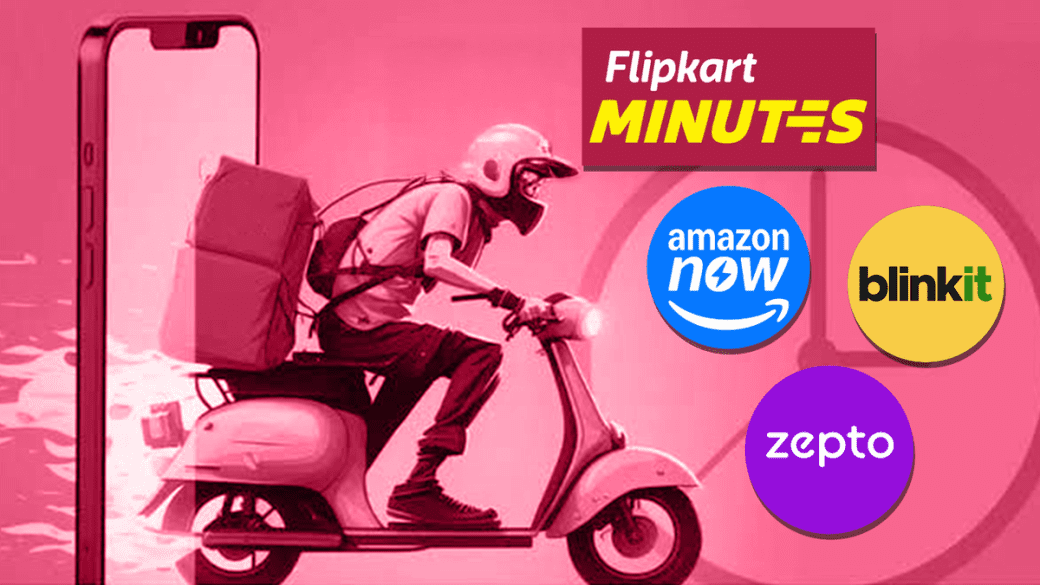
Quick commerce profitability is the big question as Amazon and Flipkart push deeper into fast delivery. Quick commerce profitability means whether these apps can make real money after paying for warehouses, riders, discounts and delivery. Right now, analysts say the market may get louder, but the business may not break.
Key takeaways
- Analysts say Amazon and Flipkart joining faster won’t automatically crush margins.
- Big players already have dense dark store networks in top cities.
- Ad income and larger basket sizes can support profits.
- Price wars are possible, but they may stay limited in the near term.
Why is quick commerce profitability still in focus?
Quick commerce grew fast by promising groceries and small daily items in 10 to 30 minutes. A dark store is a small local warehouse built only for online orders. That speed feels magical to shoppers, but it costs a lot to run.
Companies must pay rent, rider fees, packing costs and tech bills. They also spend on discounts to pull in new users. So investors keep asking a simple question: can this business earn more than it spends?
That is why quick commerce profitability matters so much. According to comments reported from Elara Capital analyst Karan Taurani, fresh moves by Amazon and Flipkart do not automatically ruin the profit path for existing leaders. The reason is simple: scale still matters most.
Why don’t new rivals instantly change the game?
Blinkit, Swiggy Instamart and Zepto already built dense networks in major cities. Dense means many stores packed close to customers. That helps firms deliver more orders from each store and cut the cost per order.
Amazon and Flipkart are huge names, but they are still building out this faster model. In quick delivery, reach alone is not enough. A company also needs the right items in the right neighborhood, and it must move them fast every hour of the day.
That is where incumbents have an edge. An incumbent is a company already strong in a market. They know what sells in each area, how to place stock, and how to keep riders busy so each order costs less.
For example, one dark store can only work well if enough homes around it keep ordering. If too few people order, the fixed cost stays high. Fixed cost means a bill the company pays even when sales dip, like rent and salaries.
What numbers explain the business?
Speed delivery is a game of tiny savings across thousands of orders. A basket size is the value of one customer order. If the average basket rises from ₹450 to ₹650, the same rider trip becomes easier to justify.
Ad income also helps. Ad income means brands pay apps to show products more clearly inside the app. That money can lift margins because it comes without adding one more delivery trip.
Many orders also carry a delivery fee, platform fee or small convenience charge. A margin is the money left after costs. Even a few extra rupees per order can matter when an app handles millions of deliveries.
Quick commerce economics by order₹450₹550₹650LowMidBetterprofit room
The chart above is a simple picture, not company guidance. But it shows the core idea. Higher order values can create more room for quick commerce profitability, especially when stores stay busy and ads add revenue.
| Factor | Why it matters | Profit effect |
|---|---|---|
| Dense dark stores | Shorter delivery routes | Lower cost per order |
| Bigger basket size | More items in one trip | Higher revenue per order |
| Ad income | Brands pay for visibility | Improves margins |
| Heavy discounts | Brings users fast | Can hurt profits |
Could a price war still hurt quick commerce profitability?
Yes, it could. If every platform starts handing out steep discounts, the whole market can feel pressure. But analysts appear to think that may not be the first move, because fast delivery needs careful local execution, not just cheap offers.
A price war means rivals cut prices hard to win customers. That often helps shoppers at first, but it can burn cash fast. Companies have learned from older e-commerce battles, so they may act with more discipline this time.
That does not mean the sector is safe from stress. Quick commerce profitability can still wobble if firms expand too fast, open weak stores, or chase growth without enough repeat orders. Repeat orders matter because loyal users lower customer acquisition costs over time.
Customer acquisition cost means the money spent to get a new shopper. If a user orders again and again, that first cost gets spread out. As a result, mature city clusters usually look better than brand-new ones.
What does this mean for Blinkit, Swiggy Instamart and others?
The biggest takeaway is that leadership may still depend on execution, not just brand size. Blinkit and Swiggy Instamart already understand rush-hour demand, local stock choices and rider allocation. Allocation means deciding where workers and goods should go.
That said, Amazon and Flipkart should not be dismissed. They have money, supply chain muscle and huge customer bases. If they link fast delivery to their wider shopping apps, they could grow quickly in the cities they target first.
Investors will now watch store expansion, order values and take rates. A take rate is the share a platform keeps from each sale and related fees. Those numbers say more about quick commerce profitability than headlines alone.
This is also part of a wider retail shift in India. Fast delivery is changing how people buy milk, snacks, chargers and even small electronics. For broader context on digital competition and shifting business models, readers can also see our coverage of why India IT firms spent $4.5 billion on AI acquisitions and why India has become Asia-Pacific’s top ransomware target.
How big could the market get from here?
India’s quick commerce market is still young, so forecasts vary. Different brokerages and research firms have projected sharp growth over the next few years, driven by urban demand and higher order frequency. Frequency means how often people place orders.
What seems clearer is the shape of the contest. Top metros will stay key, because order density is strongest there. Then firms may push into more tier-2 cities, but only where demand can support store economics.
Public data from company filings and investor notes will matter more than hype. For primary context, readers can track disclosures from NSE-listed companies and official company updates from Amazon India. For related market shifts, our readers may also find useful our stories on RBI funding curbs hitting trading firms and Alphabet joining the Dow Jones as the index turns more tech-heavy.
Quick commerce profitability is likely to depend less on who enters next and more on who can run busy local warehouses, keep order values healthy and avoid reckless discounting.
FAQs
What is quick commerce profitability?
It means whether a fast-delivery company makes money after paying for stores, riders, discounts and app operations.
Why aren’t Amazon and Flipkart guaranteed to win?
Because this business needs local store density, smart inventory and repeat orders, not just a famous brand name.
How do quick commerce apps improve profits?
They try to raise basket size, earn ad income, charge small fees and make each dark store handle many orders.