Key takeaways
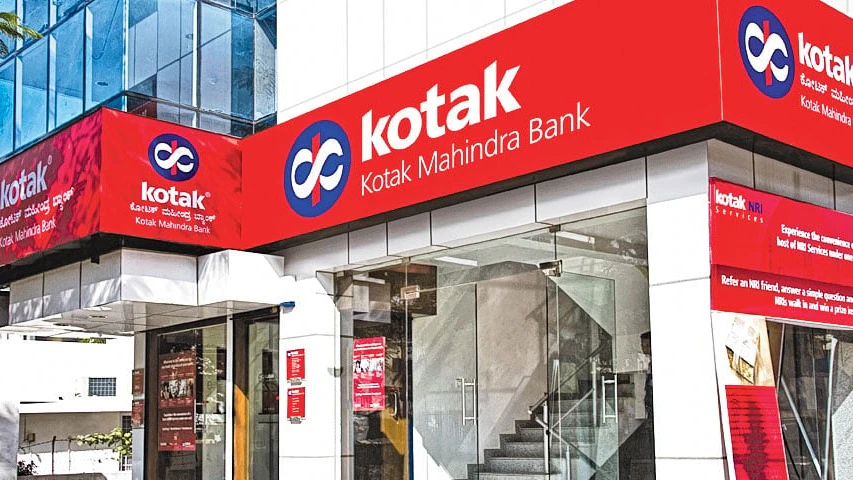
- Kotak Mahindra Bank has agreed to buy Deutsche Bank India’s retail and wealth business for ₹282 crore.
- The Kotak Deutsche deal covers personal banking customers, wealth clients, branches, and staff tied to that unit.
- A wealth business helps rich clients manage money. It often earns fees, not just loan interest.
- The deal still needs approval from regulators. Regulators are official watchdogs for banks and markets.
The Kotak Deutsche deal is Kotak Mahindra Bank’s plan to buy Deutsche Bank India’s retail and wealth business for ₹282 crore. Retail banking means services for everyday customers, like savings accounts and cards. Wealth business means money advice for richer clients. So this is a fast way for Kotak to add customers, staff, and branches.
What exactly is in the Kotak Deutsche deal?
Kotak Mahindra Bank said it signed a deal to acquire Deutsche Bank India’s personal banking and wealth management business. Personal banking means products used by regular customers. That can include savings accounts, deposits, cards, and some investment products.
The price is ₹282 crore. That is about ₹2.82 billion. In simple terms, Kotak is paying to take over a ready-made slice of banking business instead of building it branch by branch.
The deal includes liabilities, assets, customers, and employees linked to that business, according to company statements and exchange filings. Liabilities means money the bank owes, like customer deposits. Assets means things the bank owns or money it is due, like loans or investments.
It also includes Deutsche Bank India’s wealth management clients. These are higher-value customers who want help with investing and planning. That matters because wealth customers can bring fee income, and fee income is money a bank earns for services.
Why would Kotak want this business now?
The Kotak Deutsche deal gives Kotak a quicker route to growth. Building a new customer base takes years. Buying one can save time, so the bank can scale faster in cities where Deutsche already has a footprint.
Kotak has been trying to strengthen its consumer side. Consumer side means the part that serves people, not just big companies. A retail and wealth push can help because it spreads income across loans, deposits, cards, and advisory fees.
This also comes at a key time for Kotak. The bank has faced pressure in digital banking after the Reserve Bank of India restricted some online customer onboarding and card issuance earlier this year. Onboarding means signing up new customers. So adding an existing customer base through a deal may look attractive.
For readers tracking India’s wider banking and economy story, this fits a bigger pattern. Strong factory output can help loan demand over time, as seen in India’s recent industrial growth data. Banks want to be in position before that growth fully shows up in consumer and wealth products.
Why is Deutsche Bank selling this India unit?
Deutsche Bank is a global bank based in Germany. Global banks often review which businesses they want to keep in each country. Sometimes they decide to focus on corporate banking, investment banking, or areas where they are stronger.
That seems to be the logic here. By exiting a smaller retail and wealth operation in India, Deutsche can simplify its local business. Simplify means do fewer things and focus on the parts with better returns.
This does not mean Deutsche is leaving India. It means it is changing shape in India. Big banks do this often, because capital and management time are limited.
How big is ₹282 crore in banking terms?
₹282 crore is not a giant mega-merger number. But it is still meaningful. In banking, a deal’s value is not just the sticker price. It is also about deposits, client relationships, cross-selling, and how much profit the buyer can make later.
Think of it like buying a small busy shop in a prime market. You are not paying only for furniture. You are also paying for the regular customers who already walk in each day.
Here are the headline numbers in a quick view:
| Item | Figure | Why it matters |
|---|---|---|
| Deal value | ₹282 crore | Cash cost of the acquisition |
| Businesses involved | 2 | Retail banking and wealth management |
| Main buyer | Kotak Mahindra Bank | Expands consumer reach |
| Main seller | Deutsche Bank India | Sharpens local focus |
And here is a simple visual:
Kotak Deutsche deal: key numbers₹282 cr2 businessesDeal valueRetail + wealth
What happens to customers and staff now?
Deals like this usually try to keep customer service running smoothly. Customers may later see changes in account branding, branch handling, or relationship managers. A relationship manager is the bank staff member who helps a customer with products and planning.
Staff linked to the acquired business may also move to the buyer, depending on final terms and approvals. That can help because customers often stay calmer when familiar staff remain in place.
Still, not everything changes overnight. Banking transfers need legal, operational, and regulatory steps. Operational means the day-to-day systems and processes that keep the bank running.
Readers who follow financial system rules may remember that regulators have been active lately, including in areas like market funding and risk control. Our earlier report on RBI funding curbs hitting trading firms shows how closely regulators watch financial stability.
What does the Kotak Deutsche deal mean for India’s banking market?
The Kotak Deutsche deal shows that India’s banking market is still attractive, but also highly competitive. Local private banks want more scale. Scale means size that helps lower costs and spread products across more customers.
It also shows that foreign banks may choose narrower roles in India. India is a huge market, but it is tough. You need strong local reach, good digital systems, and the patience to build for years.
For Kotak, the upside is simple. It can add customers, gather deposits, and deepen wealth services. Deposits are money customers keep with the bank. Banks use deposits as a key funding base.
For Deutsche, the upside is focus. It can put more energy into business lines where it thinks it can win. That is common in banking around the world.
The Kotak Deutsche deal matters because Kotak is not just buying accounts. It is buying customer trust, trained staff, and a faster path into retail and wealth banking.
What should investors watch next?
First, watch for regulatory approval. In India, bank deals usually need a nod from regulators before they close. The main one is the Reserve Bank of India, which oversees banks.
Second, watch how Kotak talks about integration. Integration means combining two businesses into one. If systems and staff merge well, the deal can work better and faster.
Third, watch whether Kotak shares details on deposits, customer numbers, and branch count from the acquired business. Those numbers will help investors judge if ₹282 crore looks cheap, fair, or expensive.
Finally, keep an eye on filings to the stock exchanges and regulator updates from the BSE or NSE. Exchange filings are official company disclosures. They are usually the cleanest source for deal facts.
There is also a wider money story here. India’s financial system is changing fast, from bank fund-raising to new digital competition. For example, our coverage of the Yes Bank fundraising plan shows how banks are reshaping balance sheets and chasing growth.
FAQs
What is the Kotak Deutsche deal?
It is Kotak Mahindra Bank’s agreement to buy Deutsche Bank India’s retail and wealth business for ₹282 crore.
Why does Kotak want this deal?
Kotak can grow faster by buying an existing customer base, staff network, and wealth platform instead of building all of it from scratch.
When will the Kotak Deutsche deal be completed?
There is no final public closing date yet. The deal will move ahead after regulatory and other required approvals.