The Tata Group is India’s largest and oldest business conglomerate, founded in 1868 by Jamsetji Tata. Today it spans more than 25 publicly listed companies and over 100 operating businesses across software (TCS), automobiles (Tata Motors, Jaguar Land Rover), steel, consumer goods, hotels, airlines, power and digital services. What makes the group unusual is its ownership: the principal holding company, Tata Sons, is majority-owned by philanthropic Tata Trusts, so a large share of its profits flows back into charity, education and research.
- What is the Tata Group?
- Who owns the Tata Group? Tata Sons & Tata Trusts
- History: from Jamsetji to N Chandrasekaran
- Leadership and chairmen of Tata Sons
- Major Tata Group companies (the listed giants)
- Sectors and business verticals
- Strategy: EV, semiconductors, retail & digital
- Why the Tata Group matters to India
- Frequently asked questions
What is the Tata Group?
The Tata Group is a multinational conglomerate headquartered at Bombay House in Mumbai. A conglomerate is a single business house that owns many companies operating in unrelated industries. Among Tata companies you will find everything from the salt in your kitchen and the tea in your cup to the car in your driveway, the software running a global bank, and the steel inside a skyscraper.
The group traces its origin to 1868 and has grown into one of the most recognised names in Indian business. People search for it under many names — “tata corp”, “tata organisation”, “companies of tata group” or simply “tata companies” — but they all point to the same sprawling enterprise built around a holding company called Tata Sons.
Two features set the Tata Group apart from most large corporations in the world. First, its scale and diversity: few business houses anywhere operate across so many sectors at once. Second, its ownership structure, which channels a major portion of promoter profits into philanthropy rather than to a single family’s personal wealth. This combination of commercial heft and a stated commitment to nation-building is central to the Tata identity.
Who owns the Tata Group? Tata Sons & Tata Trusts
The question “who is the tata group owner?” does not have a simple one-person answer, and that is the point. At the centre sits Tata Sons, the principal holding and promoter company of the group. Tata Sons holds the controlling or significant stakes in the major operating companies and also owns the Tata brand name, which it licenses to group firms.
The role of Tata Trusts
The majority of Tata Sons’ equity — about two-thirds — is owned by a set of philanthropic trusts collectively known as the Tata Trusts. The two largest are the Sir Dorabji Tata Trust and the Sir Ratan Tata Trust. Because these charitable trusts are the dominant shareholders, a large share of the dividends Tata Sons earns is directed toward grants in healthcare, education, rural development, arts and scientific research. Institutions such as the Tata Institute of Fundamental Research, the Tata Memorial Hospital and the Indian Institute of Science trace funding roots to Tata philanthropy.
How the structure flows
The remaining shareholding in Tata Sons is held by other entities including members of the Tata family and the Shapoorji Pallonji group, which has historically been a significant minority shareholder. The simplified ownership pyramid below shows how value and dividends move through the structure.
History: from Jamsetji to N Chandrasekaran
The Tata story is, in many ways, the story of modern Indian industry. It began with one entrepreneur’s conviction that a colonised India could build world-class enterprises of its own.
Jamsetji Tata: the founder (1868–1904)
The group was founded in 1868 by Jamsetji Nusserwanji Tata, widely regarded as the father of Indian industry. He started with a trading firm and moved into textiles, setting up the Empress Mills in Nagpur. Jamsetji’s grand vision rested on a few large ideas: a world-class hotel, a steel plant, hydroelectric power and a research university. He lived to open only one of them — the Taj Mahal Palace Hotel in Mumbai in 1903 — but his successors realised the rest.
The foundation-building decades (1904–1938)
After Jamsetji’s death, his sons Dorabji and Ratanji, along with cousin R D Tata, carried the vision forward. Tata Steel (then Tata Iron and Steel Company, TISCO) was founded in 1907 at Jamshedpur, becoming Asia’s first integrated private steel plant. Tata Power followed to harness hydroelectricity. In 1932, Tata Airlines — the seed of what would later become Air India — took to the skies under J R D Tata.
J R D Tata’s long stewardship (1938–1991)
J R D Tata led the group for more than five decades. Under him the group expanded into chemicals, consumer products, locomotives and, later, software. Tata Consultancy Services (TCS) was established in 1968, an early and prescient bet on information technology that would eventually become the group’s most valuable company.
Ratan Tata and global expansion (1991–2012)
Ratan Tata took over as chairman in 1991, just as India began liberalising its economy. He consolidated the sprawling group, increased Tata Sons’ control over operating companies, and pursued bold international acquisitions. Landmark deals included Tetley (tea, 2000), Corus (steel, 2007) and Jaguar Land Rover (automobiles, 2008). The launch of the Tata Nano in 2008 reflected his ambition to build the world’s most affordable car. Searches for “ratan tata”, “tata ratan” and “ratan tata net worth” remain among the most popular Tata-related queries in India, a measure of his standing in public life. Ratan Tata passed away in 2024, and is remembered as one of India’s most respected industrialists.
N Chandrasekaran: the current era (2017–present)
N Chandrasekaran — widely searched simply as “n chandrasekaran” — became chairman of Tata Sons in 2017, the first chairman from outside the Tata family in the modern era to hold the role on a permanent basis, having risen through TCS. His tenure has focused on simplification, deleveraging, doubling down on digital and consumer businesses, and pushing the group into new strategic frontiers such as electric vehicles, semiconductors and large-scale retail.
Leadership and chairmen of Tata Sons
Leadership of the Tata Group means, in practice, leadership of Tata Sons, whose chairman is regarded as the head of the entire group. The role has passed through a small number of long-serving stewards, which has given the group unusual continuity of culture and values.
| Chairman | Approx. tenure | Defining contribution |
|---|---|---|
| Jamsetji Tata | 1868–1904 | Founder; set the long-term vision for steel, power, hotels and education |
| Sir Dorabji Tata | 1904–1932 | Built Tata Steel and Tata Power; established the Tata philanthropic trusts |
| Nowroji Saklatwala | 1932–1938 | Steered the group through the early 1930s |
| J R D Tata | 1938–1991 | Diversified the group; pioneered Indian aviation; launched TCS |
| Ratan Tata | 1991–2012 | Consolidated the group; led global acquisitions (Corus, JLR, Tetley) |
| Cyrus Mistry | 2012–2016 | Served as chairman before a high-profile boardroom transition |
| N Chandrasekaran | 2017–present | Simplification, digital and consumer focus, EV and semiconductor push |
Note: Ratan Tata returned briefly as interim chairman in 2016–17 before N Chandrasekaran was appointed. Each operating company also has its own managing director or CEO and board, who run day-to-day operations within the group framework.
Major Tata Group companies (the listed giants)
One of the most common searches is for a “list of tata companies” or “tata group companies list”. The group has more than 25 publicly listed companies. Below are some of the most prominent, the ones that anchor the group’s value and visibility. Treat any financial figures here as broad, rounded indicators rather than precise live numbers, since market values change daily.
Tata Consultancy Services (TCS)
TCS is the crown jewel: India’s largest IT services company by revenue and, by market capitalisation, typically the most valuable Tata company and one of the most valuable listed firms in India. It provides software, consulting and IT outsourcing to clients worldwide and is a major contributor to Tata Sons’ dividend income.
Tata Motors
Tata Motors makes passenger cars, trucks and buses, and owns the British luxury marque Jaguar Land Rover (JLR). It is also a leader in India’s electric passenger vehicle market, where Tata EVs have held a dominant share. People often search “jaguar car owner tata” — and yes, JLR has been part of Tata Motors since 2008.
Tata Steel
One of the world’s notable steel producers, with major operations in India and Europe. Tata Steel is among the oldest companies in the group, dating to 1907.
Titan Company
A consumer powerhouse best known for watches (Titan, Fastrack), jewellery (Tanishq), eyewear (Titan Eye+) and more. Tanishq in particular is one of India’s most trusted jewellery brands.
Trent
Trent (often searched as “trent limited” or “tata trent”) runs the group’s fashion and value retail through formats such as Westside and the fast-growing Zudio chain. Trent has been one of the standout retail growth stories on the Indian stock market in recent years.
Other major listed companies
The group also includes Tata Power (electricity generation and renewables), Tata Consumer Products (the maker of Tata Salt, Tata Tea and more), Tata Chemicals, The Indian Hotels Company Limited (which runs the Taj, Vivanta and Ginger hotel brands), Tata Communications, Tata Elxsi, Voltas (air conditioning and engineering) and Tata Technologies.
| Company | Sector | Well-known brands / business |
|---|---|---|
| TCS | IT services | Software, consulting, outsourcing |
| Tata Motors | Automobiles | Tata cars & trucks, Jaguar Land Rover, Tata EVs |
| Tata Steel | Steel & metals | Steel for construction, auto, packaging |
| Titan Company | Consumer / lifestyle | Tanishq, Titan, Fastrack, Titan Eye+ |
| Trent | Retail / fashion | Westside, Zudio |
| Tata Power | Power & renewables | Electricity generation, solar, EV charging |
| Tata Consumer Products | FMCG | Tata Salt, Tata Tea, Tata Sampann |
| Indian Hotels (IHCL) | Hospitality | Taj, Vivanta, SeleQtions, Ginger |
| Tata Chemicals | Chemicals | Soda ash, specialty chemicals |
| Voltas | Engineering / appliances | Air conditioners, cooling, projects |
Major unlisted businesses
Not every Tata business trades on the stock exchange. Some of the most strategically important sit inside Tata Sons or its unlisted arms: Air India (the airline the group reacquired from the government in 2022, answering the popular “air india owner tata” and “air india is owned by” queries), the digital super-app Tata Neu, BigBasket (online grocery), Croma (electronics retail), 1mg (digital health) and the new semiconductor venture, Tata Electronics.
Sectors and business verticals
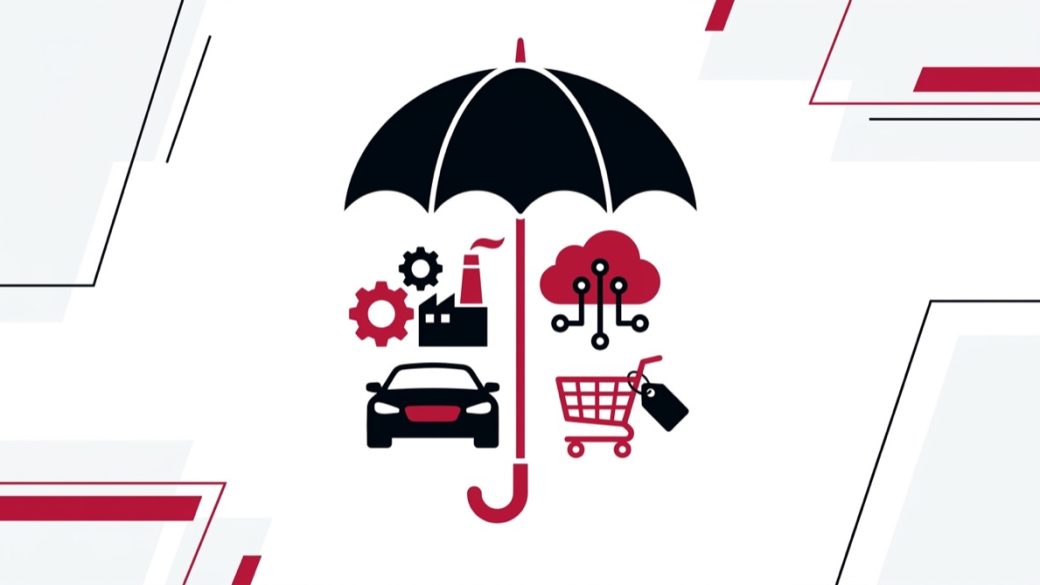
The breadth of the Tata Group is easiest to grasp by sector. Few conglomerates in the world touch as many parts of daily life. The chart below shows the main verticals in which the group operates; the slices are indicative of breadth, not precise revenue shares.
Technology and digital
Beyond TCS, the group runs Tata Elxsi (design and engineering), Tata Technologies (product engineering), Tata Communications (global connectivity) and Tata Digital, which builds the Tata Neu app and houses acquisitions like BigBasket and 1mg.
Automotive and mobility
Tata Motors, JLR and the EV business make the group a serious player in mobility, from affordable hatchbacks to luxury SUVs and electric cars.
Materials and energy
Tata Steel, Tata Power and Tata Chemicals supply the raw inputs and energy that underpin industry, with growing investment in renewables and battery technology.
Consumer, retail and hospitality
Titan, Trent, Tata Consumer Products, Croma and Indian Hotels put the Tata brand directly in front of millions of Indian households every day.
Strategy: EV, semiconductors, retail & digital
Under N Chandrasekaran, the group has organised much of its growth around a few big strategic bets aimed at the industries expected to define the next decade.
Electric vehicles
Tata Motors moved early into electric passenger cars in India and has built a leading position in the segment, supported by group investment in batteries and charging infrastructure through Tata Power. The aim is to keep the group at the front of India’s EV transition.
Semiconductors
Through Tata Electronics, the group has entered chip manufacturing — one of the most ambitious industrial bets in recent Indian history. This includes building semiconductor fabrication and assembly-and-test facilities in India, aligned with the country’s push for chip self-reliance. Searches for “tata semiconductor” reflect how closely this is being watched.
Retail and digital super-app
The combination of Trent’s physical retail, Croma’s electronics stores, BigBasket’s grocery delivery and the Tata Neu app is the group’s attempt to build an integrated consumer ecosystem that competes with the largest digital players in India.
Why the Tata Group matters to India
It is hard to overstate the Tata Group’s role in Indian economic and social life. The group is one of India’s largest private employers, supporting several hundred thousand jobs across its companies. Its firms collectively rank among the most valuable on Indian stock exchanges, and TCS alone is a bellwether for the country’s IT sector.
Just as important is the group’s philanthropic model. Because Tata Trusts own most of Tata Sons, the financial success of Tata companies translates directly into funding for hospitals, universities, scientific research and rural development. This “profit with purpose” structure is frequently cited as a distinctive feature of Indian capitalism and a reason for the deep public trust the brand enjoys.
For investors, students and entrepreneurs, the Tata Group is also a case study in long-term thinking: patient capital, brand stewardship, professional management and a willingness to make large, multi-decade bets — from steel in 1907 to semiconductors today.
How the Tata Group compares with other Indian business houses
The Tata Group is often discussed alongside India’s other big conglomerates — the comparison “tata birla” is a long-standing search, and newer rivalries with the Reliance and Adani groups draw plenty of attention. What distinguishes Tata is its charitable ownership and its unusually wide spread across both old-economy and new-economy sectors.
| Business house | Founded (approx.) | Known especially for | Ownership character |
|---|---|---|---|
| Tata Group | 1868 | IT, autos, steel, consumer, hospitality | Majority held by charitable Tata Trusts |
| Birla (Aditya Birla Group) | Early 1900s | Cement, metals, fashion, financial services | Promoter family-led |
| Reliance Industries | 1950s–60s | Energy, telecom (Jio), retail | Promoter family-led |
| Adani Group | 1980s | Ports, energy, infrastructure | Promoter family-led |
This is a simplified comparison; each group is far more diversified than a single row can capture.
Frequently asked questions
Who is the owner of the Tata Group?
There is no single individual owner. The group is controlled by Tata Sons, the holding company, and the majority of Tata Sons is owned by the philanthropic Tata Trusts (about two-thirds). The rest is held by the Tata family, the Shapoorji Pallonji group and others. N Chandrasekaran is the current chairman of Tata Sons.
How many companies are in the Tata Group?
The group has more than 100 operating companies in total, of which over 25 are publicly listed on Indian stock exchanges. The exact number changes over time as businesses are acquired, merged or restructured.
Who founded the Tata Group and when?
The Tata Group was founded in 1868 by Jamsetji Nusserwanji Tata, often called the father of Indian industry. It is India’s oldest large business conglomerate.
Does Tata own Air India and Jaguar Land Rover?
Yes to both. Tata Sons reacquired Air India in 2022, returning the airline to the group that originally founded it as Tata Airlines in 1932. Jaguar Land Rover has been owned by Tata Motors since 2008.
What are the biggest Tata Group companies?
By market value and prominence, the largest include TCS (IT services), Tata Motors (automobiles, including JLR), Tata Steel, Titan Company, Trent (retail), Tata Power and Tata Consumer Products. TCS is typically the most valuable company in the group.
What does the Tata Group do, in simple terms?
It is a conglomerate that owns many companies across unrelated industries — software, cars, steel, salt and tea, jewellery, hotels, airlines, power and digital services — all held together by the holding company Tata Sons.
Can I buy shares in the Tata Group?
You cannot buy shares in “the Tata Group” or in Tata Sons directly, as Tata Sons is unlisted. You invest in the group by buying shares of individual listed Tata companies such as TCS, Tata Motors, Tata Steel, Titan or Trent through a demat account.
Disclaimer: This article is for educational purposes only and is not investment/financial advice. Company structures, shareholdings and market valuations change over time. Read all scheme/offer documents and consult a SEBI-registered adviser where relevant.