Taiwan Chip Billionaires: How Two Brothers Got Rich Making the Chips Behind Every Screen
Two brothers from Taiwan just became billionaires. A billionaire is someone who owns more than one billion dollars. They got rich from a tiny part most people never think about: the chip that lights up a screen. These new Taiwan chip billionaires are Wu Biing-seng, 69, and Jordan Wu, 66. They run a company called Himax Technologies. Their money comes from “display driver chips.” These chips are used in cars, phones, and many other gadgets.
The news comes from the Bloomberg Billionaires Index. That is a list that tracks the richest people in the world. Financial Express shared the report. Together the brothers are now worth about $1 billion. This is the first time Bloomberg has counted them as billionaires. Here is the simple story of how they got there. We will also see why it matters.
First, what is a display driver chip?
Let us explain the words first. A semiconductor, or chip, is the tiny “brain” inside electronics. It does the thinking and the work.
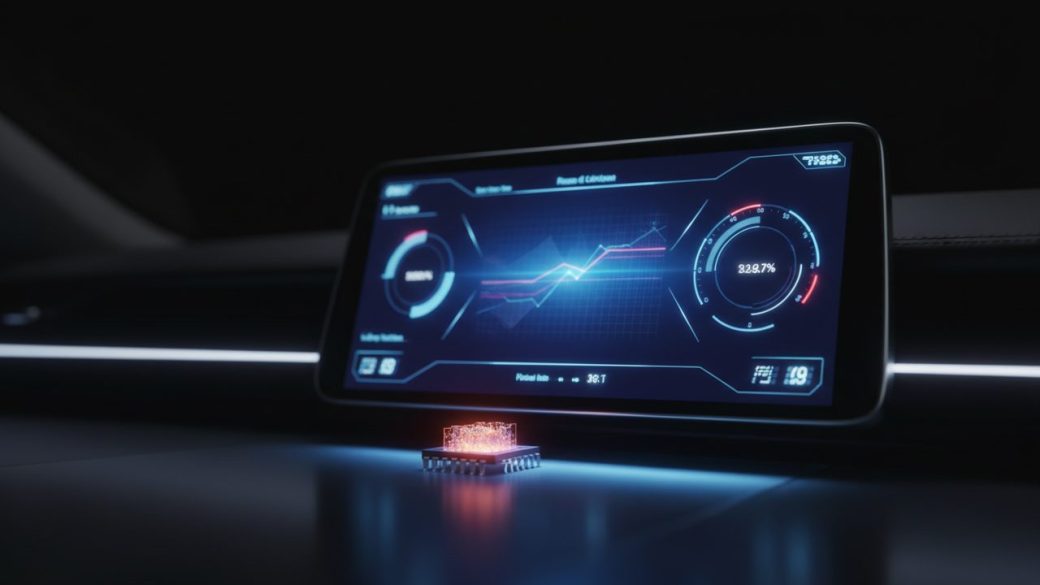
A display driver chip is a special chip that controls the screen. It is also called a “driver IC,” which is short for driver integrated circuit. A screen is made of pixels. Pixels are the tiny dots that make up a picture. The driver chip tells each dot what color to show. It also tells each dot how bright to be. Without it, your screen would stay dark.
So almost every screen has one of these chips inside. Your phone needs one. Your TV needs one. The dashboard in a modern car needs one too.
Who are the Wu brothers?
The two brothers come from very different backgrounds. That difference turned out to be a strength.
Wu Biing-seng is the tech mind. He earned a Ph.D. in electrical engineering in 1985. A Ph.D. is the highest college degree you can earn. He got it from National Cheng Kung University in Taiwan. Later he helped build Taiwan’s flat-screen display industry. He also worked at Chimei Optoelectronics, a big display maker.
Jordan Wu is the money mind. He earned an MBA. That is a college degree in how to run a business. He worked as an investment banker at Merrill Lynch and Barclays. An investment banker helps companies raise money and do big deals. So one brother knew the science. The other knew business and money.
In 2001 they started Himax Technologies with their own money. Later they raised more money from other people to help the company grow.
What does Himax actually do?
Himax is a fabless chip company. “Fabless” means it designs chips but does not build them in its own factory. Instead, it sends the designs to other companies that own the factories. These factories are called foundries. They build the chips. This keeps costs lower. It also lets Himax focus on design.
The company has about 2,200 workers. More than 90% of them are engineers. It has offices in Taiwan, China, South Korea, and the United States. In 2006, Himax listed its shares on the Nasdaq. The Nasdaq is a stock market in the United States where people buy and sell parts of companies. A share is one small piece of a company that you can own. By selling shares, Himax raised $468 million.
Today Himax is best known for one thing: chips for car screens. The report says it holds about a 40% share of the world market for car display driver chips. Market share means how much of the total market one company has. So about four out of every ten such chips in cars come from Himax. Its customers include big names like Ferrari, Volkswagen, and Porsche.
Why did they become billionaires now?
The simple answer is car screens. Cars today have more screens than ever. They also have bigger screens. Think of the large dashboard displays. Think of the touch screens in the center. There are even screens for back-seat passengers. Every one of those screens needs driver chips.
Demand for car display chips jumped. Demand means how much people want to buy something. Because of this, Himax shares more than doubled in 2026. The brothers own about 24% of the company. This part they own is called their stake. When the share price went up, the value of their stake went up too. The company also pays dividends. Dividends are cash that a company gives to the people who own its shares. Add the dividends and some stock they sold over the years, and their combined worth crossed $1 billion.
Jordan Wu summed up the journey simply. He said there are very few carmakers that do not use the company’s products in some way. Looking back, he said it “was nothing short of a miracle.”
Key facts (as reported)
| Item | Detail |
|---|---|
| Brothers | Wu Biing-seng (69) and Jordan Wu (66) |
| Company | Himax Technologies |
| Combined net worth | About $1 billion |
| Family stake in Himax | Around 24% |
| Founded | 2001 |
| Nasdaq listing | 2006 (raised $468 million) |
| Auto display chip market share | About 40% |
| Employees | About 2,200 (90%+ engineers) |
| Key car customers | Ferrari, Volkswagen, Porsche |
| Share move in 2026 | More than doubled |
Taiwan’s chip ecosystem: why this keeps happening
“Taiwan’s chip ecosystem” means the whole web of companies on the island. They design, make, test, and pack chips. They sit close together and work as a team. This small island is a giant in the chip world.
Taiwan is home to TSMC. TSMC is the world’s biggest chip factory company. Around it sit hundreds of design firms, equipment makers, and packing firms. A fabless company like Himax can grow fast there. The factories and skills it needs are right next door.
This same web powers much more than screens. The chips that run today’s artificial intelligence are also designed and made here. Artificial intelligence, or AI, is computer software that can learn and think in ways like a human. The hunger for computing has fueled Sam Altman’s view on AI scaling. Scaling means making AI models bigger, and bigger models need even more chips. So the chip boom and the AI boom feed each other.
FAQ
Who are the new Taiwan chip billionaires?
They are brothers Wu Biing-seng and Jordan Wu. They started the chip design firm Himax Technologies in Taiwan in 2001.
What is a display driver chip?
It is a chip that controls the pixels (tiny dots) on a screen. It tells each dot what color and brightness to show, so the picture appears.
How rich are they?
About $1 billion together, based on the Bloomberg Billionaires Index as reported. Most of the money comes from their roughly 24% stake in Himax. A stake is the part of the company they own.
Why did their wealth jump in 2026?
People wanted more car display chips. Himax shares more than doubled in 2026. This lifted the value of the brothers’ stake.
Why it matters (especially for India / founders)
This story holds a clear lesson for founders and students in India. The brothers did not chase the flashiest product. They picked one small, boring-sounding part: the display driver chip. Then they became the best in the world at it. Owning a small niche can build huge value. A niche is one small area that you focus on.
It also shows the power of a strong pair. One founder was deep in technology. The other was deep in business and money. That balance helped Himax grow.
For India, the message is about the chip race. India is now spending big to build its own chip plants and design talent. Demand for chips is only rising, from cars to AI. The same wave is pushing the move from rented software to smart software. You can see this in the shift to agentic AI replacing SaaS. SaaS means software you rent online instead of buying. Agentic AI means AI that can do tasks on its own. Whoever controls the chips controls a big slice of the future. Taiwan shows how a focused, skilled team can turn a tiny island, or a tiny chip, into world-leading wealth.
The takeaway
Two brothers, one tiny chip, and a billion-dollar fortune. The Wu family’s rise with Himax shows a simple truth. The parts hidden inside our screens can be just as valuable as the screens themselves. Cars and AI keep adding more screens and more chips. So the firms that make these small but vital parts may keep making new billionaires.
Source: Financial Express (reporting the Bloomberg Billionaires Index). Additional public context via VnExpress and The Japan Times.