Agentic AI Replacing SaaS: Why the Old Software Playbook May Not Come Back
For years, using software was simple. You paid a monthly fee, logged in, and did the work yourself. Now that is changing. A new report says that agentic AI (AI that can do tasks on its own) is starting to replace SaaS (software you rent online). The report says this is not a small trend. It is a big change in how software works and who does the real job. This piece explains the idea in easy words, with examples for founders, students, and business owners.
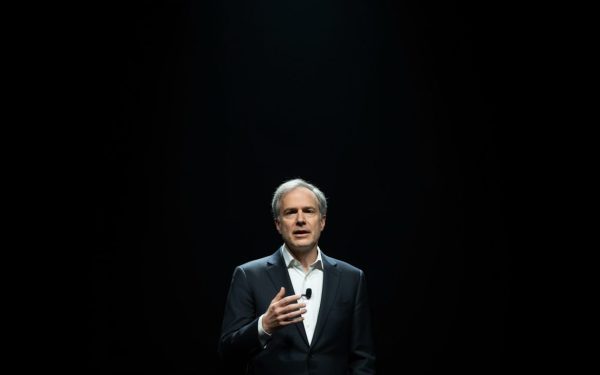
The idea comes from Richard de Silva. He is the founder of Lateral Investment Management. He shared it in a recent Crunchbase News article. He is very clear about it. He says the old way of selling software may not come back the same way.
First, the plain-word basics
Let us first explain the key words. Then we can go deeper.
- SaaS means “software as a service.” It is software you rent online instead of buying. Gmail and Zoom are examples. You pay a small fee each month and use it in your browser.
- Agentic AI is AI that can DO tasks for you on its own. It does not just answer questions. It does not wait for every click.
- An AI agent is a helper that takes action by itself. It can book a meeting or file a report. You do not have to do each step.
Here is the simple difference. SaaS is a tool you use. An AI agent is a worker that uses the tool for you.
What is actually changing
Most SaaS today charges “per seat.” This means you pay for each person who logs in. A team of 10 people pays for 10 seats. This worked because humans did the work. And each human needed their own account.
De Silva makes a sharp point here. He says “the per-seat model evaporates the moment AI agents generate most of the usage.” In plain words: if a robot helper does most of the work, you do not need many human seats. So charging for each human seat stops making sense.
This is the main change. When the AI agent does the job, the old pricing breaks. Software companies must rethink what they charge for.
Traditional SaaS vs agentic AI: a simple comparison
The table below shows the difference in easy terms. These are general examples, not exact numbers.
| Question | Traditional SaaS | Agentic AI |
|---|---|---|
| How you use it | You log in and click through the steps yourself | You give a goal; the agent does the steps for you |
| Who does the work | A human (you or your team) | The AI agent, with a human checking the result |
| Pricing model | Monthly fee per person (“per seat”) | Pay per task done, or a share of the result (outcome-based) |
| Example | A CRM where you type in each customer note | An agent that drafts the contract or chases the savings on its own |
The table mentions a CRM. A CRM (customer relationship management tool) is software that stores notes about your customers. “Outcome-based” pricing simply means you pay for results. For example, you might pay a small part of the money the AI helps you save. Or you might pay a fee for each contract it writes. You pay for the job done, not for a login.
Which software is at risk
Not all software is in the same danger. De Silva points to a few kinds that look weak. These include form builders, project-management tools, small-business CRMs, and social-media schedulers. These are simple tools. An AI agent can often do their job by itself. He warns they may face “compression” and may not recover.
“Compression” here means lower prices and less demand. If an agent can do the same job, why pay for a separate tool?
Which software stays strong
Some software is much harder to replace. De Silva says the winners share three strengths. We can call them the three D’s:
- Distribution — they already reach many customers and are trusted.
- Domain expertise — deep knowledge of one field, like law or insurance.
- Data — their own special data that others cannot easily copy.
His examples are “vertical” specialists. “Vertical” means software built for just one industry, not for everyone. Think of a legal document library, an insurance underwriting system (a tool that decides who gets insurance and at what price), or a loan-performance database. These hold rare data and deep know-how. So an AI agent alone cannot easily copy them.
De Silva also points to a number from McKinsey, a big business advice firm. McKinsey estimates a “$6 trillion annual productivity opportunity.” That is how much extra value better work could create each year. De Silva’s point is this: AI-native software can go after labour and compliance budgets. (Labour means the cost of workers. Compliance means following rules and laws.) Those budgets are far bigger than normal software budgets.
The “human in the loop” idea
One more idea matters here. De Silva thinks the strongest model will mix software with services. It will also keep a “human in the loop.” That phrase means a person still checks and approves the agent’s work. The AI does the heavy lifting. The human makes the final call.
This is a calmer view than “AI replaces everyone.” It says software, plus AI, plus a human will often beat any one of them alone.
Why it matters (especially for India and founders)
India builds and sells a lot of software. Many startups here use the SaaS model. So this change is not far-away news. It affects local founders and IT teams directly.
If you are a founder, the lesson is simple. Do not just build one more login tool. Build something with rare data, deep industry knowledge, or strong reach. That is what AI agents cannot easily copy.
This links to a bigger story. Indian IT firms are watching how much clients will spend on AI. You can see this with Persistent Systems and AI spending. And the race to build bigger AI models, which power these agents, ties into the debate around Sam Altman and AI scaling. The software world is changing from many sides at once.
For students and job seekers, the message is also clear. Knowing one industry deeply will be valuable. So will knowing how to guide AI agents. The work moves from doing every step to checking and directing the AI.
FAQ
Is SaaS dying completely?
No. The report says some SaaS will struggle. But specialists with rare data and deep know-how can stay strong. The model is changing, not vanishing overnight.
What is the difference between SaaS and an AI agent?
SaaS is a tool you use yourself. An AI agent is a helper that does the task for you and takes action on its own.
Why is “per seat” pricing under threat?
Per-seat pricing charges for each human user. If AI agents do most of the work, you need fewer human logins. So that pricing earns less money.
What should founders build instead?
Build software with strong distribution, deep domain expertise, or its own special data. Pair it with AI agents. And keep a human in the loop.
The takeaway
The big idea is easy to remember. Software is moving from a tool you use to a worker that acts for you. The winners will own rare data. They will know one field deeply. And they will let AI do the work while a human checks it. The old SaaS way may not come back the same. The smart move is to build for the new one.
Source: Crunchbase News — The growing agentic AI market (Richard de Silva, Lateral Investment Management)