AI Inflating Student Grades: New Study Says Marks Went Up, Not Learning
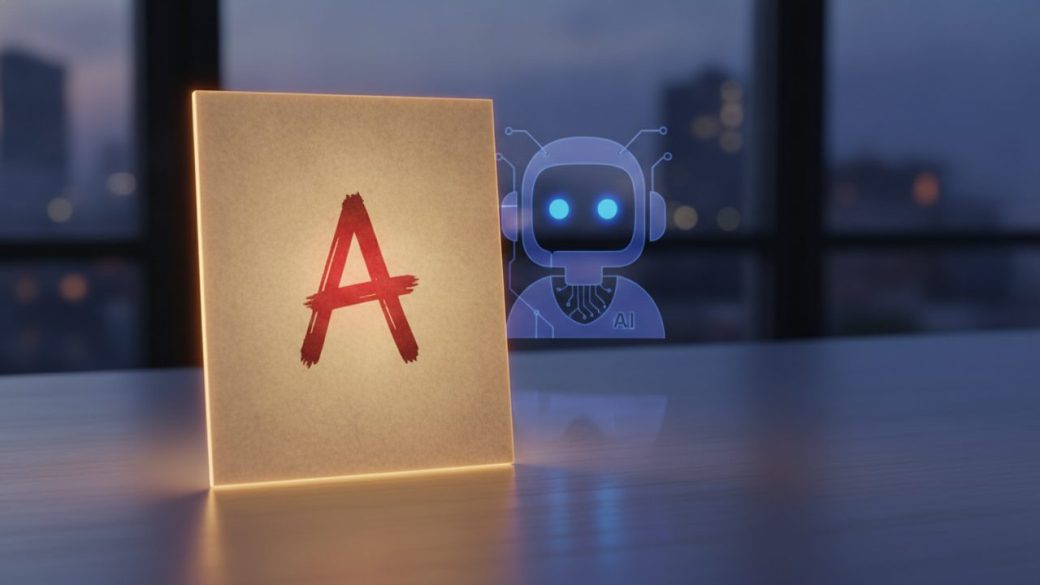
A new study says AI is pushing student grades higher. But the marks are going up for the wrong reason. They are rising because students let AI do their homework. They are not rising because students learned more. This is called grade inflation. Grade inflation means grades go up even though real learning does not. The study found that top marks jumped a lot once AI chatbots (computer programs you can chat with, like a smart helper) became easy to use. But the jump only showed up where AI could do the work, like homework. It did not show up where AI cannot help much, like talking out loud in front of a class.
This matters for students, teachers, and the people who hire them. If an “A” no longer proves real skill, then the grade means nothing. Let us break down what the study found, in plain words.
What the study looked at
The study was done by Igor Chirikov at UC Berkeley. He used data from a large public research university in Texas. The report says he looked at more than 500,000 grades. These grades came from eight autumn (fall) terms, from 2018 to 2025.
That covers 319 courses across 84 departments. So this is not a tiny sample. It is a big, wide look at how grades changed over many years. The key moment was late 2022. That is when easy-to-use AI chatbots arrived. The study used 2022 course plans (called syllabi, the papers that list what each class will teach) to judge how much each class could use AI.
The big finding: top grades jumped
After AI tools spread, “A” grades rose by 13 percentage points. That is about 30% higher than the 2022 starting level (the baseline, the number used as the starting point to measure change). The average GPA went up by 0.12 points. GPA stands for grade point average. It is one number that adds up all of a student’s marks.
At first, this looks like good news. More students getting top marks sounds great. But the study looked deeper. The pattern told a different story.
Why this points to outsourcing, not learning
Outsourcing work to AI means letting AI do the task for you instead of doing it yourself. The study found three clues that this is what happened.
Clue 1: Homework drove the jump, not exams
The grade rise came from homework marks, not exam scores. Students usually do homework at home, alone, with no one watching. That is exactly where AI is easy to use. Exams are often watched and timed. So AI is harder to sneak in. If students had really learned more, exam scores would have gone up too. But they did not rise the same way.
Clue 2: More homework weight meant a bigger jump
In some courses, homework counted for a big part of the grade. In those courses, “A” grades rose much more. They went up an extra 16 percentage points. That is compared to similar courses where homework counted for less. Where homework counted for little, the effect was tiny. It was also not statistically meaningful. That means it could just be random luck, not a real change.
Clue 3: Spoken tasks showed no change
Oral presentations are spoken tasks done in front of people. AI cannot easily do these for you. In these tasks, grades did not change. This is the strongest clue. If students were truly smarter, their spoken work would get better too. It did not.
The researcher said the results are “difficult to reconcile with broad learning gains or sorting effects alone.” In plain words: the numbers are very hard to explain by saying students simply got better.
Key facts (as reported)
| What | Figure |
|---|---|
| Grades studied | 500,000+ |
| Time period | 8 fall semesters (2018–2025) |
| Courses / departments | 319 courses, 84 departments |
| Rise in “A” grades | 13 percentage points (about 30% above 2022 baseline) |
| Average GPA rise | 0.12 points |
| Extra “A” rise in high-homework courses | +16 percentage points vs low-homework courses |
| Change in oral presentation grades | No change |
Why it matters (especially for India / students / founders)
This study was done in the US. But the lesson reaches far, including India. Lots of students here use AI tools for homework and assignments. If grades stop showing real skill, three groups get hurt.
- Students: A high grade feels nice. But it can hide weak skills. When a job test or real work asks you to write or code on the spot, the gap shows. The study warns AI may weaken skills in writing and coding the most. That is because those are the areas where AI is strongest.
- Employers and founders: If you hire based on grades, you may pick the wrong people. The study warns this could lead to worse hiring choices. Founders (the people who start a company) may need real-world tests, like a small live task, instead of trusting marks alone.
- Colleges and graduate programs: If everyone has top marks, grades stop helping schools tell students apart. Then choosing who gets in gets harder and less fair.
There is a bigger theme here too. AI is changing how work gets done everywhere. Some of that is the same force behind the wider debate over AI scaling, where leaders argue about how fast AI is getting better. It is also behind the shift toward agentic AI replacing software tools, where AI agents do whole tasks for people. The grade study is one early sign of what happens when AI does the doing instead of the human.
FAQ
Does this mean students are cheating?
Not always in the simple sense. Many rules are unclear. Some teachers even allow AI help. The study does not blame any single student. It shows a pattern across thousands of grades. The point is that marks rose where AI could do the work. That suggests the work was handed over to AI.
Did learning improve at all?
The study found little sign of broad learning gains. Exam scores and spoken tasks are places where AI helps less. Those did not rise the same way. That is why the researcher says better marks do not equal better learning here.
Is AI bad for students then?
AI is a tool. Used to learn, it can help a lot. Used to skip learning, it puffs up grades without building skill. The risk is using it to finish work, not to understand it.
What should students do?
Use AI to check your thinking, not to replace it. Try the problem first yourself. Real skill shows up in live tests and on the job. There, a chatbot cannot save you.
The takeaway
This study sends a clear message. AI is pushing student grades up. But the marks hide a problem instead of fixing one. The “A” looks the same, but the skill behind it may be missing. For students, the smart move is to learn the hard way now. Then you are ready when the test is real. For employers and founders, it may be time to trust a live task over a grade on paper.