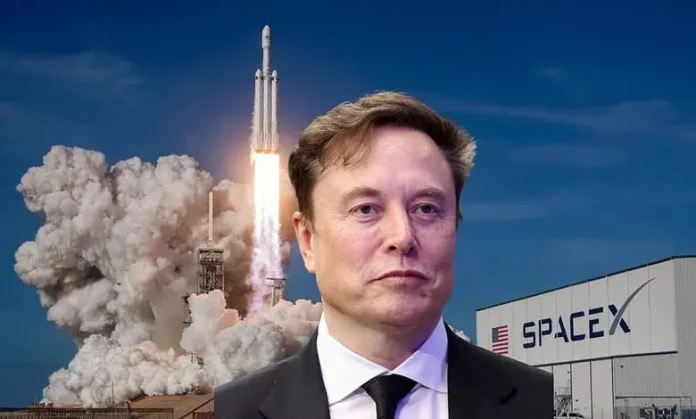


The financial world crossed an unprecedented threshold as tech mogul Elon Musk officially became the first verified trillionaire in human history. The milestone was cemented following the blockbuster public listing of his aerospace and satellite enterprise, SpaceX, on the Nasdaq exchange.
Thursday evening’s pricing of the historic initial public offering (IPO) valued the satellite broadband and rocket manufacturing giant at a staggering $1.77 trillion. When the opening bell rang on Friday, the immediate surge in market value catapulted Musk’s personal fortune comfortably past the thirteen-digit mark, tracking at an estimated $1.1 trillion.
The historic market debut marks the largest IPO in corporate history, placing the controversial entrepreneur in an economic league entirely of his own.
How the SpaceX Listing Turbocharged the “Muskonomy”
Prior to the public debut, the Bloomberg Billionaires Index and Forbes real-time trackers pegged Musk’s net worth at approximately $971 billion, fueled by a massive wealth surge that saw his fortune expand by over $350 billion in less than six months.
The ultimate trigger for his trillion-dollar ascent was the structured pricing of the SpaceX float:
- The Record Float: SpaceX successfully issued over 555 million shares priced at $135 per share, aggressively raising $75 billion in fresh capital from global institutional buyers.
- Retaining Absolute Control: Musk holds a dominant 42% common stock ownership in the newly listed corporation. More importantly, his holdings are tied to highly potent Class B supervoting shares, granting him an unbreakable 82% of the aggregate voting power.
- The Single-Asset Moat: This 42% equity slice is natively valued at roughly $866 billion, completely transforming SpaceX into the single largest source of his cumulative personal wealth and displacing his automotive holdings in Tesla as his primary financial anchor.
When combined with his 20.5% stake in electric vehicle leader Tesla, brain-chip innovator Neuralink, infrastructure enterprise The Boring Company, artificial intelligence startup xAI, and social media ecosystem X (formerly Twitter), his aggregate network of disruptive businesses commands an unmatched premium across global capital markets.
Global Comparisons: Wealth on a Sovereign Scale
To put a $1.1 trillion net worth into perspective, Musk’s personal balance sheet has surpassed the annual Gross Domestic Product (GDP) of all but roughly 20 countries on Earth.
The scale of this wealth accumulation is reshaping macroeconomic comparisons:
- Outpacing Major Nations: At $1.1 trillion, Musk’s paper fortune is now statistically larger than the entire annual economic output of advanced industrial nations like Taiwan, Saudi Arabia, and his birth country of South Africa.
- The Quarter-India Threshold: His net worth is now equivalent to roughly one-fourth of India’s entire GDP, which currently tracks at approximately $4.15 trillion under latest IMF projections.
- The Billionaire Gap: The wealth gap between Musk and the rest of the world’s ultra-rich has widened into an insurmountable chasm. The world’s second-richest individuals have hovered around the $300 billion to $350 billion mark, meaning Musk is legally worth more than the next three richest global billionaires combined.
Public Backlash and the Geopolitical Spotlight
While Wall Street and retail investors have heavily celebrated the “Elon premium”—the belief that his singular vision for multi-planetary species redundancy justifies massive valuation multiples—the trillion-dollar milestone has triggered intense criticism from humanitarian groups and economic policy organizations.
In an analysis issued immediately ahead of the listing, anti-poverty charity Oxfam America called the achievement a “dark day for democracy,” pointing out that hitting a $1 trillion baseline means Musk’s fortune grew at an average clip of over $1 million per minute over the past year. Humanitarian advocates noted that a simple, theoretical 10% wealth tax on a trillion-dollar portfolio could completely fund global extreme poverty eradication efforts for an entire year under World Bank metrics.
The spotlight on his wealth is further intensified by his deep regulatory entanglements and prominent placement within government infrastructure channels. With SpaceX and its Starlink satellite subsidiary commanding billions of dollars in active government contracts, critics warn that the rise of the world’s first trillionaire underscores an era of extreme wealth concentration and unparalleled corporate influence over public policy.
Nevertheless, institutional appetite for the newly public aerospace stock remains insatiable. As global asset managers redeploy trillions in liquid capital to capture pieces of the satellite internet and commercial spaceflight monopolies, the financial reality remains absolute: the era of the corporate trillionaire has officially arrived.