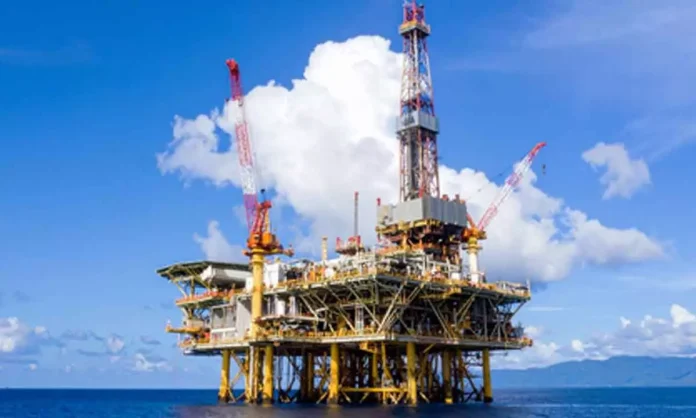


In a historic realignment of global energy politics and commodity flows, the United States has officially surpassed Saudi Arabia to become the world’s largest exporter of crude oil and refined petroleum products.
Data compiled from global energy tracking agencies and the US Energy Information Administration (EIA) confirms that American oil exports hit a record-breaking weekly average of 11.4 million barrels per day (bpd). This massive surge pushed the US ahead of Saudi Arabia’s aggregate export volume, which has pulled back to roughly 10.2 million bpd.
The milestone marks a monumental milestone for the American shale revolution, fulfilling a decades-long strategic goal of Western energy independence while permanently blunting OPEC’s traditional grip on global oil supply management.
The Perfect Storm: Permian Surge Meets OPEC Production Cuts
The structural inversion at the top of the global export rankings was driven by a twin combination of record-shattering American shale extraction and strict production curbs engineered by the OPEC+ cartel.
1. The Permian Basin Efficiency Boom
American upstream operators have unlocked unprecedented production efficiencies, primarily out of the Permian Basin spanning West Texas and New Mexico. Despite keeping overall rig counts relatively steady, exploration firms have utilized advanced multi-pad drilling, extended horizontal laterals stretching over three miles, and AI-driven reservoir modeling to push total US crude production to an all-time high of 14.2 million bpd.
Because domestic refinery configurations are historically optimized to process heavier, sour crude imports, the vast majority of this newly extracted light, sweet shale oil is routed directly to the Gulf Coast for immediate export to European and Asian markets.
2. Saudi Arabia’s Macro Strategy Shift
Conversely, Saudi Arabia has spent the past several quarters executing a deliberate, highly calculated strategy of managed supply scarcity. To defend a strict global price floor as crude prices hover around the $100-per-barrel mark amid ongoing maritime supply chain friction in West Asia, Riyadh extended its voluntary production cuts of 1 million bpd.
By prioritizing state revenue margins over raw volume market share, the Kingdom intentionally kept close to 1.5 million bpd of its production capacity offline, creating a supply vacuum that aggressive American independent drillers rapidly backfilled.
Reshaping Global Trade Routings and Currency Flows
The transformation of the US into the world’s premier “swing supplier” is fundamentally shifting the geopolitical balance of power across major international trading blocs:
- The European Energy Anchor: Following the strict implementation of European Union sanctions on Russian energy origins, American exporters have stepped in to act as Europe’s primary energy security blanket. Over 45% of total US crude exports are now bound for Western European processing hubs like Rotterdam and Le Havre, completely replacing legacy Russian Urals dependencies.
- The Asian Diversification Drive: Major Asian economies—including India, South Korea, and Japan—are rapidly expanding their long-term supply contracts with Gulf Coast terminals. Facing persistent maritime vulnerabilities and rising war-risk insurance premiums around traditional Middle Eastern choke points like the Strait of Hormuz, Asian refiners are actively paying a premium for American crude as a strategic hedge against regional supply chain shocks.
Market Implications: Price Floors and Volatility Dampening
For commodities traders, macroeconomic forecasters, and enterprise brands, the rise of the US to the top of the export ladder establishes a powerful stabilizing mechanism underneath the global energy market.
While production cuts by Saudi Arabia and Russia would historically trigger immediate, unmanaged price spikes, the fluid scalability of US shale serves as a safety valve. Every time OPEC+ attempts to squeeze supply to force prices higher, American exporters ramp up deliveries to global spot markets.
This dynamic ensures that while global crude remains elevated due to geopolitical risk factors, the risk of an unmitigated runaway energy shock is heavily mitigated. As multi-billion dollar infrastructure expansions across the Corpus Christi and Houston ship channels wrap up construction over the remainder of the year, the US is cementing its position not just as a tem