Do Space-Based AI Data Centers Make Economic Sense? A Plain-English Reality Check
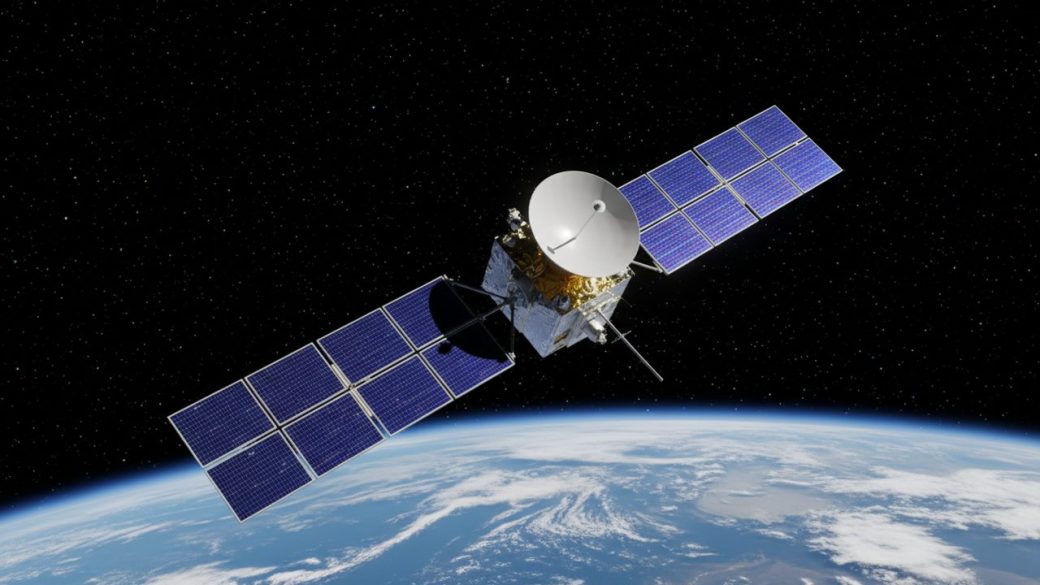
Some of the biggest tech companies want to put computers in space. The idea sounds crazy. But it is real. A space-based AI data center is a place full of computer chips that floats high above the Earth. It goes around the planet instead of sitting on the ground. (Going around the planet is called being “in orbit.” The Moon orbits the Earth too.) A data center is just a big building full of strong computers. These computers run apps, websites, and AI tools. Companies are now testing the space idea. One is Starcloud. It gets help from Nvidia, a company that makes computer chips. Google is testing it too. So does the idea make money? Let us explain it in simple words.
Why would anyone put a data center in space?
AI uses a lot of power. Teaching an AI and running it needs a huge amount of electricity. On Earth, that power is getting harder to find. It also costs more and more. A big data center on land needs lots of power and water too. There is only so much to go around.
Space gives engineers two big gifts. The first is free sunlight. In orbit there are no clouds. There is almost no night. The Sun shines nearly all the time. So solar panels can work without stopping. (Solar panels are flat sheets that turn sunlight into electricity.) The second gift is free cooling. Chips get very hot when they work. Space is empty and very cold. This empty, cold space is called a vacuum. It can pull the heat away on its own. You do not need water. You do not need electric coolers.
Starcloud says the savings are huge. It says power in space could cost about 10 times less than power on the ground. This is over the whole life of the data center. The company also says it would make about 10 times less pollution than a data center on Earth that runs on natural gas.
What has actually happened so far?
This is not just talk anymore. In November 2025, Starcloud sent its first space data center up. It is called Starcloud-1. It went up on a SpaceX rocket. It is small. It weighs about 60 kilograms. That is about the size of a small fridge. Inside is one Nvidia H100 chip. (A chip is the small part that does the computer’s thinking. The H100 is one of the best AI chips you can buy.) It is the first big, data-center-grade chip ever sent to space.
That one chip has already done real AI work up in space. It even ran Google’s Gemma AI model. (An AI model is the trained “brain” that an AI tool uses to answer you.) Later, Starcloud wants to add Nvidia’s newer Blackwell chips. Those are far more powerful. The big dream is even bigger. Starcloud wants a 5-gigawatt data center in space. (A gigawatt is a very large amount of power. 5 gigawatts is enough to run millions of homes.) Its solar and cooling panels would stretch about 4 kilometres across.
Key facts at a glance
| Item | Reported figure |
|---|---|
| First orbital data center launch | Starcloud-1, November 2025 (SpaceX rocket) |
| Starcloud-1 weight / size | ~60 kg, size of a small fridge |
| Chip on board | 1 Nvidia H100 (later: Nvidia Blackwell) |
| Energy cost claim (Starcloud) | ~10x cheaper than on Earth over its life |
| Carbon claim (Starcloud) | ~10x lower than a gas-powered Earth center |
| Future plan | 5-gigawatt center, panels ~4 km wide |
| Launch cost needed to compete | Around $500 per kg (analysts) |
| Google Suncatcher target | Under $200 per kg by 2035 |
The huge hurdles nobody can ignore
1. Getting there costs a fortune
Sending anything to space is costly. Every kilogram you put on a rocket costs money. Experts who study this (called analysts) did the math. They say space computers only start to beat Earth computers when launch costs drop to about $500 per kilogram. Google has its own space project. It is called Suncatcher. Google hopes launch costs will fall below $200 per kilogram by 2035. But prices today are still much higher than that. So the numbers do not add up yet.
2. Cooling is harder than it sounds
Here is the surprise problem. Space is cold. But there is no air in space. So you cannot just blow the heat away with a fan. Heat can only leave by glowing off big metal panels. These panels are called radiators. And they are heavy. Look at NASA’s space station for proof. Its system gets rid of 70 kilowatts of waste heat. (A kilowatt is a unit of power. 70 kilowatts is a small amount for a data center.) To do that, it uses radiator “wings” that weigh about 7 tonnes. Now imagine cooling 1 megawatt of AI chips. (A megawatt is about 1,000 kilowatts.) You might need about 100 tonnes of radiators. But the chips themselves weigh only about 10 tonnes. So the cooling gear is much heavier than the chips. More weight means many more rocket trips. And each trip costs a lot.
3. The green claim is in doubt
Companies say space is cleaner for the planet. But scientists at Saarland University found it may be the opposite. Rockets burn fuel, and that makes pollution. Old space gear also falls back to Earth and burns up. When you count all of this, space data centers might make up to 10 times more pollution than ones on Earth. (Pollution from this kind of burning is called emissions.) Chips in space face another problem too. Space is full of harmful rays, called radiation. This can damage the chips. So they may need to be swapped out every 5 to 6 years.
So, does it make economic sense today?
The honest answer is: not yet. The early tests are real and very cool. But the money side only works if rockets get much cheaper. One expert, Benjamin Lee, said it well: “Launch costs are dropping with reusable rockets, but we would still require a very large number of launches to build orbital data centers that are competitive with those on Earth.” (A reusable rocket is one that can fly, land, and fly again. That helps cut costs.)
Some people still believe in the dream. Starcloud’s boss, Philip Johnston, made a bold guess. (His title is CEO, which means the top leader of a company.) He thinks that in 10 years, almost all new data centers will be built in space. That is a big bet. For now, space data centers are best for small, special jobs. One example is looking at satellite photos of crops, weather, or wildfires. They can study the photos right where the photos are taken.
Why it matters (especially for India and founders)
India is rushing to build AI. It is also building its own data centers on the ground. There, power and cooling cost real money. The space test teaches one clear lesson. The hard part of AI is no longer just getting chips. The hard part is cheap power and cheap cooling. So if you are building anything that uses a lot of AI, plan for big power bills.
There is also a chance here. India has a strong space program, and it costs little to run. If launch prices keep dropping around the world, Indian space and chip startups could join this new field. The smart move is to watch the costs, not the hype. The winners will be the ones with the cheapest power for each bit of AI work. That is true on Earth or up in space. This is part of a bigger debate about whether AI compute is becoming a tradeable commodity.
FAQ
What is a space-based AI data center?
It is a group of strong AI computer chips placed on a satellite. The satellite goes around the Earth. Solar panels give it power. The cold, empty space cools it down. So it works in space instead of in a building on the ground.
Why do companies want them in space?
Because space gives almost endless free sunlight for power. It also gives a way to throw off heat without water or coolers. On Earth, power and cooling for AI cost more and more, and they are getting hard to find.
Do they make money sense right now?
No, not yet. It still costs too much to launch heavy gear into space. The idea only works if rocket launches drop to about $500 per kilogram or less.
Takeaway
Space-based AI data centers are a real test, not a movie idea. The promise of free sunlight and free cooling is true. But three things hold it back. Launches cost too much. The cooling panels are shockingly heavy. And the “clean for the planet” claim is in doubt. So the money does not add up yet. Will this turn into a real business? That depends almost fully on one number: the price of getting to space.
Source: CNBC — Do space-based AI data centers make economic sense?