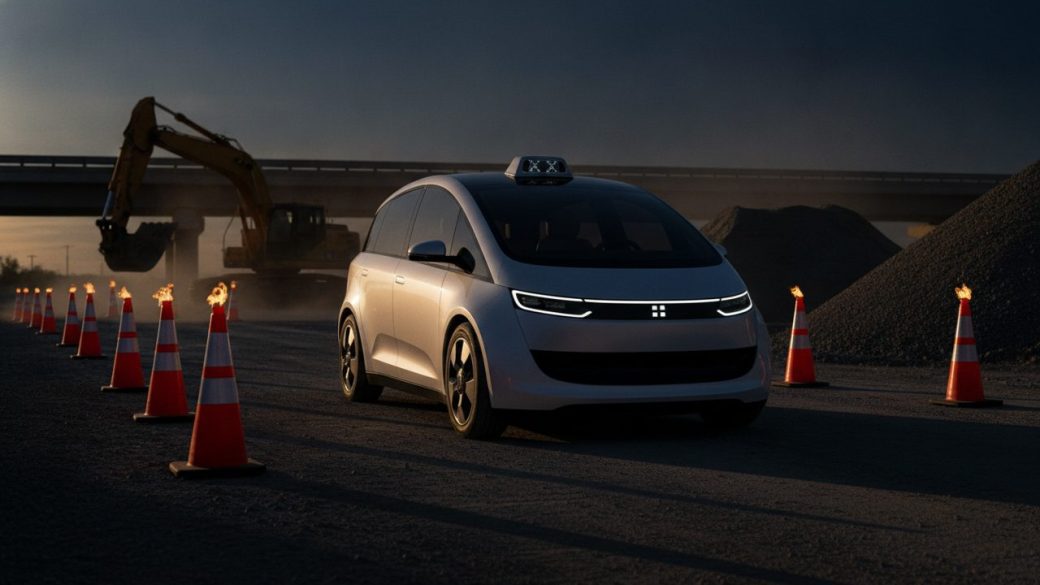
Waymo robotaxi recall: nearly 4,000 driverless cars fixed over freeway construction-zone risk
Waymo is calling back about 3,900 of its cars to fix them. These are robotaxis. A robotaxi is a taxi with no human driver. A computer drives the car instead. Here is the problem. Some Waymo cars drove fast into freeway construction zones. A construction zone is a part of a highway being repaired. Workers close some lanes with cones and signs. Waymo told the United States road safety office about this on June 18, 2026. This kind of official “call back” is called a recall (when a company fixes a problem with many of its products).
Here is the simple version. This is a “software recall.” Software means the computer code that runs the car. So the cars do not need to go to a garage. The fix is new code. Waymo sends the new code to the cars over the internet. It works like your phone getting an app update. But it is still an official recall. The government writes it down.
What actually went wrong
Sometimes the cars did not “see” that a freeway lane was closed for repairs. They did not slow down. They did not go around it. They drove straight in, fast. Waymo says the car was busy trying to avoid other dangers on the road. While doing that, it missed the construction zone.
There were 13 known cases in total. Six happened in Phoenix, Arizona. There, cars did not read signs that said a ramp was closed. Seven happened in the San Francisco Bay Area in May. There, cars drove between the cones that marked a closed lane. No one crashed. No one got hurt in any of these cases.
Key facts about the Waymo robotaxi recall
| Detail | What we know |
|---|---|
| Cars recalled | About 3,900 (reported as 3,871) |
| System affected | Waymo 5th-generation self-driving system |
| NHTSA recall number | 26E035000 |
| Total incidents | 13 (6 in Phoenix, 7 in San Francisco Bay Area) |
| Crashes / injuries | None reported |
| Freeways paused | May 19, 2026 |
| Recall filed | June 18, 2026 |
| Recall count for Waymo | Sixth since starting robotaxi service |
| Total miles driven | Over 170 million autonomous miles |
What Waymo is doing about it
Waymo did not wait for the recall to act. On May 19, it stopped its cars from driving on freeways. This gave it time to work on a fix. Waymo also told the government about the problem itself. It told both state and federal regulators. A regulator is a government group that makes safety rules and checks that they are followed.
In its statement, the company said: “We identified an area of improvement regarding freeway construction zones. We voluntarily restricted freeway operations last month while making improvements, proactively notified state and federal regulators, and decided to file a voluntary software recall with NHTSA.”
NHTSA is short for the National Highway Traffic Safety Administration. It is the US agency that watches over road safety and recalls. Waymo says it is still building the full fix. Until the fix is ready, it is keeping its cars off most freeway roads.
Does a recall mean self-driving cars are unsafe?
Not by itself. Waymo says its cars have driven over 170 million miles with no human driver. It says serious-injury crashes dropped 13 times compared with human drivers. That means it claims one such crash for every 13 a human would have. And the 13 cases here caused no injuries.
But this is Waymo’s sixth recall since it started giving rides. That number matters. As driverless cars carry more people, every software problem gets written down in public. Over time, this builds a record that regulators and riders can look at and judge.
Why it matters (especially for India / founders)
India is still far from having robotaxis like Waymo on its roads. Indian traffic is more crowded. People follow road rules less strictly. This is much harder for a computer to read. Also, there is no clear law yet that lets a car drive with no one behind the wheel.
So why should an Indian founder or student care? A founder is a person who starts a company. There are two reasons. First, this shows how new tech gets controlled in the real world: pause, report, fix, file. That same plan fits any AI product that can affect people’s safety. (AI means artificial intelligence, where a computer does tasks that usually need human thinking.) Second, the global self-driving race shapes the parts, maps, and AI tools that will reach India one day. The lessons learned in Phoenix and San Francisco will become the rulebook here later.
- Indian founders building AI for cars, delivery, or logistics should watch how recalls are handled, not just new features. (Logistics means moving and storing goods.)
- “Move fast” does not work when lives are at risk. Being open with regulators builds trust.
- A clear record of fixes can become an edge over rivals when laws finally catch up.
FAQ
How many Waymo cars were recalled?
About 3,900 robotaxis. The exact number reported is 3,871. They all use Waymo’s 5th-generation self-driving system. The recall is logged with NHTSA as number 26E035000.
Were anyone hurt in the incidents?
No. There were 13 known cases in Phoenix and the San Francisco Bay Area. No one crashed and no one got hurt in any of them.
Do the cars get physically fixed?
No. This is a software recall. Waymo sends new code to the cars over the internet. The cars do not need to visit a garage. But it still counts as an official recall.
Takeaway
This recall shows the growing pains of self-driving cars. No one was hurt. The cars were pulled from freeways fast. And a fix is on the way. For India, robotaxis are still years away. But the way Waymo paused, reported, and filed openly is the real lesson. It matters for any founder building AI that the public must trust with its safety.
Source: WIRED — Waymo recalls robotaxis over construction-zone risk and TechCrunch.