RBI monsoon growth risks: how a weak monsoon could hit India’s prices and growth
India’s central bank has given a clear warning. The story of RBI monsoon growth risks is now big news. In its June 2026 review, the Reserve Bank of India (RBI) named two big dangers for the economy. One is a weak monsoon. The other is fighting in other parts of the world. Rain has been far below normal this June. That could make food cost more and slow the economy down. But there was some good news too. One member of the rate-setting team said India’s growth could go past 7% if the world stays calm.
Let us explain this in simple words. We will tell you what the RBI does, what the repo rate is, and why low rain can affect your money.
First, the basics in plain words
The RBI (the Reserve Bank of India, the country’s main bank) controls how much money flows in the country. Its job is to keep prices steady and the economy strong.
The MPC (Monetary Policy Committee, a team of six people who set interest rates) meets once every two months. It decides how much it costs to borrow money in India.
Inflation means how fast prices go up. Say a bag of rice cost 100 rupees last year. If it costs 105 rupees this year, that is 5% inflation. The RBI wants inflation near 4%. It must not go above 6%.
The repo rate is the interest rate the RBI charges when it lends money to banks. When this rate is high, loans cost more, so people spend less. When it is low, loans cost less, so people spend more. This is the RBI’s main tool to control prices.
What the RBI actually said
The RBI kept the repo rate the same, at 5.25%. The MPC chose to wait and watch. It did not change anything. Why? Because the future is unclear. Two big worries hang over the economy.
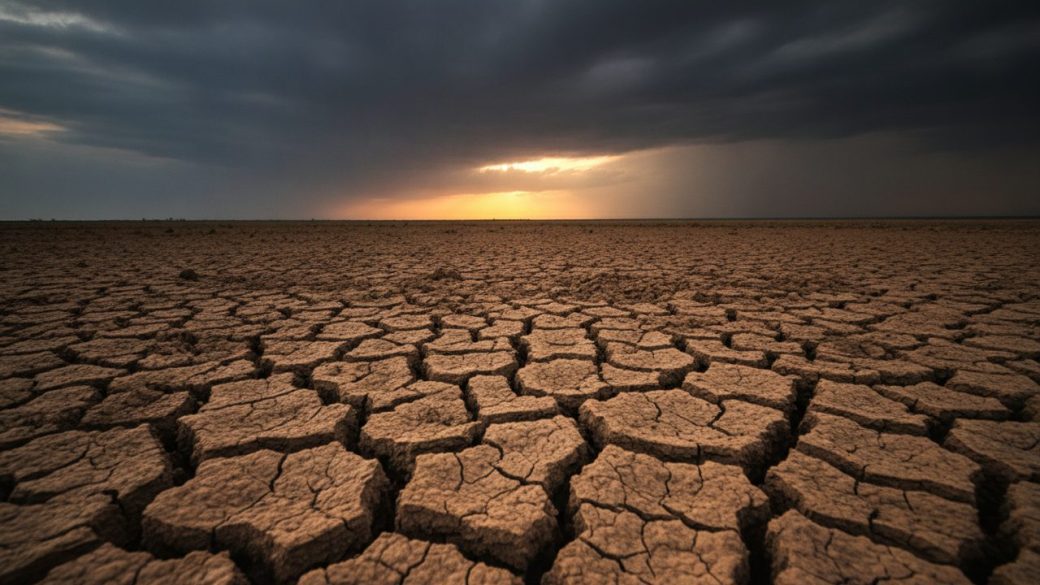
The first worry is the monsoon. June 2026 has been one of the driest in over a hundred years. So far, rain is about 42% below normal. Low rain is bad for farming. It means smaller crops, costlier food, and weaker buying in villages.
The second worry is the world. Fighting in West Asia has pushed up the price of oil and energy. Supply chains (the path goods take from the factory to the shop) have been broken in places. When oil costs more, almost everything in India costs more too. That is because India buys most of its fuel from other countries.
Because of these worries, the RBI now thinks retail inflation will be about 5.1% on average in the 2026-27 financial year. It warned that inflation could rise close to the 6% danger line in the third quarter if these problems stay. The bank also cut its growth forecast (its best guess for how fast the economy will grow) to 6.6%. In April, it had guessed 6.9%.
The hopeful view: 7% growth if peace lasts
Not all the news is bad. One MPC member gave a brighter view. He said India’s growth could reach or even cross 7% if the world stays at peace. In simple words, the fighting in West Asia is the main thing pulling growth down. If that fighting eases, oil prices will fall and people will feel more sure. Then the economy could grow much faster than the careful 6.6% guess.
RBI Governor Sanjay Malhotra said much the same. He said the world is still shaky because of West Asia tensions and high energy costs. But he added that India is now in a stronger spot to handle shocks from outside than it was in past hard times.
Key facts at a glance
| Item | Figure (as reported) |
|---|---|
| Repo rate | 5.25% (kept unchanged) |
| CPI inflation forecast, FY27 | 5.1% average |
| Inflation upper tolerance limit | 6% |
| GDP growth forecast, FY27 (new) | 6.6% |
| GDP growth forecast (earlier, April) | 6.9% |
| Possible growth “if peace lasts” | Above 7% (per an MPC member) |
| June 2026 rainfall deficit | ~42% below normal |
| MPC vote on rate | Unanimous to hold |
Why it matters (especially for India and founders)
This news touches almost everyone. Here is why it counts.
- For your loans: The repo rate stayed the same. So home and business loan rates will likely not jump soon. Borrowing costs are steady for now.
- For food bills: A weak monsoon can raise the price of rice, vegetables and pulses. Keep an eye on your grocery costs in the coming months.
- For founders: Steady rates mean the cost of funding stays easy to plan for. But weaker village buying can hurt sales for firms that sell to small towns.
- For investors: A 6.6% growth guess is still strong next to the rest of the world. India is still one of the fastest-growing big economies.
For business owners, the lesson is to plan for two roads. Build for the careful 6.6% world. But stay ready to grow faster if global tensions cool down. If you are watching the wider market mood, our coverage of the recent IPO-led market rally shows how investor trust is shifting along with these policy signals. Demand linked to defence is rising too, as seen in the strong BEL defence order book.
FAQ
Why did the RBI keep the repo rate unchanged?
The RBI is unsure about two things: the weak monsoon and global oil prices. Both could push inflation up. So the MPC chose to wait and watch instead of moving rates.
How does a weak monsoon raise prices?
Less rain means smaller harvests of crops like rice and vegetables. When there is less food but people still want the same amount, prices go up. Food makes up a big part of India’s inflation.
Can India’s growth really reach 7%?
One MPC member thinks it can. But only if the world stays at peace and oil prices fall. The RBI’s careful base guess is 6.6%. The higher number depends on tensions easing.
The takeaway
The RBI monsoon growth risks message is one of caution mixed with hope. A dry June and fighting around the world could lift prices and slow growth. Even so, India’s economy is still set to grow strongly. If the rains come back and the world calms down, growth above 7% is possible. For now, the RBI is watching the sky and the news closely. You should too.
Sources: Financial Express — Monsoon risks loom over growth, prices: RBI and Financial Express — Growth rate to be 7% if peace lasts: MPC member.