Norway AI in Schools: Why a Rich, Digital Country Is Bringing Back Books
Norway is changing its mind about screens in the classroom. This story about Norway AI in schools is now big news in education. Norway is one of the richest countries in the world. It also uses a lot of computers and the internet. But now it wants to limit how much students use AI in class. AI means artificial intelligence — computer software that can answer questions, write text, and solve problems on its own. At the same time, Norway wants to bring back printed books for children to read.
This is a surprising change. For years, many schools rushed to add tablets and apps. Now Norway is slowing down. Leaders there worry that too much screen time and too much AI may be hurting how children learn.
What Norway is doing
Norway is starting to limit the use of AI in its schools. In plain words, the country wants rules. These rules will control when and how students use AI tools to do their work. This is a policy change. A policy is an official plan or rule made by a government or a group.
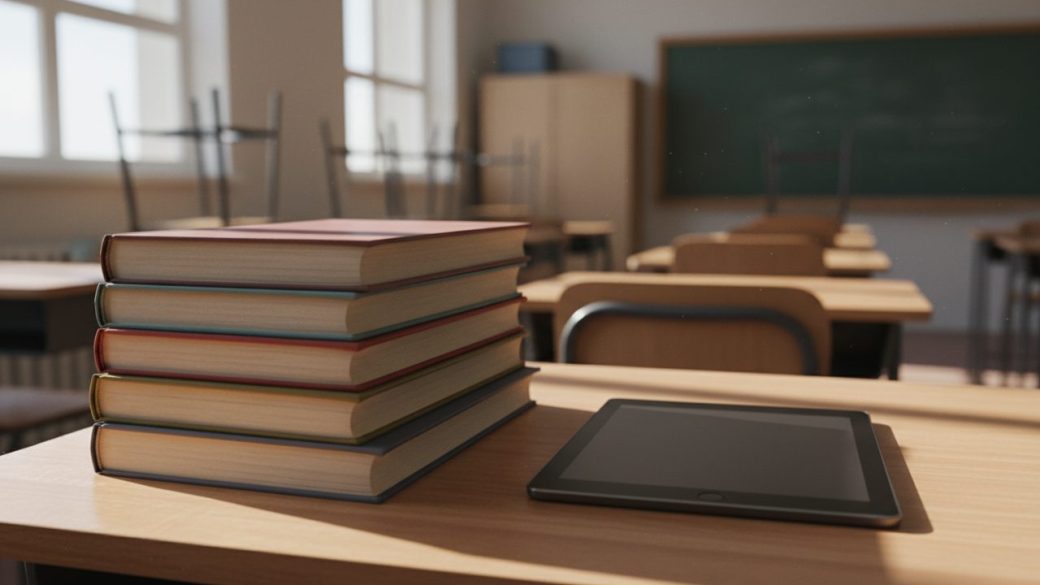
Norway also wants to bring real books back into classrooms. That means more printed pages and fewer screens for some lessons. The goal is to mix new technology with old-fashioned reading and writing. This is a big change for a country that put so much tech in its schools.
Why Norway is worried
The main worry is how AI and screens affect how children learn. One worry is weaker deep reading. Deep reading means reading slowly and carefully. You do this so you really understand and remember what you read. It is not the same as quickly scrolling or skimming on a screen.
A second worry is that students lean on AI too much for answers. Many students now use a chatbot to do their homework. A chatbot is an AI program you can type to, and it types back like a person. If a chatbot gives the answer every time, students may stop thinking for themselves. They may never learn to work through a hard problem. But that struggle is often how real learning happens.
A third worry is too much screen time. Screen time means the hours a person spends looking at phones, tablets, and computers. Teachers fear that long hours on screens make it harder to focus. It can also leave less time for reading, writing by hand, and talking face to face.
The other side (where AI can help students)
To be fair, AI in school is not all bad. Used the right way, it can help a lot. AI can act like a patient tutor. It can explain a tricky idea in many ways until a student understands it.
AI can also help students who learn at different speeds. A fast learner can move ahead. A slower learner can get extra practice. AI tools can help children with disabilities. They can translate lessons into other languages. They can also save teachers time by doing simple, repeated tasks. This kind of technology is often called edtech. Edtech is short for education technology. It means software and devices made for teaching and learning.
So the real question is not “AI or no AI.” It is about balance. The idea is to use AI as a helper. It should not be a crutch that does all the thinking for you.
Key points
| Point | Detail (as reported) |
|---|---|
| Main move | Norway is moving to restrict the use of AI in schools |
| Books | Physical books are being brought back into classrooms |
| Reason | Concern over how AI and screens affect children’s learning |
| Key worries | Weaker deep reading, over-reliance on AI for answers, too much screen time |
| Why notable | A wealthy, highly digital country is pulling back on classroom tech |
Why it matters (especially for India’s schools and edtech boom)
India has a huge edtech market, and it is growing fast. Millions of students use learning apps. AI tutors are spreading quickly too. So Norway’s move is worth watching closely here.
Norway is a rich, digital country, and it is having second thoughts. So Indian parents, teachers, and edtech companies may ask the same questions. How much screen time is healthy? When should a child use a chatbot, and when should they think on their own? How do we protect deep reading?
There is also a bigger pattern here. Around the world, governments are making their own tech rules — India is pushing for its own internet root server. Schools are now part of this same trend. Each country is deciding for itself how much technology belongs in the classroom.
FAQ
Is Norway banning AI in schools completely?
No. Norway is moving to limit AI use in schools. It is not a total ban. The aim is to stop students from leaning on AI too much and to protect reading.
Why bring back printed books?
Printed books help deep reading and focus. Norway hopes more paper and fewer screens will help children read carefully and remember more.
Does this mean AI is bad for students?
Not exactly. AI can help students learn when it is used well. The worry is about balance. AI should be a helper. It should not do all the thinking.
The takeaway
Norway’s plan is a reminder that newer is not always better. Technology can help children learn, but only with the right balance. AI is spreading into classrooms everywhere, including India. The smart path is careful and clear. We can keep the best of books and the best of AI.
Source: MediaNama — Norway to restrict AI use in schools, bring back books in classrooms