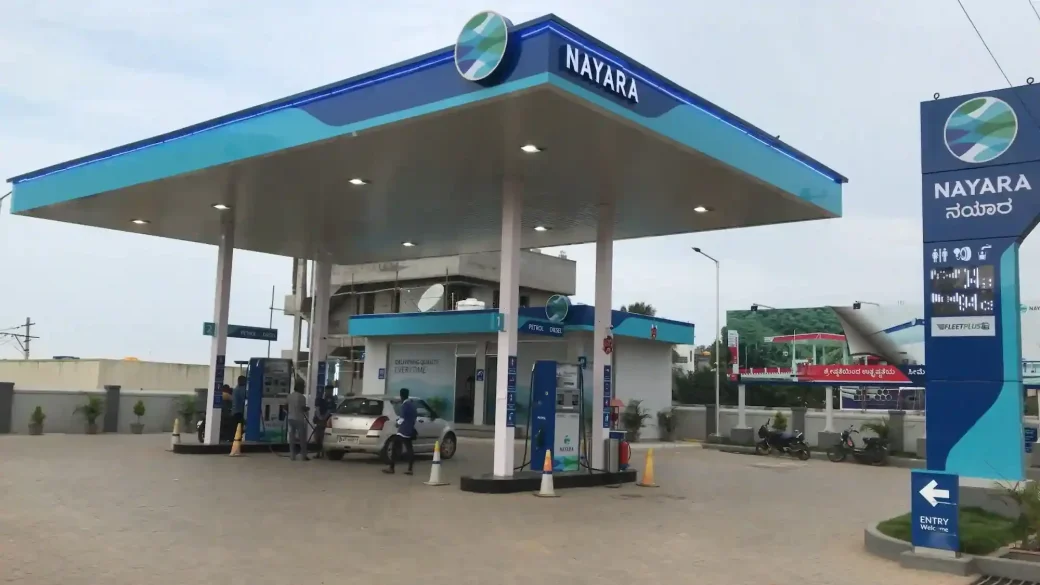
Russia-backed Nayara Energy has officially crossed the milestone of 7,000 petrol pumps across India, firmly cementing its position as the country’s largest private fuel retailer.
The achievement highlights a massive network expansion strategy, leaving competing private entities like Reliance-bp (which operates around 2,000 stations) well behind.
1. Speed-Running the Network Build-Out
Nayara’s push past the 7,000 mark has been characterized by an incredibly rapid infrastructure blitz over the last year and a half:
- One Pump a Day: The company added more than 500 new retail outlets over the past 18 months, averaging nearly one brand-new fueling station every single day.
- The Structural Reach: The expanded footprint stretches across high-volume national highways, industrial growth corridors, metropolitan tier-1 hubs, and smaller tier-2 cities.
2. A Strategic Bet on the Rural “Hinterlands”
Unlike traditional private networks that primarily target high-margin urban corridors or commercial highway freight routes, Nayara’s current growth cycle relies on a heavy regional tilt.
                  ┌──► ~2,300+ Outlets (1/3rd of network) placed in underpenetrated hinterlands
Nayara Footprint ─┤
                  └──► Anchored by the 20 MMTPA Vadinar Refinery in Gujarat (8% of India's output)
Nearly one-third of Nayara’s total retail outlets are deliberately located in deep rural hinterland areas. By targeting underserved, developing markets where public sector fuel infrastructure is sparse, Nayara is locking in a highly loyal, localized consumer base to insulate its retail revenues from metropolitan price wars.
3. The DODO Model and Economic Impact
The logistics of managing over 7,000 locations are handled primarily through a highly scalable Dealer Owned Dealer Operated (DODO) franchise model.
By delegating forecourt management to local entrepreneurs while maintaining strict corporate oversight for uniform fuel quality and quantity standards, the company avoids the heavy capital expenditure of direct land acquisition. According to company statements, this decentralized ecosystem now supports more than 55,000 local livelihoods across India through dealer partnerships, engineering, and service personnel.
4. The Broader Upstream Picture
The expansion of Nayara’s retail presence matches a broader transformation of its parents’ downstream strategy:
- The Rosneft Anchor: Russian state energy giant Rosneft remains the single largest shareholder, holding a controlling 49.13% stake in the Mumbai-headquartered firm (formerly known as Essar Oil).
- Crude-to-Chemicals Migration: The fuel network is backed directly by Nayara’s massive 20 million metric tonnes per annum (MMTPA) refinery in Vadinar, Gujarat—India’s second-largest single-site refining complex. To capture higher margins, the company is spending heavily to expand past baseline gasoline production, recently launching a 450 KTPA (kilo-tonnes per annum) polypropylene plant to transition the Vadinar asset into a high-value petrochemical facility.