Key takeaways
- Tunnel work is starting on a key stretch of the Mumbai Ahmedabad bullet train project.
- The line is India’s first high-speed rail route, built to connect Mumbai and Ahmedabad faster than today’s trains.
- The tunnel section matters because hard underground work often decides the pace of a big rail project.
- The project also includes stations, bridges, tracks, and systems that must all come together before trains can run.
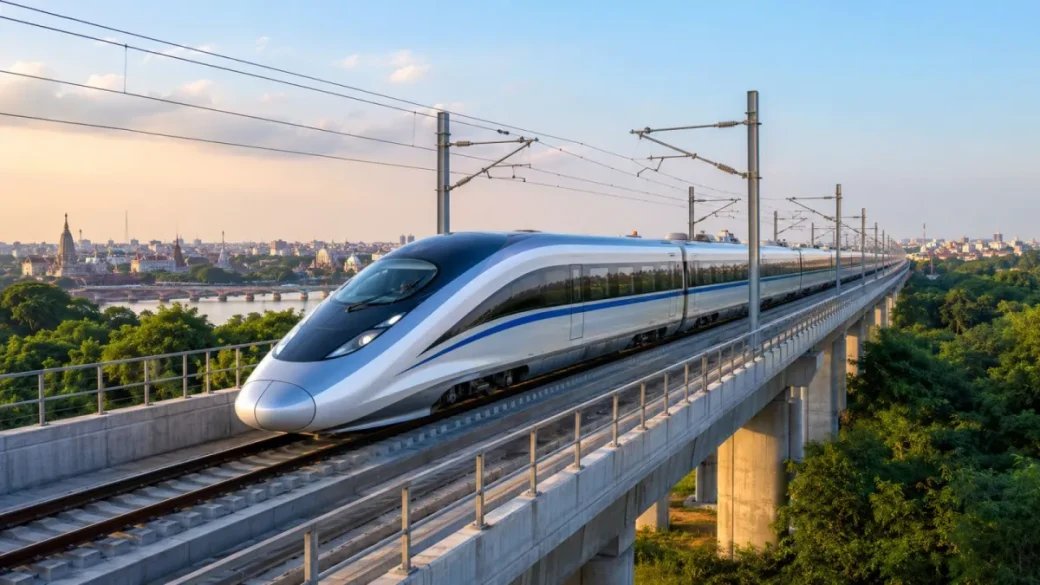
The Mumbai Ahmedabad bullet train is India’s first high-speed rail line. A bullet train means a very fast passenger train. Tunnel work on this route is now starting on an important underground section, so the project has reached a new building stage.
Why does the Mumbai Ahmedabad bullet train tunnel matter?
This step matters because tunnels are some of the toughest parts to build. Workers must dig through the ground safely, while also protecting roads, homes, and utilities above. If tunnel work moves well, the whole project often gets a big push.
The Mumbai Ahmedabad bullet train has many moving parts. It needs stations, viaducts, tracks, power systems, signalling, and rolling stock. Signalling means the system that tells trains when to move and stop. But tunnels are special, because they demand careful engineering from day one.
According to the National High Speed Rail Corporation Limited, or NHSRCL, work on this tunnel section is set to begin on Sunday. NHSRCL is the government company building the line. That makes this a key moment, since underground construction usually starts only after long design, surveys, and site preparation.
What exactly is being built?
The project will link Mumbai in Maharashtra with Ahmedabad in Gujarat. The full corridor is about 508 kilometres long. That is roughly the distance of driving from Delhi to Chandigarh and back, with extra kilometres added.
The route is designed for high-speed trains that can run far faster than regular intercity services. High-speed rail means trains built for very fast travel on special tracks. As a result, the line aims to cut travel time sharply once it opens.
Much of the corridor runs on elevated structures. Elevated means built above the ground on pillars. But one important stretch must go underground, and that is why tunnel work gets so much attention.
Here is a quick look at the project scale:
| Project item | Figure | What it means |
|---|---|---|
| Route length | 508 km | Full Mumbai-Ahmedabad high-speed corridor |
| States covered | 2 | Maharashtra and Gujarat |
| Major cities linked | 2 | Mumbai and Ahmedabad |
| Project type | 1st | India’s first bullet train line |
How big is the Mumbai Ahmedabad bullet train project?
It is one of India’s biggest transport projects. Transport project means a large public work for moving people or goods. In fact, this is also one of the most watched rail projects in the country, because it will show whether India can build more high-speed lines later.
The corridor will use Japanese Shinkansen technology. Technology here means the train design and operating systems. Japan’s Shinkansen is famous for speed and safety, so planners see it as a tested model.
The project is also costly and complex. Big rail lines need land, civil work, tracks, train sets, depots, and safety approvals. Since all of those parts must fit together, delays in one area can affect others.
Mumbai Ahmedabad bullet train: key numbers508 km2 states1st lineRouteStatesIndia debut
Why has this project taken so much time?
Large rail projects rarely move in a straight line. Land acquisition, approvals, contracts, and difficult construction can slow things down. Land acquisition means the government gets land needed for public work, usually with compensation.
Some parts are harder than others. Building a station above ground is one challenge. Digging below busy urban areas is another level, because crews must manage soil, water, traffic, and safety at once.
That is why this tunnel stage stands out. It shows planning has moved into physical execution on a crucial segment. Meanwhile, other sections of the corridor have also seen work on piers, bridges, and stations.
If you want a wider view of India’s infrastructure push, read our piece on the modified UDAN scheme and who may benefit. You can also see how heavy industry projects move in our report on the Rayalaseema steel project starting after 20 years of delay.
What could this mean for travel and business?
If the line works as planned, trips between the two cities should become much faster. Faster travel can help business people, families, and tourists. It can also make same-day travel easier, so companies may rethink where they base teams and meetings.
There may be wider effects too. Areas near stations often see more shops, offices, and housing plans. For example, metro stations in many cities changed local property markets over time, though each project is different.
The Mumbai Ahmedabad bullet train could also become a test case. A test case means a real example used to judge what should happen next. If it proves useful and reliable, India may feel more confident about future high-speed corridors.
The clearest takeaway is simple: the Mumbai Ahmedabad bullet train has moved into a key tunnel-building phase, and that matters because underground work is one of the hardest parts of any major rail line.
What should readers watch next?
First, watch construction progress on the tunnel itself. Tunnel boring needs time, machines, safety checks, and support work. Then watch how stations, tracks, and electrical systems move, because a rail line opens only when all parts are ready.
Second, look for official updates from NHSRCL and the Railway Ministry. Primary source means the original official source of information. You can track project notes on the NHSRCL website and broader rail updates from the Indian Railways portal.
There is also a bigger policy angle. India is investing in roads, airports, factories, and digital systems at the same time. Our stories on Chennai’s water and sewage upgrade backed by ADB and robots getting busier in factories show how this wider build-out is changing the country.
For now, the headline is clear. The Mumbai Ahmedabad bullet train has crossed a notable construction marker. It is not the finish line, but it is one of the moments that tells you the project is still moving from plans on paper to concrete, steel, and tunnels in the ground.
FAQs
What is the Mumbai Ahmedabad bullet train?
The Mumbai Ahmedabad bullet train is India’s first planned high-speed rail line between Mumbai and Ahmedabad. It is meant for very fast passenger travel.
Why is tunnel work such a big deal?
Tunnel work is difficult, costly, and slow to prepare. So when it starts, it usually means a project has cleared major design and site hurdles.
How long is the route?
The full corridor is about 508 kilometres long. It will connect major parts of Maharashtra and Gujarat.