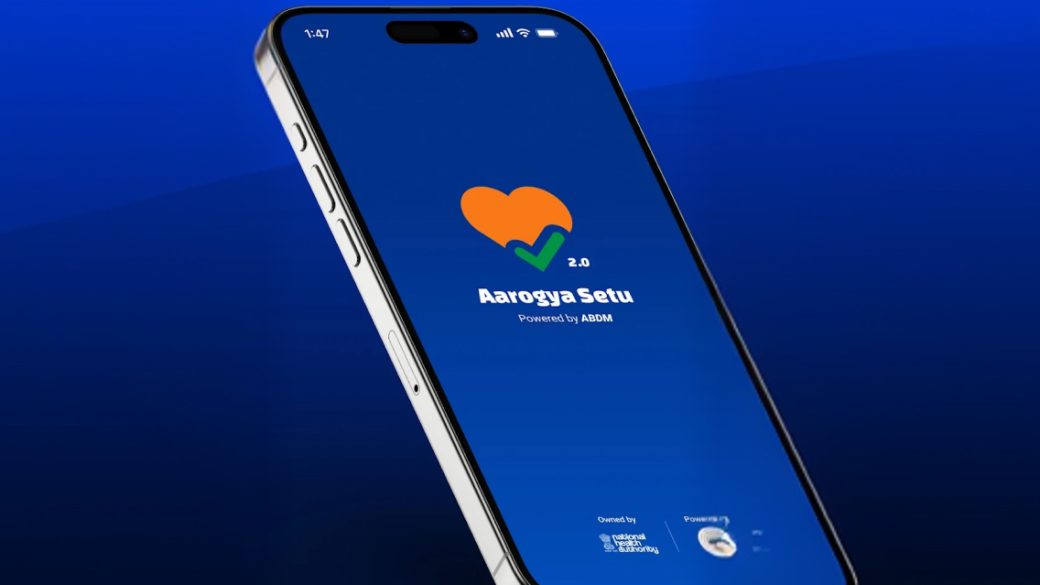
In a massive evolutionary leap for India’s digital public health infrastructure, the National Health Authority (NHA) has officially launched Aarogya Setu 2.0.
The upgraded application completely strips away its legacy, COVID-era contact tracing framework and rebuilds it into a unified, AI-enabled Personal Health Record (PHR) vault.
To drive the heavy lifting behind this transition, the NHA has partnered with Google to integrate its state-of-the-art Gemma 4 open-source AI model alongside a newly deployed Medical Data Toolkit. The goal is straightforward but massive: instantly converting India’s chaotic, paper-based medical paperwork into standardized digital history profiles.
1. Reversing the Paper Jumble: The Core AI Processing
The biggest friction point in India’s digital health mission has been the nature of medical records themselves. Patients and clinics manage a fragmented jumble of physical lab reports, PDFs, handwritten summaries, and scanned phone images.
Aarogya Setu 2.0 utilizes the integrated Gemma 4 model to process these unstructured files through a systematic automated pipeline:
 [ PAPER-BASED LAB REPORT / IMAGE ] ──► User Uploads to Aarogya Setu 2.0 Vault
                                                 │
                                                 ▼
 [ GOOGLE GEMMA 4 CHASSIS        ] ──► Intelligently scans text/image to identify document type
                                                 │
                                                 ▼
 [ MEDICAL DATA TOOLKIT         ] ──► Extracts parameters: Test names, methods, and clinical values
                                                 │
                                                 ▼
 [ FAST HEALTHCARE (FHIR)       ] ──► Maps raw text into globally standardized medical format
By structuring information directly into the internationally recognized Fast Healthcare Interoperability Resources (FHIR) data architecture, the app ensures that a patient’s medical history can travel with them. If a patient changes doctors or moves across different hospitals participating in the Ayushman Bharat Digital Mission (ABDM), their clinical profiles can be shared securely without getting lost in translation.
2. Democratizing the Tech: The Open-Source Multi-Tool
Beyond the consumer-facing app, Google has simultaneously open-sourced the Medical Data Toolkit at no cost for developers, health-tech startups, and hospital networks.
The strategy behind the rollout focuses intensely on lowering the entry barrier for domestic healthcare innovation:
- Built-In ABDM Compliance: Startups building custom hospital software no longer need to spend months coding interoperability engines from scratch. The toolkit comes pre-optimized to map standard laboratory reports and observations into ABDM-compliant formats out of the box.
- Strict Rules-Based Structuring: To eliminate the dangerous “hallucination” risks associated with traditional LLMs in medical contexts, the toolkit utilizes a strict rules-based approach to group and organize the information extracted by Gemma 4, keeping data accuracy exceptionally tight.
- Complete Localized Control: The platform explicitly ensures that the patient remains the absolute, sole custodian of their data. Sharing historical lab parameters with an insurance provider or a diagnostic clinic operates on an explicit, case-by-case consent-based sharing architecture.
3. The Digital Scale Matrix
The deployment of Gemma 4 inside India’s health stack Lands at a time when the country’s broader digital public infrastructure (DPI) is logging unparalleled volume milestones:
| DPI Health Initiative | Current Cumulative Scale | The Operational AI Impact Horizon |
| Ayushman Bharat Health Accounts (ABHA) | Over 80 Crore Accounts Created | Provides a massive, ready-made structural user base to transition from static IDs to intelligent health profiles. |
| Linked Digital Health Records | Over 100 Crore Linked Nationally | Shifts from a simple historical data filing cabinet to an active, scannable clinical summary line. |
| eSanjeevani Telemedicine platform | Over 40 Crore Consultations | Allows remote tele-consulting doctors to immediately access clean, AI-summarized health charts instead of messy picture uploads. |
As Aarogya Setu 2.0 rolls out to mobile app stores nationwide, it marks a pivotal global precedent for how governments utilize open-source artificial intelligence. By using advanced language models to solve everyday data fragmentation, the platform is moving toward an infrastructure where an individual’s long-term wellness data is securely organized and completely within their own control.