In a major leap forward for India’s heavy-lift launch capabilities and the Gaganyaan human spaceflight roadmap, the Indian Space Research Organisation (ISRO) successfully conducted a high-stakes hot test of its indigenous semi-cryogenic engine power head.
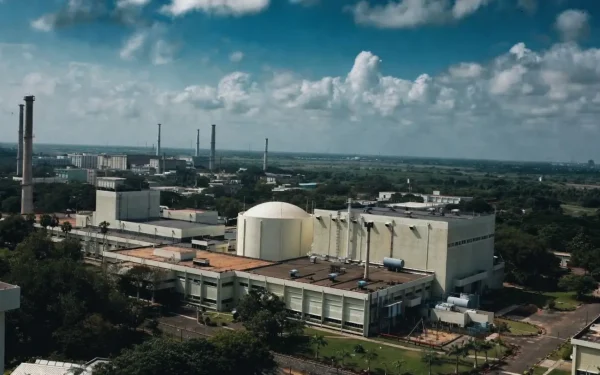
The critical test took place on June 24, 2026, at the ISRO Propulsion Complex (IPRC) in Mahendragiri, Tamil Nadu. The system was pushed to a massive 175-tonne thrust level, running steadily at 88% of its fully designed capacity for the first time.
1. Firing the “Power Head”: The Tricky Heart of the Rocket
This firing marked the eighth milestone in a rigorous series of hot tests using the Power Head Test Article (PHTA). To manage experimental risk, engineers isolated the trickiest, highest-pressure part of the engine while leaving out the actual combustion thrust chamber:
- The Component Mix: The power head encompasses nearly all core engine plumbing systems—including the gas generator, pre-burner, control valves, and massive turbopumps.
- Crushing Pressure Success: The test successfully validated the integrated turbopumps as they safely delivered extreme outlet pressures of 400 bar and 500 bar under intense mechanical stress.
- The Growth Ladder: This 175-tonne success builds directly on top of previous, lower-load trials that carefully evaluated the system at 47% (94 tonnes) and 60% (120 tonnes) capacity.
 [ Early Development Baseline ] ──► Tested at 47% & 60% Load Limits
                                              │
                                              ▼ (June 24, 2026 Milestone)
 [ Advanced 175-Tonne Hot Run ] ──► Pushed to 88% Strength (Main Turbopumps Hit 500 Bar)
                                              │
                                              ▼ (Next Strategic Off-Hop)
 [ Upcoming Full-Scale Target ] ──► Readying for 100% Load Firing at 200 Tonnes
2. Why the Semi-Cryogenic Shift is a Game-Changer
A fully cryogenic stage (like the upper stage of India’s LVM3) burns hydrogen and oxygen, both of which must be chilled to hundreds of degrees below zero. A semi-cryogenic engine simplifies the math by introducing a denser, more practical fuel mix:
- The Propellant Blueprint: The engine relies on deeply chilled Liquid Oxygen (LOX) as its oxidizer but swaps out complex liquid hydrogen for highly refined, space-grade kerosene (isrosene).
- The Operational Advantage: Kerosene is non-toxic, highly stable at everyday temperatures, significantly denser than hydrogen, and substantially cheaper. This translates directly to more structural push per rupee.
- The Strategic Target: Designated as the SC120 stage, this 200-tonne thrust engine is being explicitly designed to replace the current L110 liquid core stage of India’s workhorse LVM3 rocket, immediately expanding its lifting capacity for heavy satellites and deep-space payloads.
3. Clearing the Path to 100% and Beyond
ISRO Chairman V. Narayanan hailed the hot test as a defining milestone, confirming that the telemetry matched predictions perfectly.
The successful run gives scientists the absolute data confidence required to execute a full-scale, 100% thrust test at 200 tonnes, which will soon be followed by an integrated test of the complete engine assembly including its ignition chamber. By validating this ultra-powerful propellant architecture, India is locking down the heavier, cost-effective heavy-lift hardware required to eventually lift its own space station modules and send deeper robotic missions to the Moon.
ISRO Next-Gen Engine Test Deep Dive provides a complete analytical breakdown of the 175-tonne thrust milestone, exploring how the shift to semi-cryogenic kerosene fuel will lower mission costs and power the heavier payloads required for India’s upcoming crewed space flights.