In a major scientific breakthrough that expands the boundaries of atomic energy, India has inaugurated the world’s first hydrogen production facility powered directly by the process heat of a nuclear reactor.
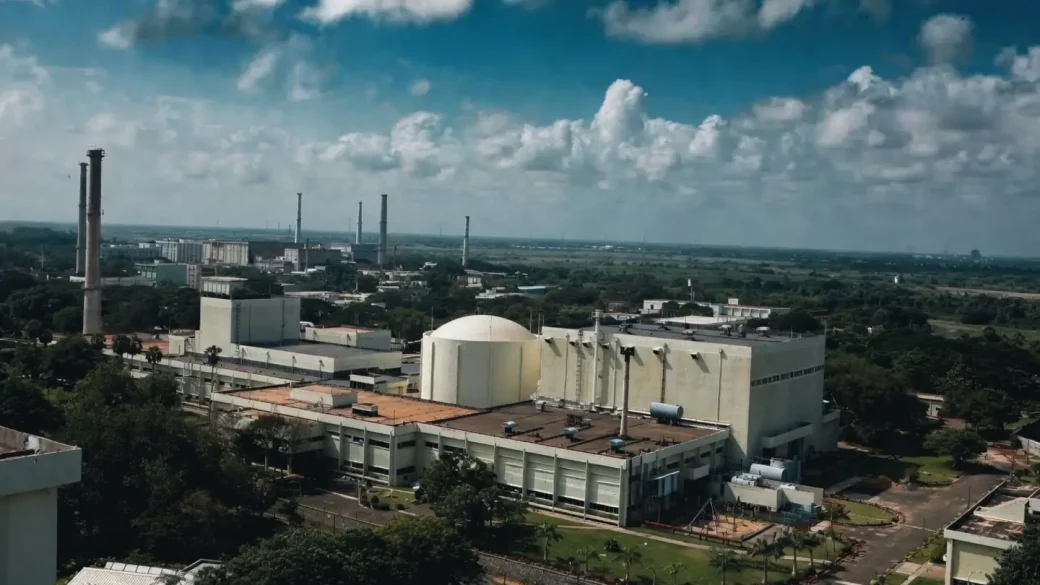
The pioneering pilot plant was officially commissioned on Friday, June 26, 2026, at the Indira Gandhi Centre for Atomic Research (IGCAR) in Kalpakkam, Tamil Nadu. The project represents a monumental paradigm shift—proving that advanced nuclear infrastructure can be weaponized for large-scale, carbon-free fuel creation rather than being limited strictly to grid electricity generation.
1. The Chemistry: Splitting Water Without Electricity
Traditional “green” hydrogen relies heavily on water electrolysis, a method that consumes massive amounts of renewable electricity to force water molecules apart. India’s new facility entirely bypasses this electrical bottleneck by using a thermochemical water-splitting cycle driven by raw heat:
- The Cu-Cl Cycle: The plant utilizes the Copper-Chlorine (Cu-Cl) thermochemical cycle, a closed-loop chemical mechanism that continuously splits water into clean hydrogen and oxygen while perfectly recycling its copper and chlorine compounds.
- The Thermodynamic Advantage: Among various global high-temperature alternatives, the Cu-Cl cycle is considered the holy grail because it operates at relatively lower temperatures (ranging between $100^\circ\text{C}$ and $530^\circ\text{C}$) while maintaining exceptional thermodynamic efficiency.
 [ Traditional Green Hydrogen ] ──► Renewable Energy ──► Massive Electricity Consumption ──► Electrolysis
                                                                                               │
                                                                                               ▼ (The Kalpakkam Pivot)
 [ Nuclear-Heat Zero-Carbon   ] ──► FBTR Nuclear Reactor ──► Direct Process Heat (100-530°C) ──► Cu-Cl Cycle
2. A Masterclass in Indigenous Collaboration
The facility serves as a technology demonstrator born from decades of synchronized cross-institutional research within India’s Department of Atomic Energy (DAE):
- The Design Anchor: The complex Cu-Cl thermochemical processing hardware was designed and developed entirely from scratch by scientists at the Bhabha Atomic Research Centre (BARC) in Mumbai.
- The Thermal Engine: To power the chemical reaction, the plant is grafted onto the Fast Breeder Test Reactor (FBTR) at IGCAR Kalpakkam, leveraging its liquid-sodium-cooled fast reactor architecture to extract stable, high-temperature process heat.
- The Milestone Handshake: The historic launch was formally inaugurated by Dr. Ajit Kumar Mohanty, Secretary of the DAE and Chairman of the Atomic Energy Commission, alongside IGCAR Director Sreekumar G. Pillai.
3. Fueling Stage 2 of India’s Nuclear Vision
The successful commissioning of the pilot plant injects massive momentum into India’s long-term three-stage nuclear power programme.
By proving that its fast breeder infrastructure—which also celebrated the criticality of the massive 500 MWe Prototype Fast Breeder Reactor (PFBR) earlier this year—can seamlessly double as industrial heat engines, the DAE is laying down the blueprint to decouple heavy industries like petroleum refining, steel manufacturing, and fertilizer production from coal and natural gas. The operational data gathered over the coming months will be utilized to optimize the Cu-Cl chemical flow, paving the way for full commercial-scale deployment across India’s upcoming advanced nuclear fleet by the turn of the decade.