In a major relief for the hospitality, restaurant, and manufacturing sectors, the Ministry of Petroleum and Natural Gas has officially restored commercial and industrial Liquefied Petroleum Gas (LPG) supplies to pre-crisis levels.
The directive completely withdraws the strict allocation caps and emergency rationing measures introduced in early March 2026 at the peak of the West Asia energy crisis. The normalization follows a steady stabilization of international crude markets and improved domestic stock buffers.
1. The Rollback Architecture: What Changes Now
The Ministry’s formal resolution lifts the phased restrictions that previously capped non-domestic gas allocations at 70% of normal requirements:
- Non-Domestic Packed LPG (19-kg & 47.5-kg Cylinders): All sector-specific quotas and state-wise rationing caps are entirely withdrawn. Hotels, small diners, canteens, and commercial kitchens can now procure bottled LPG without volume constraints.
- Bulk LPG (Industrial Scale): The government has relaxed the total freeze on bulk industrial LPG, restoring allocations up to 50% of pre-crisis consumption levels. Bulk shipments had been completely suspended at the onset of the West Asia conflict to prioritize baseline fuel stocks.
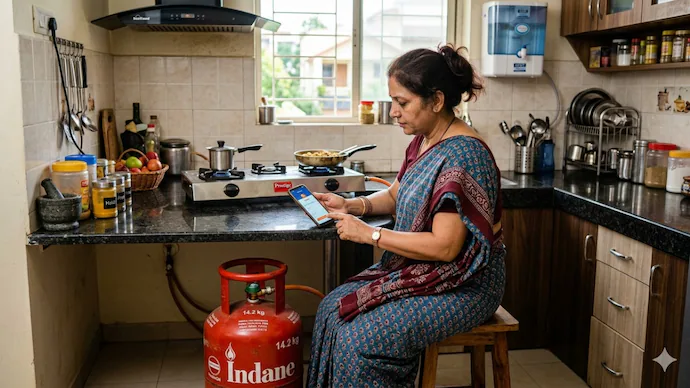
- The Black Market Cold Stop: During the peak restriction months, smaller food establishments were pushed to the brink—forced to trim menus, pivot to electric induction systems, or buy heavily marked-up cylinders on the black market. The full supply restoration eliminates this pricing bottleneck.
                  [ Commercial LPG Supply Recovery Timeline ]

  March 2026 (Peak West Asia Crisis)  █████ Severe Rationing (Bulk Frozen, Commercial Capped)

  May 2026 (Phased Tranches)          ██████████████████ 70% Allocation Level Cap

  June 2026 (Current Policy Rollback) ██████████████████████████████ 100% Full Supply Restored
2. Relief for the Petrochemical and Chemical Industries
To maximize cooking gas production when imports were threatened, the government had invoked emergency powers under the Essential Commodities Act, forcing domestic refineries to divert all C3 (propane) and C4 (butane) stream byproducts away from industrial applications into the LPG pool.
With imported LPG cargo arrivals returning to a predictable rhythm, that emergency mandate has been officially eased:
Unlocking the Feedstock: Refineries are now permitted to scale down the mandatory diversion of C3-C4 streams, freeing up vital chemical building blocks for the petrochemical, pharmaceutical, and paint industries. However, the ministry has established a strict baseline safety buffer: refineries must ensure total indigenous LPG production does not dip below 40,000 metric tonnes (40 TMT) per day.
3. The Catch: The Permanent Shift Toward Piped Gas (PNG)
While the government handed a major logistical win back to commercial operators, it is using the aftermath of the crisis to aggressively accelerate a permanent structural transition away from bottled gas:
| Consumer Segment | Crisis-Era Status | Post-Crisis Mandate & Strategy |
| Existing PNG Migrators | Over 10 lakh commercial connections gasified since March 2026. | Forbidden from returning to LPG. Businesses that shifted to Piped Natural Gas during the crisis must remain on the network. |
| Network-Adjacent Consumers | Held temporary commercial LPG allocations over the last 90 days. | Progressive Transition: OMCs and City Gas Distribution (CGD) entities will coordinate to permanently cut off cylinder reliance for any facility within reach of a working PNG pipeline. |
| Data Monitoring Infrastructure | Managed via ad-hoc state allocation committees. | Public sector Oil Marketing Companies (IOCL, HPCL, BPCL) are mandated to maintain a Unified Sectoral Database to track every commercial and industrial buyer. |
By maintaining real-time digital visibility over all non-domestic users, the government aims to prevent future panic-hoarding if geopolitical energy friction flares up again, while structurally migrating urban commercial centers onto India’s expanding, fixed city-gas grids.