📚 New to this topic? Read our full guide: Generative AI Explained.
India in Talks With the US to Access Anthropic’s Fable 5 AI Model
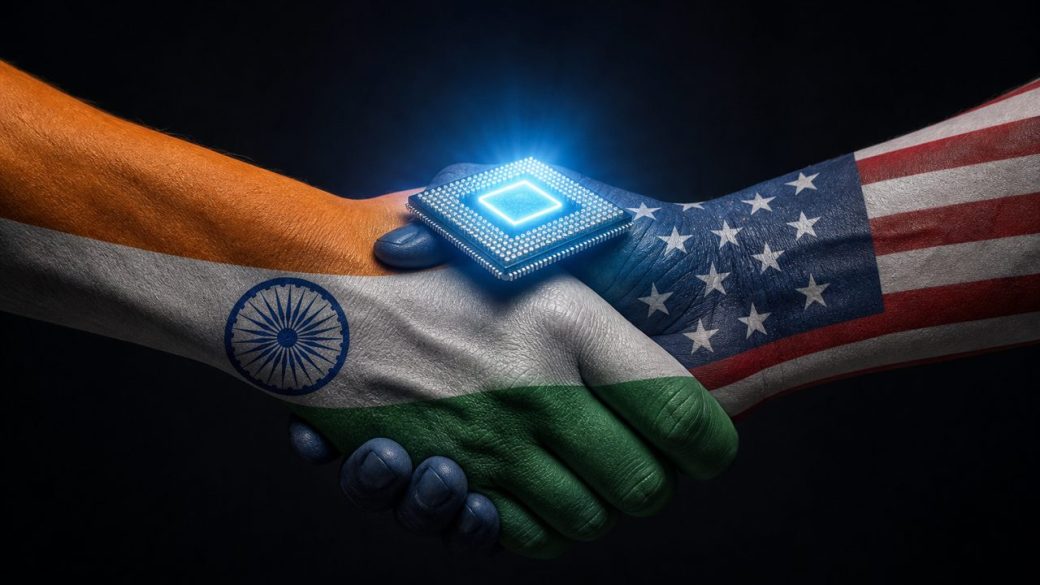
India is in talks with the United States to gain access to Anthropic’s Fable 5 AI model. This is one of Anthropic’s newest and most powerful AI systems. The talks matter because the US recently ordered Anthropic to block this model for all foreign users. India now wants a steady, trusted path to use it. The discussions are described as sensitive but friendly.
The Indian side is led by IT Secretary S. Krishnan. On the US side is Jacob Helberg, the Under Secretary of Economic Growth. The two sides spoke during the Pax Silica Summit, a meeting focused on technology and trade between allies.
What Is Fable 5?
Fable 5 is Anthropic’s general-purpose AI model. “General-purpose” means it can handle many everyday tasks, like writing, coding, and answering questions. It is part of Anthropic’s new Mythos-class family of models.
There is also a sister model called Mythos 5. That one is far more restricted. It is built for cybersecurity work under a US government program called Project Glasswing. So Fable 5 is the version meant for wider use, while Mythos 5 is the locked-down, security-focused version.
Key facts
| Item | Detail (as reported) |
|---|---|
| Model in talks | Anthropic Fable 5 (general-purpose, Mythos-class) |
| Sister model | Mythos 5 (restricted, cybersecurity, Project Glasswing) |
| India lead | IT Secretary S. Krishnan |
| US lead | Jacob Helberg, Under Secretary of Economic Growth |
| Forum | Second Pax Silica Summit |
| Current US rule | Export directive blocking Fable 5 for all foreign nationals |
Why the US Blocked Access
The US recently issued an export control directive. (An export control is a government rule that limits which technology can be shared outside the country.) This directive told Anthropic to block Fable 5 for all foreign nationals. That even included Anthropic’s own non-US staff.
As a result, the models were switched off globally for outside users. Washington’s worry is that the most advanced AI could fall into the wrong hands. This concern is real and recent. Anthropic itself recently accused China’s Alibaba of trying to copy Claude through millions of secret chats. Cases like that explain why the US is being so careful about who gets its top models.
Why India Wants a Reliable Deal
India wants steady access to advanced AI for its own development work. The problem is sudden cut-offs. If a model can be switched off overnight, Indian companies and researchers cannot depend on it.
IT Secretary Krishnan raised exactly this concern. He spoke about the need to understand “how this could be a reliable source.” In plain words, India does not just want access once. It wants a promise that the access will not vanish without warning.
The US, for its part, signalled goodwill. Officials said they would take a “gradual, measured approach” for “trusted partners” like India. Both sides reported “strong alignment,” which means they broadly agree on the goal even if the details are still being worked out.
FAQ
What is an export control directive?
It is a government order that limits sharing certain technology abroad. Here, it told Anthropic to block Fable 5 for non-US users for security reasons.
Is any money or dollar figure involved?
No financial figure was mentioned in the reports. The talks are about access and trust, not a stated price.
Has a final deal been reached?
No. The talks are described as ongoing and sensitive. Both sides report alignment, but nothing is finalised yet.
Why It Matters (Especially for India and Founders)
For Indian founders, this is a wake-up call. The most powerful AI models are no longer a simple online sign-up. They can be locked behind national security rules. A startup’s product plan could break if a key model is suddenly blocked.
This pushes two things up the priority list. One, founders should avoid depending on a single AI provider. Two, India’s own AI models matter more now. If access from abroad is shaky, home-grown systems become a safety net. This is also why India is investing heavily in local AI compute and cloud, including Amazon’s fresh push to build next-generation AI in Mumbai.
The takeaway is clear. Access to frontier AI is now part of diplomacy. India is trying to lock in a stable, trusted supply through proper government channels. If it succeeds, Indian developers get reliable access to top tools. If talks stall, the case for building strong Indian models only gets stronger.
Source: Inc42.