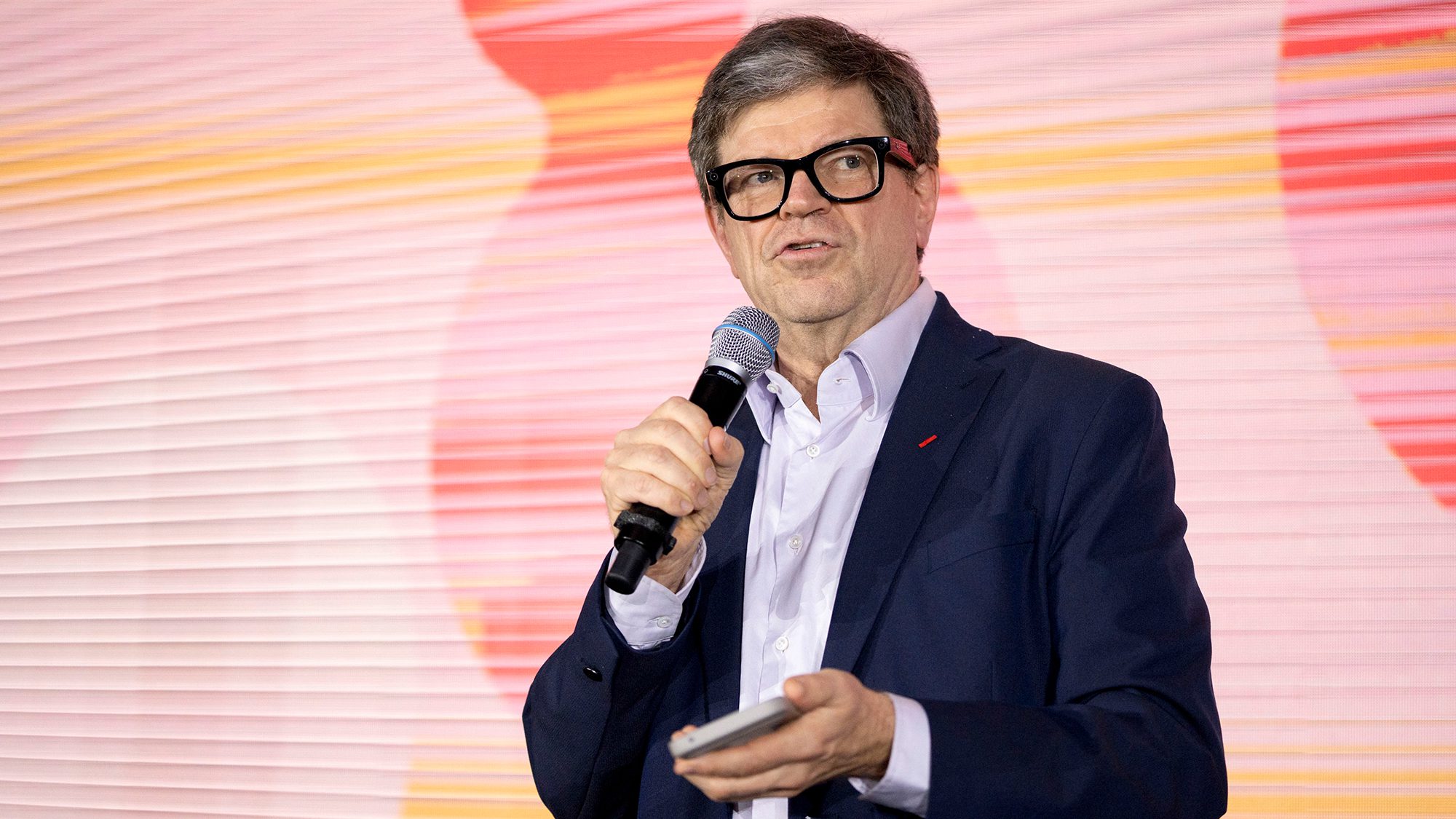
In a June 2026 interview with CNBC at the VivaTech conference in Paris, AI pioneer and AMI Labs founder Yann LeCun sharply criticized Elon Musk’s artificial intelligence venture, calling xAI “kind of a failure, frankly.”
His critique bypassed common talking points like software benchmarks and focused heavily on a much more structural issue, pointing to the steady xAI layoffs and departures that have hollowed out the company’s talent retention and leadership mechanics.
1. The Core Argument: The Mass Exodus of Talent
LeCun argued that a frontier research lab is entirely defined by the handful of top-tier scientists driving the boundary forward. In xAI’s case, that core architecture has essentially dissolved.
- Founding Team Losses: LeCun pointed directly to the complete turnover of xAI’s original founding bench. The company launched in 2023 by poaching elite talent from DeepMind, OpenAI, and Google. However, over the subsequent years, every non-Musk co-founder departed the firm—culminating in the exit of the final holdout, Ross Nordeen, in March 2026.
- The Recruitment Bottleneck: LeCun noted that Musk’s public management style has damaged his status within a tight-knit research community. “Elon is now in a position that is very, very difficult for him to hire top people in AI,” LeCun stated, “because he’s kind of… not behaved in very good ways toward the previous team.” This echoes Musk’s broader claims, including Elon Musk on AI surpassing humans.
2. Infrastructure as a Landlord Model
LeCun also challenged the strategic narrative surrounding xAI’s massive physical infrastructure investments—specifically its Colossus supercomputer complex in Memphis, Tennessee.
Rather than viewing the mega-cluster purely as a competitive advantage for training internal models, LeCun described it as a high-overhead financial burden. He noted that xAI is actively renting out its processing capacity to direct rivals like Google and Anthropic simply to break even.
“He built a huge infrastructure, which he rents to other people, because that’s the only way he can recoup the cost.” — Yann LeCun
The comment follows financial disclosures from the first quarter of 2026, which revealed that SpaceX’s newly integrated AI segment (which houses xAI under a $1.25 trillion mega-merger) booked a steep $2.5 billion operating loss in a single three-month window. Heavy losses are an industry-wide theme, as seen in OpenAI’s $3.7B quarterly loss. When asked point-blank if xAI could ever catch up to OpenAI or Anthropic at the frontier, LeCun responded simply: “No, I don’t.”
3. Warning of a Broad AI “Bubble Explosion”
LeCun used his takedown of xAI to pivot into a wider warning regarding the unit economics of the entire generative AI industry, calling out the unsustainability of current model training budgets:
- The Financial Mismatch: While companies are trying to raise the price of enterprise AI services, the actual day-to-day computational cost of running them is not dropping fast enough.
- The Investor Subsidy: LeCun argued that consumer use is currently being artificially subsidized by venture capital and corporate treasury injections, warning that OpenAI, Anthropic, and their peers will eventually face a “big bubble explosion” if they cannot rapidly lower infrastructure costs or expand margins.
4. The Competitive Backdrop
The blunt critique marks the latest chapter in a bitter, multi-year public feud between Musk and LeCun over AI safety, open-source software, and robotics. The rivalry even extends into hardware, with Musk’s ventures pushing efforts like Tesla’s Megapod AI hardware.
However, LeCun’s latest comments are also tied to a commercial pivot. Having left his role as Meta’s Chief AI Scientist, LeCun raised $1 billion for his own startup, AMI Labs, in March 2026. AMI Labs operates on the explicit thesis that the Large Language Models (LLMs) driving xAI, OpenAI, and Anthropic are an expensive, dead-end technology. Instead, LeCun is betting his capital on building “World Models”—systems designed to natively grasp physical cause-and-effect rather than just predicting the next word in a text string.
Frequently Asked Questions
Why does Yann LeCun think xAI is failing?
LeCun argues that a frontier lab is defined by its top scientists, and xAI’s entire founding team has departed, making it hard for Musk to recruit replacements. He also views xAI’s Colossus supercomputer as a financial burden rented to rivals to break even, and points to a $2.5 billion operating loss. Asked if xAI could catch OpenAI or Anthropic, he said “No, I don’t.”
Who has left xAI?
According to LeCun, every non-Musk co-founder has departed xAI since it launched in 2023 with talent poached from DeepMind, OpenAI, and Google. The final holdout, Ross Nordeen, exited in March 2026, completing the turnover of the original founding bench.
What are the xAI layoffs and departures about?
LeCun frames xAI’s problem as a steady exodus of talent rather than just headcount cuts: every non-Musk co-founder has left since 2023, hollowing out the leadership and research bench. He argues Musk’s management style has made it very hard to recruit top AI researchers to replace those who departed.
How much money did xAI lose in Q1 2026?
SpaceX’s newly integrated AI segment, which houses xAI under a $1.25 trillion mega-merger, booked a $2.5 billion operating loss in the first quarter of 2026. LeCun cited this loss alongside xAI renting out its Colossus supercomputer capacity to rivals like Google and Anthropic just to break even.