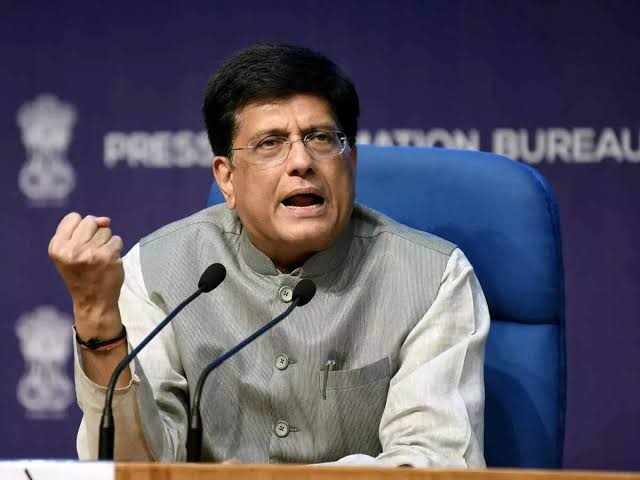


Union Commerce and Industry Minister Piyush Goyal has announced that India is on track to cross the $1 trillion export milestone in the current fiscal year (FY27).
The target covers the combined value of both merchandise (goods) and services exports. Addressing industry leaders at recent trade and logistics forums, Goyal characterized the $1 trillion goal as a stepping stone toward a grander objective: scaling India’s outward shipments to $2 trillion by 2031.
1. Bridging the Gap: The Math Behind the Target
The push for $1 trillion comes on the heels of a highly resilient performance in the previous fiscal year, despite severe global economic friction.
- The FY26 Baseline: India’s cumulative exports hit a historic high of $863.11 billion in FY26, representing a ~5% growth year-on-year.
- The Drivers: Services emerged as the primary growth catalyst, climbing 8.7% to a record $421.32 billion, while merchandise exports held steady at $441.78 billion.
- The Incremental Leap: To breach the target this fiscal year, India requires an additional $137 billion in outward shipments. Goyal noted that the gap requires an annual growth rate of roughly 16% to 17%—a margin he described as highly achievable given early momentum. The first two months of FY27 (April–May) already recorded cumulative exports of $162.69 billion, up 14.6% year-on-year.
2. A Free Trade Agreement (FTA) Offensive
To unlock new market access for Indian manufacturers and service providers, the Ministry of Commerce has aggressively expanded its bilateral trade network.
Over the last few years, India has worked on trade pacts with approximately 38 developed nations. Currently, 4 to 5 agreements are fully operational, with another five slated to go active within the next 12 months. Key focus zones include:
- The Western Front: Strategic frameworks are being finalized with the United States and the UK. Goyal emphasized that India will lock in the final execution of these trade agreements once competitive tariff advantages are fully secured over competing exporting nations.
- Regional Pacts: Treaties with Oman, New Zealand, the European Union, and the European Free Trade Association (EFTA) bloc are moving through various stages of activation to dramatically reduce import duties on Indian goods entering those borders.
3. The Structural Strategy: Quality and Import Substitution
During his address at the Swadeshi Mela and Bharatiya Vyapar Mahotsav, Goyal mapped out a dual strategy to protect India’s trade balance:
- Swadeshi and Import Substitution: The minister urged industrial clusters (such as Pune, Rajkot, and Ludhiana) to actively track import trends on the ministry’s trade portal. By identifying heavy capital goods, electronics, and medical equipment coming from abroad, local manufacturers can pivot to build domestic alternatives.
- Upgrading Product Standards: Goyal stressed that capturing global market share requires moving past low-value raw material exports. He called on young entrepreneurs and startups to invest in advanced value-addition, automated processing, and superior packaging—particularly within India’s agricultural and fisheries exports, which recently breached the ₹5 lakh crore mark but remain heavily unrefined.
4. Earmarking Funds for Tech and AI
To ensure Indian service exports remain globally competitive, the government is shifting its focus toward emerging technology sectors. The Department for Promotion of Industry and Internal Trade (DPIIT) confirmed that a major slice of the newly notified ₹10,000-crore Startup India Fund of Funds 2.0 has been strictly earmarked to back startups building AI-native products and services, aiming to position India as a leading hub for global digital capability centers.