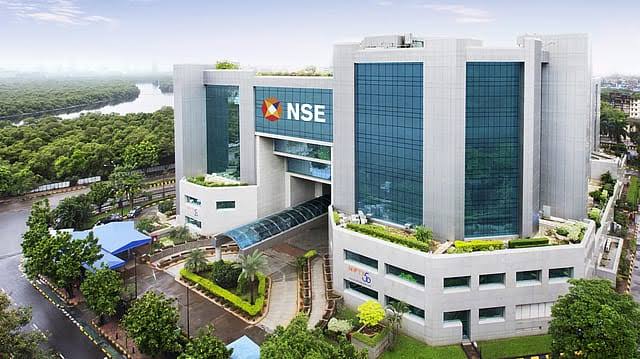


National Stock Exchange of India (NSE) has officially filed its Draft Red Herring Prospectus (DRHP) with SEBI for a blockbuster ₹30,000 crore Initial Public Offering (IPO). Among the early institutional backers, the State Bank of India (SBI) is positioned to unlock one of the most asymmetric financial windfalls in Indian corporate history.
The public issue is structured entirely as an Offer for Sale (OFS) of up to 14.89 crore equity shares (about 6% of the exchange’s capital). Because regulations prohibit an exchange from self-listing, the mega IPO will list on NSE’s rival, the Bombay Stock Exchange (BSE).
1. The Numbers Behind SBI’s 2,500x Return
The DRHP disclosures reveal that SBI’s massive paper profit is the result of decades of patient capital, bonus issues, and corporate restructuring since the exchange’s founding in the early 1990s.
- The Initial Bet: Between 1993 and 1999, SBI built its early equity position at an aggregate weighted average acquisition cost of just ₹1.98 crore.
- Cost Per Share: Due to decades of stock splits and bonus share allotments, SBI’s actual mathematical cost base drops to a mere ₹0.80 per share.
- The Divestment: Through the upcoming OFS, SBI is selling 2.47 crore shares.
- The Windfall: Unlisted gray-market trading values NSE at over ₹5 lakh crore (~$57 billion), implying an IPO price band of around ₹1,900 to ₹2,055 per share. At this valuation, the slice of shares SBI is selling will rake in roughly ₹4,950 crore to ₹5,086 crore.
Mathematically, turning a ₹1.98 crore slice into roughly ₹5,000 crore represents an approximate 2,568-fold (or over 256,000%) return on its original investment.
Furthermore, this jackpot only accounts for the shares SBI is actively selling; it excludes the vast value appreciation of the remainder of its 3.23% direct stake and the 4.33% stake held by its subsidiary, SBI Capital Markets.
2. Other PSU Backers and Insurers Sharing the Jackpot
SBI isn’t the only state-backed giant celebrating the DRHP filing. A group of public sector banks and insurance firms that supported the NSE in its infancy are looking at even higher multi-fold multipliers because of lower initial acquisition costs:
| Selling Shareholder | Shares Offered | Avg. Acquisition Cost | Estimated Payout | Implied Return Multiplier |
| New India Assurance | 1.05 Crore | ₹0.32 / share | ~₹2,100 Crore | ~6,400x |
| National Insurance Co. | 60 Lakh | ₹0.32 / share | ~₹1,200 Crore | ~6,400x |
| Stock Holding Corp. (SHCIL) | 1.09 Crore | ₹0.46 / share | ~₹2,180 Crore | ~4,460x |
| Bank of Baroda | 1.10 Crore | ₹0.54 / share | ~₹2,200 Crore | ~3,700x |
Conversely, the Life Insurance Corporation of India (LIC), which is the exchange’s single largest institutional shareholder with a 10.72% stake, has opted out of the OFS entirely. LIC will sit out the sale, keeping its entire equity allocation intact while benefiting from a major balance-sheet revaluation.
3. The End of a Decade-Long Delay
This regulatory milestone marks the final chapters of an incredibly prolonged listing journey.
NSE first attempted to go public in 2016 with a ₹10,000 crore IPO blueprint. However, the listing was indefinitely shelved by SEBI due to intense regulatory investigations into the “co-location saga”—allegations that certain high-frequency brokers received unfair, privileged access to the exchange’s servers.
The structural logjam was cleared in June 2025 after NSE submitted a massive ₹1,387.39 crore settlement to SEBI, followed by sweeping internal governance and architecture updates. SEBI officially issued its No Objection Certificate (NOC) in January 2026, opening the door for the exchange to finally monetize its status as the world’s most active derivatives marketplace.