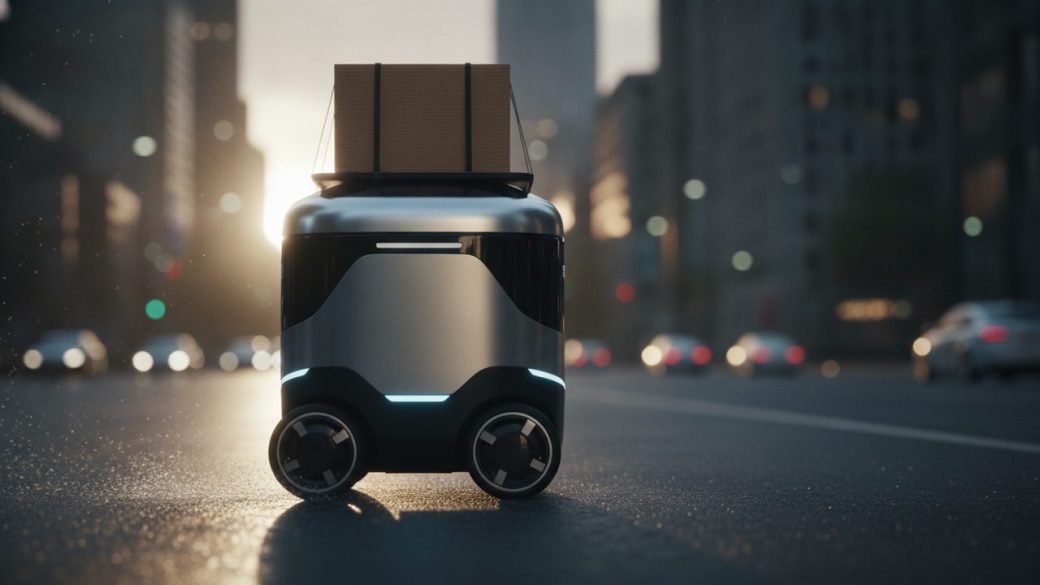
JD.com Founder Says Delivery Workers Will No Longer Be Needed as Robots Take Over
Richard Liu is the founder of JD.com. He made a bold guess about the future of jobs. He says robots will do deliveries one day. After that, human delivery workers will not be needed. JD.com is one of China’s biggest online shopping companies. Think of it as a Chinese version of Amazon. Liu’s words matter a lot. His company has hundreds of thousands of people who deliver packages every day.
TechNode is a news website. It reported that Liu spoke at a big event. His Chinese name is Liu Qiangdong. He spoke at the 2026 APEC China CEO Forum. This was on Sunday, June 22, 2026. APEC stands for Asia-Pacific Economic Cooperation. It is a group of countries near the Pacific Ocean. These countries work together on trade (buying and selling between nations). The forum is a big stage. Top business leaders go there to share their views.
What Richard Liu Actually Said
Liu did not make his words soft. “In the future, deliveries will be made by robots. There will be no need for delivery workers,” he told the forum. That is a strong thing for a boss to say. His own company needs many people who carry parcels to homes and offices.
But he also cares about his staff. “But I don’t want our 700,000 employees to be left without jobs or income,” he added. In simple words: Liu thinks robots are coming. But he does not want his workers to lose their jobs when that happens.
One thing is important to know. Liu did not give a date. He did not say when robots would fully take over from human couriers. A courier is just a person who delivers parcels. He spoke about “the future” in a general way. He did not mean next year or even the next ten years.
The “Nirvana Plan” to Retrain Workers
JD.com wants to get ready for this change. So it started its own program. The company calls it the “Nirvana Plan.” The plan has a clear goal. It will help its 700,000 delivery workers and frontline staff. Frontline staff are the people who deal directly with customers and packages. The plan helps them get ready as automation grows. Automation means using machines or software to do jobs that people used to do.
As part of this plan, JD.com has joined hands with 120 schools across China. These schools will give workers technical training. They will teach skills like fixing and taking care of robots. The idea is simple. Today workers carry parcels. One day they could fix and look after the robots that carry the parcels.
| Key fact | Detail |
|---|---|
| Who spoke | Richard Liu (Liu Qiangdong), JD.com founder |
| Where and when | 2026 APEC China CEO Forum, Sunday, June 22, 2026 |
| Workers affected | 700,000 delivery workers and frontline employees |
| Retraining programme | The “Nirvana Plan” |
| Schools partnered | 120 schools across China |
| New skills taught | Robot maintenance and servicing |
Why a Tech Boss Would Say This
At first this seems strange. Why would a founder say his own staff will not be needed? But Liu is trying to be honest, not mean. Many tech leaders think robots and artificial intelligence will change deliveries. Artificial intelligence (also called AI) means computer systems that can do tasks that once needed human thinking. They believe machines will change how goods move from warehouses to doorsteps.
By saying it now, Liu wants to stay ahead of the change. He does not want to wait for robots to arrive and then fire people. Instead, he is training workers years early. That way, when the robots are ready, his staff may already have new skills. Companies like JD.com build their own delivery networks. So they watch labour costs closely. Labour costs are the money paid to workers. Robots could make these costs lower over time.
This kind of thinking fits a bigger trend in Chinese tech. Companies are spending lots of money on smart machines and software. For example, ByteDance is testing new services through its Doubao ride-hailing push. At the same time, carmakers are moving fast with new cars like the XPeng Mona L03 SUV. Across the industry, the bet is the same. Machines and AI will do more of the work that people do today.
Why It Matters (Especially for India and Founders)
India has a huge delivery economy. It is growing fast. Millions of riders work for food and shopping apps. They carry meals and parcels across busy cities. Liu’s words are a warning worth noting. Robots may one day replace human couriers in China. If so, the same question will reach India too.
Founders can learn a clear lesson from the “Nirvana Plan.” Automation is not only about cutting jobs to save money. It can also mean training your team in new skills. Then they grow with the technology instead of being left behind. A company that gets its people ready early may keep their trust. It may keep their loyalty, even through big change.
There is also a human side to this. The word “automation” sounds simple. But behind it sit 700,000 real people. They have families and bills to pay. How a company treats workers during such a change says a lot about its values. Indian startups want to grow with robots and AI. They will face the same choice in the years ahead.
FAQ
Did Richard Liu say all delivery jobs will end soon?
No. He said that “in the future” robots will make deliveries. After that, human delivery workers will not be needed. But he gave no exact date or timeline. So this is a long-term idea. It is not a plan for the near future.
What is JD.com’s “Nirvana Plan”?
It is JD.com’s own program. It helps its 700,000 workers get ready for automation. Through it, the company has joined hands with 120 schools in China. The schools train staff in skills like fixing and taking care of robots.
How many JD.com workers could be affected?
Liu spoke about 700,000 employees. This number includes delivery workers and other frontline staff. He said he does not want them to be left without jobs or income.
The Takeaway
Richard Liu’s message has two sides. One side is a cold guess. The other side is a warm promise. He thinks robots will one day replace human couriers. But he does not want his 700,000 workers left behind. JD.com’s answer is the “Nirvana Plan” with 120 partner schools. It shows one way big companies might handle the rise of automation. They can do more than cut jobs. They can also retrain the people who hold those jobs.