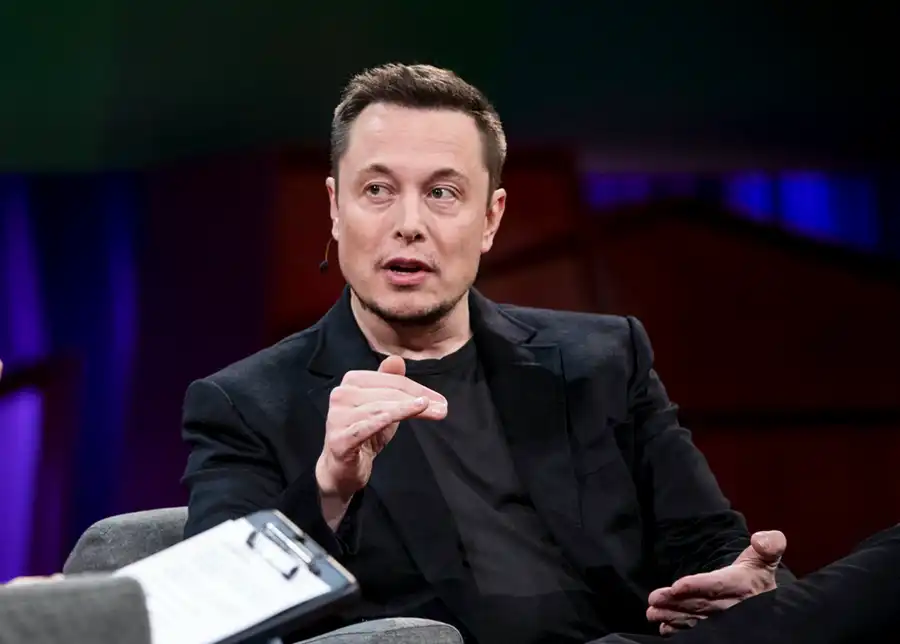
Elon Musk has doubled down on his most aggressive AI predictions yet. Speaking at key leadership forums—most notably alongside BlackRock CEO Larry Fink at the World Economic Forum and via recent statements on X (formerly Twitter)—the Tesla and xAI chief clarified exactly how he sees the AI intelligence curve unfolding over the next few years.
Rather than just predicting a chatbot that can pass exams, Musk’s timeline breaks down into two distinct, hyper-accelerated milestones:
1. Smarter Than Any Single Human (1–2 Years)
Musk believes that Artificial General Intelligence (AGI)—where an AI matches or surpasses a highly intelligent human across virtually all cognitive disciplines—is right on our doorstep.
- The Target: He predicts that we will see an AI “unequivocally smarter than humans in every way, including in innovation,” within the next year or two.
- The Rationale: He points to the breakneck speed of daily breakthroughs as a “head spinner.” However, he notes that this rapid ascent has already forced companies to heavily rely on synthetic, AI-generated data because the industry effectively exhausted the cumulative sum of public, human-created text data.
2. Exceeding Collective Human Intelligence (4–5 Years)
This is where his core “4 to 5 years” prediction sits. Musk states that by 2030 or 2031, artificial intelligence will likely exceed the sum total of all human intelligence combined.
“AI probably exceeds the sum of all human intelligence in 4 or 5 years.” — Elon Musk
Rather than comparing an AI model to an isolated human expert, this metric measures AI against the collective intellectual output and processing capacity of the entire human race.
3. The Physical Catalyst: The Robot Saturation Loop
Musk argues that this software explosion will be mirrored by an equally rapid hardware rollout via humanoid robotics.
- The Consumer Timeline: Tesla plans to begin selling its Optimus humanoid robots to the public by the end of next year, moving them from simple factory tasks to dynamic consumer roles.
- The Population Inversion: Long-term, Musk predicts a post-scarcity economy where “there will be more robots than people,” with automated machines eventually manufacturing other machines to entirely saturate human industrial needs.
4. The Real Bottleneck: Energy, Not Chips
Despite his massive compute investments — from xAI’s 100,000-liquid-cooled-GPU Colossus supercomputer cluster in Memphis, which trains the company’s Grok models, to Tesla’s new Megapod AI data-center hardware — Musk warned that the ultimate ceiling for this 5-year timeline is electricity generation, not silicon chip manufacturing.
Because AI infrastructure is scaling faster than commercial power grids can support them—particularly in the United States—Musk hinted that the ultimate, lowest-cost destination for running massive, next-generation AI data centers will eventually be orbiting in space, utilizing direct, unattenuated solar power and the natural cooling vacuum of orbit.
The Industry Divergence
While Musk’s timeline is roughly shared by peers like Sam Altman (OpenAI) and Dario Amodei (Anthropic)—both of whom expect AGI-level capabilities within a similar window—it remains highly controversial. Skeptics and open-source pioneers like Yann LeCun argue that current autoregressive language models are hitting a structural wall, claiming that true human-level reasoning will require entirely new, unproven software architectures rather than just raw scale.
Frequently Asked Questions
When will AI be smarter than humans, according to Elon Musk?
Elon Musk predicts AI will be smarter than any single human within 1–2 years, and will exceed the sum total of all human intelligence combined within 4–5 years — around 2030 or 2031.
What does Elon Musk say is the biggest bottleneck for AI?
Musk argues the real ceiling is electricity generation rather than chip supply, and has suggested future AI data centers may eventually run in space using solar power and the natural cooling of orbit.
How does Elon Musk’s AI timeline compare to others?
His view is broadly shared by OpenAI’s Sam Altman and Anthropic’s Dario Amodei, while Meta’s Yann LeCun is skeptical, arguing today’s language models will hit a structural wall before reaching human-level reasoning.
What is Elon Musk’s AI company called?
Elon Musk’s dedicated artificial intelligence company is xAI, which builds the Grok chatbot. xAI trains its models on the Colossus supercomputer cluster in Memphis, and Musk’s broader AI push also spans Tesla’s Optimus humanoid robots and its Full Self-Driving software.
Does Elon Musk think AI is dangerous?
Yes. Musk has long warned that advanced artificial intelligence is one of the biggest risks to humanity, even as he races to build it. His prediction that AI could exceed the combined intelligence of the entire human race within 4–5 years is part of why he stresses the need to develop the technology carefully.
When will Tesla’s Optimus robot go on sale?
According to Musk, Tesla plans to begin selling its Optimus humanoid robots to the public by the end of next year, shifting them from controlled factory tasks toward dynamic consumer roles as part of his wider AI and robotics timeline.