The U.S. Federal Trade Commission (FTC) has officially granted expedited antitrust clearance for SpaceX to acquire hardware startup Mesh Optical Technologies.
The regulatory greenlight—formally processed on June 25, 2026—brings Mesh back into the fold. The startup was founded just last year by a team of elite former SpaceX engineers who originally designed the laser-link communication systems for Starlink.
This buyout represents a major strategic move to vertically integrate next-generation optical hardware directly into Elon Musk’s rapidly expanding space-based computing and data center empire.
1. The Technology: Breaking the GPU Bottleneck
Mesh Optical Technologies emerged from stealth in February 2026 with a $50 million Series A funding round led by Thrive Capital. The company’s core focus is resolving the massive energy and physical bandwidth bottlenecks plaguing modern supercomputers:
- 1.6T OSFP Optical Engines: Mesh specializes in mass-producing ultra-fast 1.6T OSFP pluggable modules and Distributed Feedback (DFB) laser transceivers.
- Light over Copper: Traditional data center setups rely on copper cabling to move data between GPUs and servers. However, copper hits a hard wall when handling the massive data streams required for training frontier generative AI models, resulting in severe heat dissipation and latency issues.
- The Photonic Advantage: Mesh’s hardware converts electrical signals into high-reliability light signals, allowing near-instantaneous, low-power data transmission. The startup’s explicit goal was to build a highly automated, non-China-dependent optical supply chain in the West.
2. SpaceX’s Strategic Imperative: The “Starmind” Blueprint
While Mesh originally targeted terrestrial AI data centers, the acquisition is heavily tied to SpaceX’s private capital roadmap following its blockbuster initial public offering. SpaceX is aggressively building a full-stack, space-based computing network codenamed Starmind:
 [ Orbital Layer ]   Millions of Satellites ──► Orbital AI Clusters ──► Inter-Satellite Laser Mesh
                                                                                  ▲
                                                                                  │ (Mesh Hardware Integration)
 [ Data Foundation ] High-Speed Optical Transceivers ──► Near-Zero Latency Data Routing ──► 1.6T Data Throughput
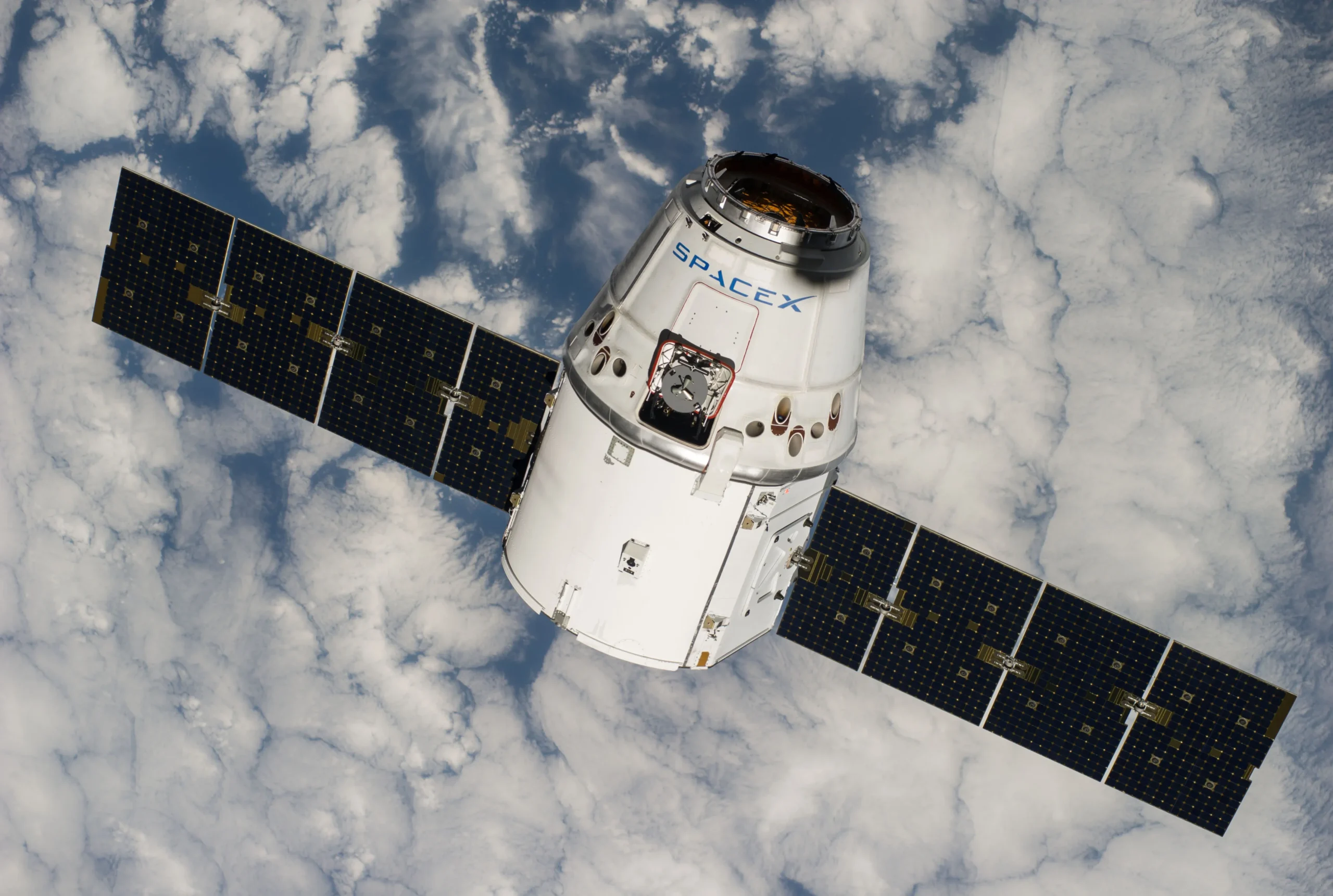
By embedding Mesh’s optical interconnect technology into its next-generation satellite constellations, SpaceX can bypass the severe data transmission limits of orbital computing. This allows millions of interconnected satellites to function as a singular, unified supercomputer floating in low Earth orbit.
3. The Multi-Company Infrastructure Flywheel
The acquisition also acts as a critical link between SpaceX and Elon Musk’s AI venture, xAI. SpaceX has been steadily scaling out massive data center facilities across Tennessee and Mississippi to host xAI’s computing clusters, while establishing infrastructure partnerships to lease excess compute capacity to partners like Google and Anthropic.
| Infrastructure Layer | Previous Operational Dependency | Post-Acquisition Integrated Blueprint |
| Component Sourcing | Relying on heavily constrained third-party optical markets dominated by foreign manufacturing hubs. | In-House Fabs: Secures direct ownership of proprietary, automated, American-made laser and optical transceivers. |
| Network Core | Standard commercial fiber routing limitations between server stacks and satellite ground stations. | Seamlessly pairs ground-based AI data centers with Starlink’s space laser communication mesh. |
By acquiring a company built by its own alumni, SpaceX is effectively locking down a core component layer of the global AI hardware boom—ensuring that its private data networks remain insulated from the steep supply-chain and memory bottlenecks currently slowing down the rest of Silicon Valley.