📚 New to this topic? Read our full guide: Indian Economy Explained.
Can India’s Textile Sector Cross The $350 Billion Target? FTAs And Tariff Cuts Fuel A Rebound
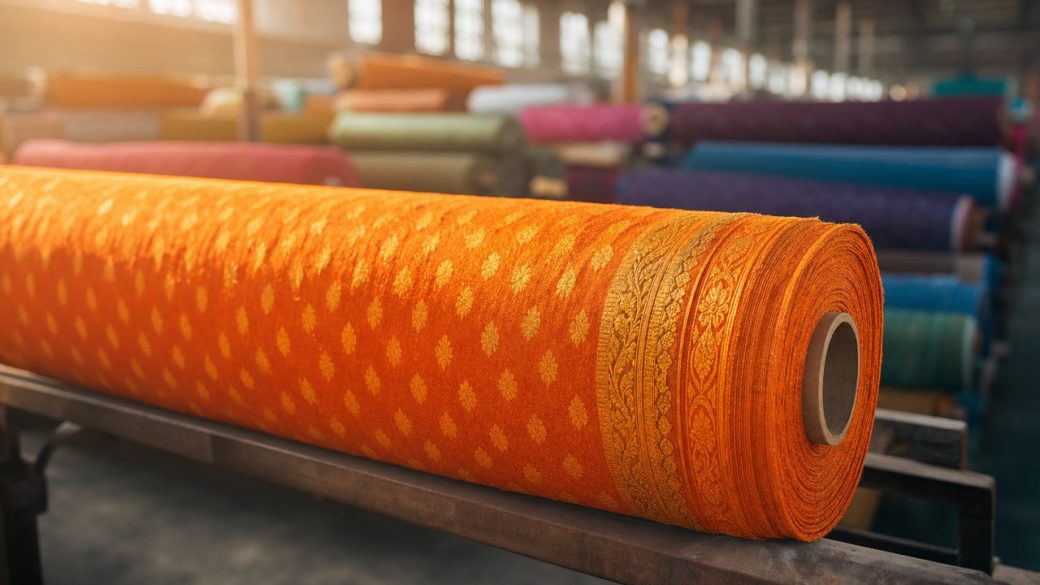
India’s textile sector is chasing a big dream: growing to $350 billion by 2030. The industry is bouncing back, and new trade deals are giving it a strong push. These deals cut import taxes on Indian cloth in big markets like Europe and the UK. That makes Indian textiles cheaper and easier to sell abroad. The question is simple: can India actually hit this huge target?
Today the industry is worth nearly $190 billion in 2025-26. To reach $350 billion, it must almost double in size in just a few years. That is a tall order. But the signs are hopeful.
How Big Is The Goal, And Where Does India Stand?
The full target is $350 billion in total market size by 2030. Within that, exports are meant to grow fast. Exports are goods India sells to other countries. They are expected to reach about $45 billion in 2025. The plan is to grow them to $100 billion by 2030. That needs about 14% growth every year.
| Key fact | Figure (as reported) |
|---|---|
| 2030 total textile market target | $350 billion |
| Current market size (2025-26) | nearly $190 billion |
| Exports in 2025 | around $45 billion |
| Export target by 2030 | $100 billion |
| Yearly export growth needed | about 14% |
| Exports to EU and UK (FY25) | $9.76 billion |
| Projected EU + UK exports after FTAs | $15 billion |
The Trade Deals Powering The Rebound
The biggest help comes from FTAs. An FTA, or Free Trade Agreement, is a pact between countries to cut or remove import taxes on each other’s goods. Lower taxes mean Indian textiles cost less in foreign shops. That helps Indian makers win more orders.
Two deals stand out. The India-EU FTA was concluded in early 2026. It promises Indian textiles zero or near-zero duty access to the European Union. Earlier, EU import taxes on Indian textiles ran between 8% and 12%. Those are now set to go away. The India-UK FTA gives duty-free access to 99% of goods. This helps labour-heavy sectors like home textiles, which faced a 12% UK tariff before.
Together these deals could lift exports to the EU and UK from $9.76 billion in FY25 to about $15 billion once they are fully working. Industry experts expect 10-15% revenue growth from FY28 onwards.
India’s Growing FTA Network
India has been busy signing trade deals. Its FTA network grew from 10 FTAs covering 19 countries in 2014 to 18 FTAs covering 56 countries now. Each new deal opens fresh doors for Indian exporters and pulls in new investment. For textiles, more open markets mean more places to sell.
The Hurdles That Could Slow It Down
The path is not all smooth. India still faces tariff barriers in some markets, including the United States. The ongoing India-US trade talks have not yet produced a deal, and a clear US tariff line would help textile exporters a lot. There is also commodity volatility, meaning the prices of raw materials like cotton and yarn can swing up and down. That makes planning harder for factories.
To hit $350 billion, India must keep raw material costs steady, win more FTAs, and move up the value chain into higher-value finished products, not just raw cloth.
FAQ
What is India’s textile target for 2030?
India aims for a $350 billion total textile market by 2030, with exports reaching $100 billion. The market is near $190 billion today.
How do FTAs help textiles?
FTAs cut import taxes on Indian textiles in foreign markets. The EU and UK deals remove duties of 8-12%, making Indian goods cheaper and more competitive abroad.
What could stop India from hitting the target?
Tariff barriers in markets like the US, plus swinging raw material prices, are the main risks. A strong US trade deal and steady cotton prices would help.
Why It Matters (Especially For India And Founders)
Textiles employ millions of Indians, many of them low-income workers. Growth here means more jobs, especially in small towns and villages. For founders and small businesses in garments, home furnishing, and fabrics, cheaper access to the EU and UK is a real opening. A startup making bedsheets or apparel can now sell into Europe with little or no import tax.
This is also a big trade story for India. A booming textile export sector lifts the whole economy and brings in foreign money. It fits into India’s wider push to grow exports across industries.
The bottom line: The $350 billion goal is ambitious but no longer a fantasy. With the EU and UK FTAs cutting duties and exports targeting $100 billion, India’s textile sector has real momentum. Steady raw material prices and a US deal would seal the case.
Sources: Financial Express and CITI / Malaysia Sun.