The report that OpenAI is leaning toward delaying its blockbuster public debut until 2027 has triggered an immediate, severe sell-off for its largest financial backers.
In Tokyo trading on Friday, June 26, 2026, SoftBank Group Corp. (TYO: 9984) saw its shares plunge as much as 13.8%, erasing billions in market value and logging one of its steepest single-day percentage losses in nearly two years.
1. Why the Delay Hits SoftBank Hardest
SoftBank has positioned itself as the primary financial proxy for the global artificial intelligence boom. The postponement of OpenAI’s IPO directly defers the massive liquidity event that public investors had been eagerly pricing into SoftBank’s stock over the last few months.
- The Squeezed Premium: SoftBank has been aggressively building out an estimated 13% equity stake in OpenAI, a position worth a staggering $64.6 billion based on recent valuation targets.
- Vanishing Valuation Gains: When OpenAI confidentially filed its initial IPO paperwork earlier this cycle, SoftBank’s stock rallied nearly 20% on the expectation of an explosive autumn listing. Pushing that timeline back to 2027 instantly defers those portfolio revaluation gains.
- The Capital Expenditures Drag: The delay forces SoftBank to carry its massive AI infrastructure investments on its private balance sheet for much longer without the clean exit valve of a public market capitalization.
                   [ The SoftBank Stock Reversal ]
                                  │
   [ Mid-June 2026: OpenAI IPO Hype ] ──► Stock Rallies (Anticipating $64B Portfolio Bump)
                                  │
                                  ▼ (June 26, 2026 Panic)
   [ NYT Report: Listing Delayed to 2027 ] ──► Shares Plunge ~13% (Tokyo Close: 6,137 Yen)
2. A Broader AI Valuation Reset in Asia
SoftBank’s double-digit tumble sent a shockwave across Asian technology ecosystems, dragging down the entire Nikkei 225 index by 4.15% and erasing most of its record-high gains from earlier in the week.
Public markets are displaying acute signs of AI capital expenditures fatigue. Investors are increasingly questioning whether the astronomical amounts of cash required to build next-generation data centers and chip clusters will yield near-term monetization. The OpenAI delay, compounded by the U.S. government’s intervention in freezing the rollout of GPT-5.6, has led investors to pull back on the sector’s heavyweights simultaneously.
| AI Ecosystem Layer | Impacted Technology Heavyweight | Single-Day Trading Drop (June 26) |
| Foundational Investment | SoftBank Group (TYO: 9984) | Slumped 12.53% to 6,211 Yen (Intraday low touched 13.8%) |
| Semiconductor Testing | Advantest (TYO: 6857) | Plummeted 9.64% |
| Next-Gen Flash Memory | Kioxia Holdings | Tumbled 11.24% |
| Chip Manufacturing Gear | Tokyo Electron (TYO: 8035) | Dropped 3.21% |
3. Masayoshi Son Defends the Long Game
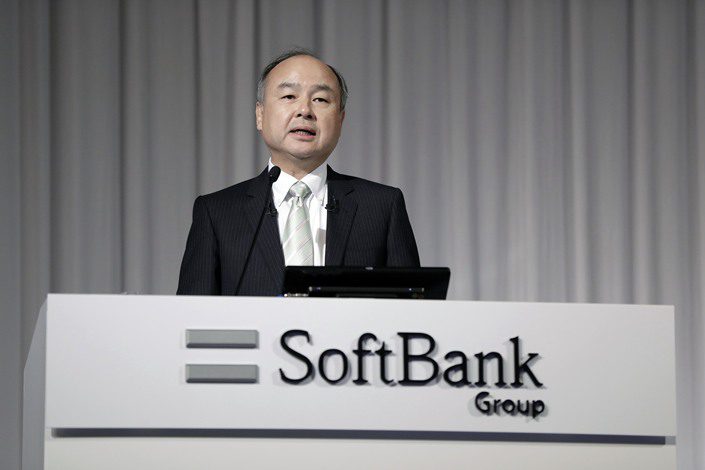
Despite the dramatic capital erasure, SoftBank Founder and CEO Masayoshi Son has firmly rejected the narrative that the AI boom is cooling off into a structural bubble.
Speaking directly to shareholders, Son doubled down on his aggressive investment thesis, likening SoftBank to a “goose that lays golden eggs” and asserting that the public markets are severely discounting the underlying value of its asset portfolio (including its core stake in Arm Holdings).
Market analysts at Tokai Tokyo Intelligence Laboratory noted that while the short-term trading volatility is painful, the underlying fundamentals of the AI infrastructure buildout remain structurally sound—meaning SoftBank’s stock is likely to experience intense, high-beta swings until OpenAI or Anthropic officially breaks the ice and goes public.