In a striking reversal from its aggressive timeline, OpenAI is leaning heavily toward postponing its initial public offering (IPO) until 2027, according to breaking reports from The New York Times and Reuters.
The decision marks a stark turnabout for the ChatGPT maker, which only weeks ago (on June 9) filed confidentially for a landmark U.S. IPO with the Securities and Exchange Commission (SEC) aiming for a rollout as early as late autumn.
The delay highlights growing friction between corporate ambition, severe financial realities, and sudden public market volatility.
1. The $1 Trillion Friction Point
The central roadblock forcing the postponement is a direct clash over OpenAI’s target valuation. OpenAI’s advisory teams presented executives with a stark choice: list early at a slashed, lower valuation to secure a fast exit, or delay until 2027 to naturally grow into their target financials.
- Altman’s Non-Starter: CEO Sam Altman rejected any valuation cuts, declaring a $1 trillion valuation floor essential for the public debut. Because its last private valuation cap sat around $850 billion, hitting a trillion-dollar public market capitalization requires either massive revenue acceleration or an incredibly hot investor market.
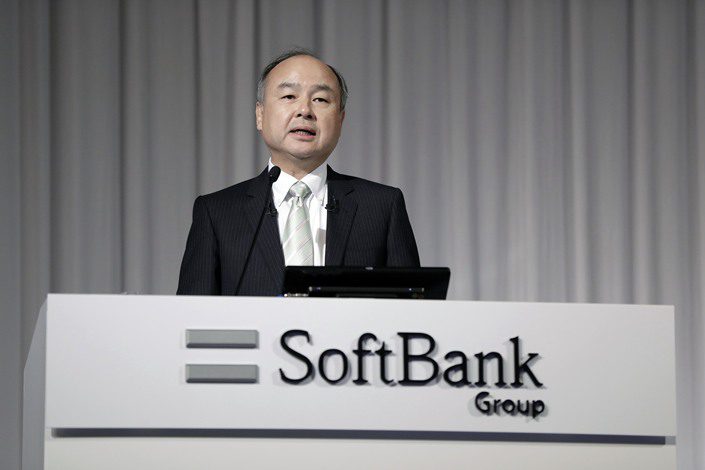
- The Pushing of Payouts: The 2027 pivot has sent immediate shockwaves through global markets. Shares of SoftBank Group, one of OpenAI’s largest institutional backers, plummeted by 12% on Friday following the news, as public investors adjusted expectations for what was supposed to be a massive, near-term windfall.
                      [ OpenAI's Dilemma: Two Divergent Paths ]
                                         │
                    ┌────────────────────┴────────────────────┐
                    ▼                                         ▼
         [ The Advisor Proposal ]                  [ The Altman Directive ]
         • List fast in late 2026                  • Postpone public debut to 2027
         • Accept lower, realistic market cap      • Maintain strict $1 Trillion floor
         • Mitigate high private burn rate         • "Any reduction is a non-starter"
2. The Tech Shockwave: SpaceX’s Volatility
The caution from OpenAI’s banking advisors is fueled by the recent, volatile public market performance of Elon Musk’s SpaceX, which executed its own historic IPO earlier this cycle.
SpaceX initially went public at $135 a share in a record-shattering $75 billion public carve-out. While retail hype drove the stock past $225—briefly pushing SpaceX’s market capitalization over $2 trillion—the stock has since retraced violently, erasing hundreds of billions in paper wealth to trade flatly above its entry point. Financial advisors warned Altman that public market retail investors are experiencing severe tech-hype fatigue, making a trillion-dollar AI listing highly risky in the current climate.
3. The Shift to a “Compute Broker” Model
Compounding the IPO delay is OpenAI’s underlying financial architecture. Pushed heavily by Chief Financial Officer Sarah Friar, the 2027 timeline gives the company breathing room to clean up its balance sheet and pivot its core business model to justify its target valuation.
To combat its multi-billion dollar burn rate and offset massive infrastructure obligations—including a $250 billion long-term cloud commitment with Microsoft Azure—OpenAI is quietly shifting from a pure AI model provider into a specialized cloud infrastructure broker:
| Legacy Operational Vector | New Private Realignment (Targeting 2027) |
| Primary Revenue Engine | Consumer ChatGPT Plus subscriptions and B2B API access. |
| Product Deployment | Instant global rollouts of frontier AI models to the public. |
By stepping back from the public markets, OpenAI hopes to work through these regulatory guardrails and infrastructure deficits away from the strict quarterly scrutiny of Wall Street, leaving its closest rival, Anthropic, to potentially define the public markets by listing first.