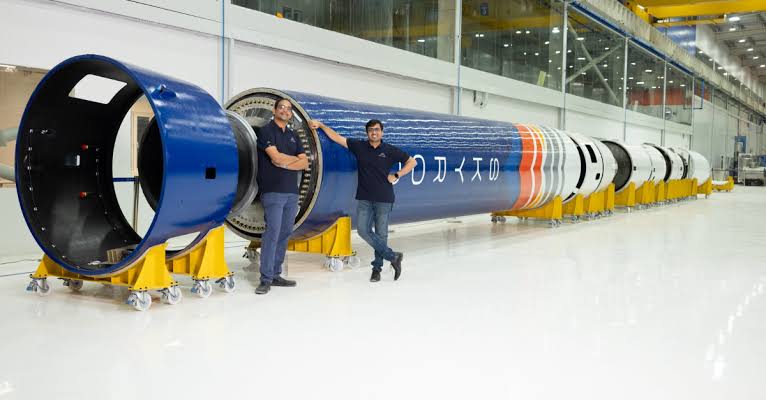
Skyroot Vikram-1 is a private rocket built to carry satellites into orbit. Orbit means going around Earth, not just going up and falling back. If this mission works, Skyroot Vikram-1 could become the first private Indian rocket to reach orbit, which would be a big step for India’s space business.
Key takeaways
- Skyroot Aerospace is preparing the first orbital launch attempt by a private Indian company.
- Skyroot Vikram-1 is designed to place small satellites into space for paying customers.
- The mission matters because India opened more of its space sector to private firms only a few years ago.
- ISRO still plays a key role, but startups now want to build, test, and launch their own rockets too.
What is Skyroot Vikram-1 and why is everyone watching?
Skyroot Aerospace is a startup from Hyderabad. A startup is a young company trying to build a business fast. It is getting ready for the debut launch of Skyroot Vikram-1, and people are watching because this is more than one rocket test.
It is a test of whether private Indian space firms can do what only government missions did before. That means building a full launch vehicle, flying it, and reaching orbit. In simple terms, that is like going from making a fast bike to building a working airplane.
India has already seen private space success, but not this exact kind. In 2022, Skyroot launched Vikram-S, a suborbital rocket. Suborbital means it went to space and came back, but did not circle Earth. That flight proved the company could build and launch safely, so this next step is much harder and much more important.
Why does reaching orbit matter so much?
Getting to orbit is the real commercial prize. Commercial means a company can sell the service and make money. A rocket that reaches orbit can place satellites where customers need them, so it can win launch contracts from India and from abroad.
That matters because the small satellite market is growing. Small satellites are much lighter than old-school ones, often weighing from a few kilos to a few hundred kilos. They are used for internet links, weather checks, maps, farm data, and defence watching.
Many countries now want cheaper and faster launches for these satellites. That is where Skyroot Vikram-1 fits in. If the rocket works well, Skyroot could offer a new Indian option in a market now led by firms in the US, Europe, and a few other countries.
How big is the rocket and what can it carry?
Public reports say Vikram-1 is a multi-stage rocket for small satellite launches. A stage is one part of a rocket that burns fuel, then drops away. That helps the rocket get lighter as it climbs, because every kilogram matters in space.
Skyroot has said the rocket can carry up to about 300 kilograms to low Earth orbit. Low Earth orbit is the region a few hundred kilometres above Earth where many satellites fly. That 300-kilogram figure is small next to giant rockets, but it is useful for the kind of satellites many startups and research groups build today.
Here is a simple look at the numbers people are tracking most closely:
Skyroot by the numbers2022300 kg3 stagesVikram-SPayloadRocket
| Item | What it means |
|---|---|
| 2022 | Year Skyroot flew Vikram-S, its earlier suborbital mission |
| 300 kg | Rough payload target to low Earth orbit for Vikram-1 |
| 3 stages | Reported number of rocket stages planned for Vikram-1 |
How did India get to this point?
For years, India’s space work was led mainly by ISRO. ISRO is the Indian Space Research Organisation, the country’s space agency. It built a strong record with missions like Chandrayaan and Mars Orbiter, but private firms had a smaller role for a long time.
Then policy started to change. In 2020, India opened more of the space sector to private companies. That allowed startups to design rockets, use testing support, and work more directly with launch systems and customers.
One key part of that change is IN-SPACe. IN-SPACe is the national space regulator for private participation. It acts like a bridge between ISRO and private firms, so companies can get approvals and use some public facilities.
That shift has sparked a wave of new firms. Skyroot is one of the best known, but it is not alone. The wider pattern looks a bit like India’s startup push in software years ago, except this time the product is hardware that must survive fire, speed, and vacuum.
What could this mean for India’s space economy?
If Skyroot Vikram-1 reaches orbit, the news will travel far beyond the space world. It would show investors that Indian private launch firms are moving from promise to proof. Investors are people or funds that put money into a company, hoping it grows.
That could bring in more funding for rockets, satellite makers, and space data firms. It could also create more high-skill jobs for engineers, software teams, and factory workers. India wants a larger share of the global space market, so real launch success matters more than speeches.
There is also a strategic side. Strategic means important for national power and long-term planning. Countries that can launch satellites on their own have more control over communications, weather data, mapping, and security tools.
India has been building on that idea in other sectors too. For example, the country is also pushing local manufacturing and clean-tech rules, as seen in our report on solar modules recycling mandatory. It is also trying to cut energy dependence, as we explained in India’s biogas import-cut plan.
What are the risks before launch day?
Rocket launches are hard. Really hard. Even large and rich space companies have seen test failures, because thousands of parts must work in the right order and within seconds.
That is why one mission does not decide everything. But it does matter a lot. A strong first orbital attempt would help Skyroot win trust, while a failure could slow things down but still teach the company what to fix next.
Private rocket firms often learn by testing step by step. SpaceX did that in the US, and many newer companies are doing the same. India’s private sector is newer, so each launch now carries extra weight for the whole ecosystem.
Readers who track new-economy funding may see a familiar pattern here. Big technical bets need patient capital, much like startup investing in sectors covered in our story on the Sparrow Capital fund. And major deep-tech projects can reshape regional plans, as in our coverage of the quantum computer for Amaravati.
Where can readers verify the key facts?
Skyroot has shared mission details and company updates on its official channels, including its website. India’s private space framework is also outlined by IN-SPACe, the government-backed regulator for non-government space activity.
Here is the clearest way to say why this launch matters: if Skyroot Vikram-1 reaches orbit, India will have proof that a private local company can build and fly an orbital rocket at home. That would turn years of policy talk into a working business case.
What happens next if Skyroot Vikram-1 succeeds?
The next step would be customer missions, repeat launches, and pressure to scale up. Scale up means doing the same thing more often and more efficiently. One successful orbital launch is exciting, but a reliable launch schedule is what customers really pay for.
Success could also push other Indian startups to move faster. Competition helps because firms try to cut costs, improve speed, and offer better service. In a few years, that may give satellite buyers more launch choices from India instead of sending payloads abroad.
For young readers, the big idea is simple. India’s space story is no longer just about one national agency. It is starting to include private builders too, and Skyroot Vikram-1 may be the moment that shift becomes real.
FAQs
What is Skyroot Vikram-1?
Skyroot Vikram-1 is a private Indian orbital rocket. It is designed to carry small satellites into low Earth orbit.
Why is this launch important for India?
It could be the first time a private Indian company reaches orbit. That would be a landmark for India’s growing commercial space industry.
How is orbital different from suborbital?
Orbital means a rocket places an object around Earth. Suborbital means it goes to space briefly, then comes back without circling Earth.