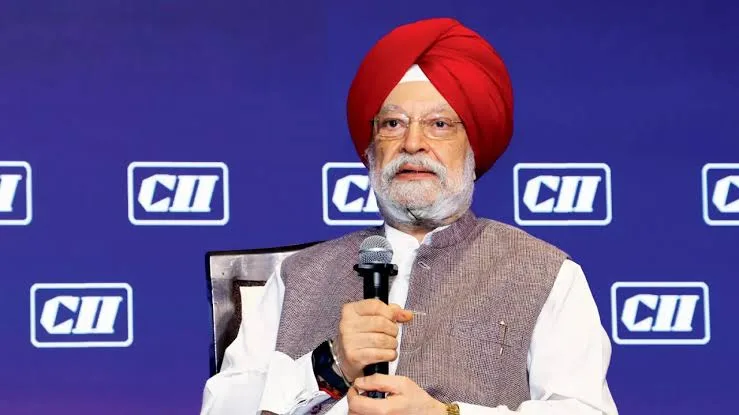
Petrol diesel prices may stay where they are for now. Petrol diesel prices means the retail rates people pay at fuel pumps. Oil Minister Hardeep Singh Puri said people should not expect a quick cut yet. He said state-run fuel sellers still need time to recover old losses.
Key takeaways
- Hardeep Puri said fuel price cuts are not likely right away.
- He said oil companies are still balancing losses from earlier periods.
- Global crude prices have eased, but they still move up and down fast.
- India last cut pump prices by ₹2 per litre in March 2024.
Why are petrol diesel prices not falling yet?
Puri’s message was simple. Even if crude oil cools, retail fuel does not always get cheaper at once. That’s because Indian oil marketing companies, or OMCs, first look at earlier under-recoveries. Under-recoveries means they sold fuel too cheaply for a time and took a hit.
India’s three big state-run fuel sellers are Indian Oil, Bharat Petroleum, and Hindustan Petroleum. They buy crude, refine it, and sell petrol and diesel. But pump rates are shaped by more than crude alone. Taxes, freight, refinery margins, and dealer commissions also matter.
That gap is why people often get confused. If crude falls on TV, they expect a cut the same week. But companies do not reset prices like a classroom scoreboard. They watch trends over time, because one sharp jump in global oil can wipe out gains fast.
What exactly did Hardeep Puri say about petrol diesel prices?
Puri said consumers should not expect petrol diesel prices to come down just yet. He pointed to the losses public sector oil companies carried in the past. In plain words, he argued that lower crude now does not mean an instant reward at the pump.
His remarks matter because fuel rates affect almost everything. They shape transport costs, food prices, delivery fees, and even school bus bills. A small fuel change can spread through the economy, so families watch it closely.
India’s fuel pricing is officially market-linked. Market-linked means prices should broadly follow global costs. Yet in practice, state-run sellers often hold prices steady for long stretches. That can help keep inflation calm, but it also delays both cuts and hikes.
How much did India cut fuel prices last time?
The last nationwide cut came in March 2024. Then the government announced a ₹2 per litre reduction in both petrol and diesel. That was the first major pump price relief in many months, so it got wide attention before the general election.
Since then, pump rates in many cities have stayed unchanged. In Delhi, petrol has been around ₹94.72 per litre and diesel around ₹87.62 per litre. City prices differ because local taxes differ. VAT means value-added tax, a state tax added on top.
| Fuel | Delhi price | Last nationwide cut |
|---|---|---|
| Petrol | ₹94.72/litre | ₹2/litre |
| Diesel | ₹87.62/litre | ₹2/litre |
Those numbers show why this issue stays hot. A family using 40 litres of petrol a month would save only ₹80 from a ₹2 cut. That’s helpful, but not life-changing. So many people hope for bigger relief when global crude drops.
What role do global crude prices play?
Crude oil is the raw oil pulled from the ground. It must be refined before it becomes petrol or diesel. India imports more than 85% of its crude, so world prices matter a lot. When crude jumps, India’s energy bill rises too.
Brent crude, a global benchmark, has moved sharply in recent months. A benchmark is a standard price used for comparison. At times, Brent has traded near the low $80s per barrel. A barrel is about 159 litres of crude oil.
But crude is only one piece of the puzzle. The rupee-dollar exchange rate also matters, because oil is bought in dollars. If the rupee weakens, imports cost more even when crude softens. So lower crude does not always mean lower pump prices.
Key fuel numbersPetrolDieselCut₹94.72₹87.62₹2
Are oil companies still recovering old losses?
That is the heart of Puri’s point. During periods of high crude, oil companies did not always pass on the full increase. As a result, they earned less on fuel sales. In some stretches, they sold below what full market pricing may have allowed.
Public sector companies also juggle politics and economics. They are businesses, but they operate in a sensitive sector. Fuel prices can sway inflation and public mood. So the government watches them more closely than, say, shoe stores or toy shops.
If companies recover some old pain now, they may prefer stability over quick cuts. That does not guarantee future hikes or freezes. It just explains why petrol diesel prices can feel sticky, even after global oil cools.
What does this mean for families and businesses?
For households, it means fuel budgets may not get easier soon. If you ride a scooter, drive to work, or pay for app cabs, costs could stay steady. That’s better than a sudden spike, but it isn’t the relief many were hoping for.
For businesses, stable fuel can still be useful. Truck fleets, delivery firms, and factories prefer predictability because they plan months ahead. Even so, high transport costs can keep pressure on food and goods. That is one reason inflation often tracks fuel so closely.
You can see the wider pattern in energy policy too. India is trying to reduce import pressure through other fuels, like in this report on the plan to cut natural gas imports using biogas. Energy supply worries have also shown up in stories like LPG consumption falling as supply shock bites.
Could petrol diesel prices fall later?
Yes, they could. If crude stays lower for long enough, and if oil companies feel their books look healthier, a cut becomes easier. Books means financial records. But timing is hard to predict because global events can change oil markets overnight.
Wars, shipping risks, OPEC+ supply decisions, and currency moves all shape the next step. OPEC+ is a group of oil-producing countries that coordinate supply. When they cut output, oil prices can rise because less supply reaches the market.
Readers who want the original official context can check Puri’s remarks as reported by CNBC-TV18. For daily city fuel rates, Indian Oil posts updates on its official fuel price page.
Here is the plain answer: petrol diesel prices are not falling yet because lower crude alone is not enough. State-run oil companies are still watching global oil, taxes, currency moves, and past losses before passing on any fresh relief.
This also fits a larger money story. Governments want inflation under control, but companies want healthier margins. Margins means the money left after costs. When those goals pull in different directions, pump prices often stay frozen longer than people expect.
That balancing act shows up in other sectors too, from power to trade. For example, India is also pushing long-term supply security through moves like mandatory solar modules recycling and broader policy talks such as the India-US trade deal progress.
FAQs
Why are petrol diesel prices not dropping now?
Because oil companies are looking at past losses, taxes, and global risks, not just today’s crude price.
What was the last fuel price cut in India?
India cut petrol and diesel prices by ₹2 per litre in March 2024.
Who decides petrol diesel prices in India?
State-run oil marketing companies set pump prices, while global crude, taxes, and government policy strongly influence them.