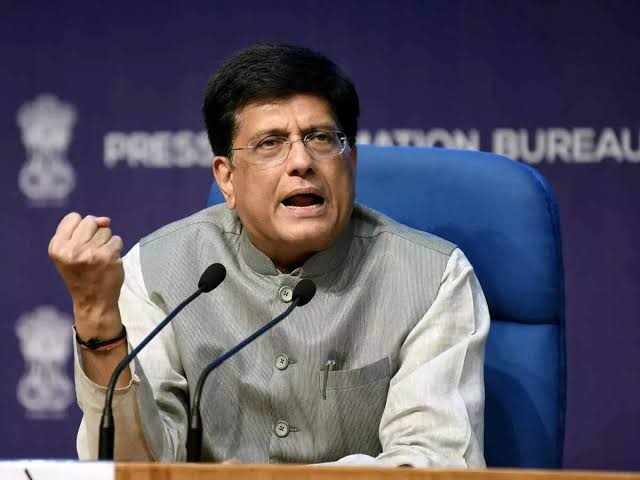
Speaking at the India Global Forum’s UK-India Week in London, Union Commerce Minister Piyush Goyal confirmed that the proposed India–US Bilateral Trade Agreement (BTA) is “99% complete”—but explicitly warned that India will not sign or execute the deal until Washington figures out a legal framework to guarantee Indian exports a comparative tariff advantage over rival manufacturing nations.
The statement follows a high-stakes, multi-round technical review meeting in New Delhi between Goyal and United States Trade Representative (USTR) Jamieson Greer.
1. The “1% Sticking Point” Explained
The broad contours of an interim trade pact were actually agreed upon on February 6, 2026. However, the economic logic underpinning the entire deal was completely upended by subsequent shifts in US trade policy:
- The Original Baseline Advantage: Under the February 6 framework, the US agreed to slash its International Economic Emergency Powers Act (IEEPA) tariffs on Indian goods from 50% down to 18%. Because competitor nations across ASEAN (like Vietnam, Thailand, Malaysia) faced US tariffs ranging from 19% to 20%, India was handed a lucrative competitive discount.
- The Trump Tariff Reset: The legal architecture collapsed on February 20, 2026, when the US Supreme Court struck down President Trump’s sweeping tariff framework. Subsequently, Washington imposed a flat, temporary 10% tariff regime on all global imports, which is legally mandated to expire on July 24, 2026.
- The Level Playing Field Problem: Because the blanket 10% levy treats everyone equally, India’s hard-fought 18% preferential advantage completely evaporated. If Vietnam and China are paying 10%, India has no strategic incentive to execute a deal that mandates reciprocal market access concessions for American goods.
 [ ORIGINAL FEB 6 FRAMEWORK ] ──► US cuts Indian tariffs to 18%  ──► Competitors face 19-20% (India Wins Edge)
                                              │
                                              ▼ (The Regulatory Disruption)
 [ FEB 20 SCOTUS RULING     ] ──► Overturns sweeping tariff caps; US pivots to a flat 10% global levy
                                              │
                                              ▼ (The Present Bottleneck)
 [ THE JULY 1 DEADLOCK      ] ──► India & Competitors both sit at 10% ──► Preferential margin is wiped out
2. India’s Ultimatum Ahead of the July 24 Deadline
Goyal was refreshingly blunt regarding New Delhi’s position, clarifying that negotiations are no longer about changing text or product lists, but finding creative American legal loopholes:
“The day that happens, the deal is on… But until the framework of getting that competitive advantage can be finalized, we cannot enter into force a US deal. I don’t think I can be more transparent than that.”
Negotiating teams are now racing against the clock to draft an interim agreement before the temporary 10% tariff regime expires on July 24. Discussions are focused entirely on how the U.S. executive branch can find appropriate statutory tools and legal backing to grant India a preferential discount relative to lower-cost manufacturing hubs like Vietnam, Thailand, Indonesia, and China.
3. What is on the Negotiating Table?
If the US successfully resolves the tariff-edge framework, the first tranche of the BTA will unlock massive reciprocal trade corridors:
| What India Has Offered to the US | What India Demands from the US |
| Total elimination or reduction of tariffs on all incoming US industrial machinery and components. | Preferential, guaranteed tariff discounts below the baseline rate applied to ASEAN exporters. |
| Deep duty cuts on premium agricultural goods, including fresh/processed fruits, tree nuts, soybean oil, and spirits. | Elimination of non-tariff barriers clogging Indian agricultural and pharmaceutical exports. |
| A commitment to purchase $500 billion worth of US energy products, commercial aircraft, precious metals, and coking coal over 5 years. | Secure digital trade channels and clear exemptions from sudden unilateral maritime or supply chain blocks. |
Contrast with the UK Deal
Goyal contrasted the highly complex, geopolitically sensitive US negotiations with the India-UK Comprehensive Economic and Trade Agreement (CETA).
While praising the UK for its absolute “continuity in decisions” across changing political ministries, Goyal announced that the historic India-UK trade pact has been fully finalized and will officially come into force on July 15, 2026. He labeled the UK agreement the most comprehensive and structurally sound free-trade package India has signed to date, leaving the ball firmly in Washington’s court to match that level of bilateral execution.