Key takeaways
- India’s LPG use dropped 8% in the first half of FY26, mainly because supply got hit.
- LPG consumption falls when fewer cargoes arrive and refill delays grow.
- West Asia conflict disrupted shipping routes, so companies had less fuel to sell.
- The dip matters because LPG is a daily cooking fuel for millions of homes.
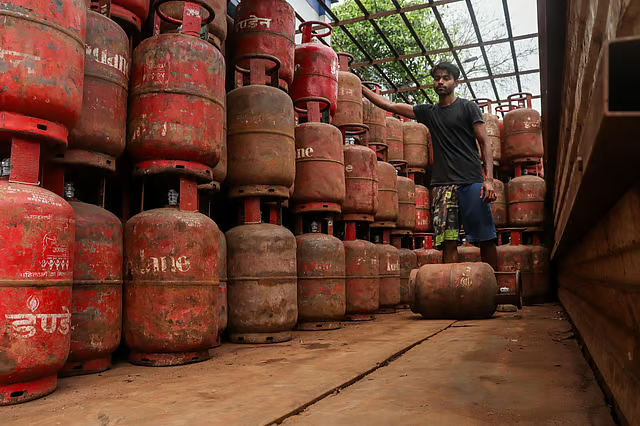
LPG consumption falls means India used less liquefied petroleum gas, or cooking gas, than before. Liquefied petroleum gas is the fuel in home gas cylinders. In the first half of FY26, India’s use fell about 8%. That drop came as West Asia conflict hurt supply and slowed cargo flows.
Why did LPG consumption falls happen in the first half?
The big reason was supply trouble, not a sudden change in how people cook. West Asia is a key source for LPG cargoes, and fighting there disrupted normal trade routes. A cargo is a large shipment carried by sea. When ships get delayed or rerouted, deliveries arrive late and costs can rise.
India depends heavily on imports for LPG, so shocks abroad can show up fast at home. Oil marketing companies, or OMCs, are firms that buy, transport, and sell fuel. They had to manage tighter availability during the first six months of FY26. As a result, refill movement slowed in some places.
The reported decline was about 8% in H1 FY26. H1 means the first half of the financial year. If India used 100 units before, it used about 92 units this time. That is a big drop for a fuel used every day.
What is happening in West Asia, and why does it matter?
West Asia matters because it supplies a large share of the world’s oil and LPG. When conflict spreads, ships can face longer routes, higher insurance, or port delays. Insurance is money paid to protect ships and cargo from loss. Those problems make trade slower and more expensive.
Even when fuel is available, it may not reach buyers on time. Some vessels may avoid risky zones, while others wait for clearer routes. That can squeeze supply in importing countries like India. So LPG consumption falls not always because demand disappears, but because supply gets stuck.
India has seen this pattern before in energy markets. A global event far away can still affect local fuel pumps and gas agencies. That’s also why governments track shipping, storage, and import contracts so closely during wars or unrest.
How big was the drop? Key numbers at a glance
The clearest number is the 8% fall in the first half of FY26. That means the market shrank year on year over six months. Year on year means compared with the same period a year earlier. It gives a cleaner view than one odd month.
To picture it, think of 10 gas cylinders sold last year. This year, only about 9.2 cylinders moved over the same stretch. That may sound small, but across a country as big as India, it adds up fast. Millions of homes use LPG for daily meals.
LPG consumption indexH1 previous year = 100, H1 FY26 = 9210092H1 last yearH1 FY26-8%
Here is the same idea in a small table:
| Period | Index | Change |
|---|---|---|
| H1 previous year | 100 | — |
| H1 FY26 | 92 | -8% |
What does LPG consumption falls mean for families and businesses?
For many families, LPG is the main cooking fuel. If supply tightens, refill waits may grow in some areas. A refill is a new gas cylinder delivered after the old one is empty. That can be stressful, especially for homes without a backup stove.
Restaurants, small food shops, and caterers can also feel the strain. They often need regular cylinder supply to keep working. If delivery slows, they may switch fuels or pay more for urgent supplies. So the issue is not just about homes.
There is also a price angle, even if retail rates do not change right away. Companies can absorb some pain for a while, but higher import and shipping costs add pressure. That’s why fuel supply stories matter beyond ports and tankers.
How are Indian energy companies likely to respond?
OMCs usually respond by juggling imports, storage, and distribution. Storage means keeping fuel in tanks so it can be used later. If one route gets blocked or delayed, they can try buying from other suppliers. But that often costs more.
They may also prioritise household supply over less urgent uses. Governments do this because cooking fuel has a direct social impact. In India, LPG is tied to welfare and clean cooking goals. Clean cooking means using fuels that create less smoke indoors.
India has also been trying to strengthen its wider energy system. You can see that in moves like the plan to cut natural gas imports using biogas and the solar modules recycling push. Those are different sectors, but the idea is similar: rely less on one fragile supply chain.
Could this affect India’s broader energy strategy?
Yes, because one supply shock can change planning for years. If LPG consumption falls due to imports getting stuck, policymakers may push harder on storage and supply diversity. Diversity means buying from more than one place. That lowers the risk of one region causing a big national problem.
India is already balancing trade, energy, and industry goals at the same time. For example, trade talks with the US could shape future energy flows and costs, as seen in India-US trade deal talks. Meanwhile, funding deals like Adani Energy’s ₹10,000 crore raise show how much money the sector still needs.
A simple way to read this is: fuel systems need backup plans. One route, one region, or one supplier is rarely enough. That is the real lesson behind the headline that LPG consumption falls in H1 FY26.
What should readers watch next?
First, watch whether West Asia shipping becomes normal again. If routes stabilise, cargo arrivals could improve. Then supply pressure may ease. That could help demand recover in the next few months.
Second, watch company and government updates on imports and stock levels. Stock levels are the amount of fuel already stored. Stronger stocks can soften short-term shocks. Primary data from the Petroleum Planning and Analysis Cell and fuel policy updates from the Ministry of Petroleum and Natural Gas will matter most.
For now, the core point is simple and quotable:
India’s LPG demand did not just cool on its own. LPG consumption falls mainly because overseas supply was disrupted, and that made a daily household fuel harder to move at normal levels.
FAQs
What does LPG mean?
LPG means liquefied petroleum gas. It is the fuel used in many home cooking cylinders.
Why did LPG consumption falls in India?
It fell mainly because West Asia conflict disrupted supply routes. Fewer or slower cargoes meant less fuel moved in India.
How much did LPG use drop?
It dropped about 8% in the first half of FY26 compared with the same period a year earlier.