Why Global Enterprises Are Buying Indian AI: The ‘Inside-Out’ Strategy Reshaping IT Services
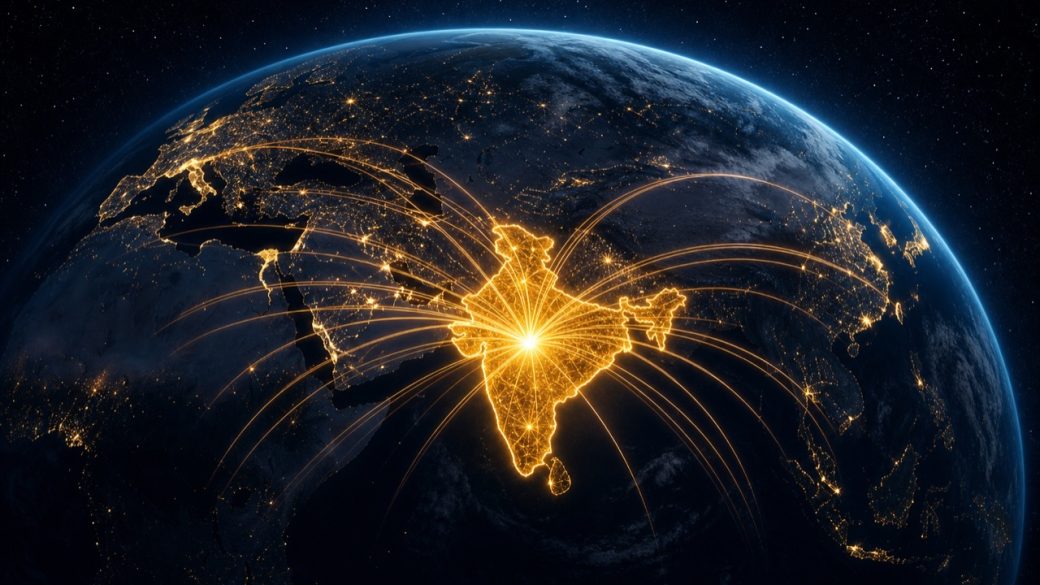
Something big is changing in the tech world. Large companies in the United States, Europe, and West Asia are now buying Indian AI — not just Indian coding work. AI, or artificial intelligence, means computer programs that can think and do tasks on their own. In the past, these companies came to India because Indian engineers cost less. Now they come for ready-made AI tools, AI helpers, and finished solutions that solve a problem.
Behind this change is a new plan. Indian tech companies and AI startups (new, fast-growing companies) are using what people call the “inside-out” plan. First they use AI inside their own company. Then they sell the parts that work well. This is changing India’s old way of selling tech services to the world.
For an industry built on low prices and big teams, this is a real change. The old sales pitch was “we can do it cheaper.” The new pitch is “we already built this AI and tested it inside our own company. Now we can set it up for you too.” This change matters for profits, prices, jobs, and India’s place in the world of AI.
The shift: global enterprises are buying Indian AI, not just Indian labour
For almost 30 years, India’s tech industry sold one main thing: cheap labour. This is called arbitrage — making money from the price gap between two places. Global companies sent their software work to big Indian firms. Things like building apps, fixing apps, testing them, and office back-end work. They did this because an Indian engineer cost much less than one in the US. What they bought was effort, or work hours.
AI is changing what gets sold. Many companies feel pressure to use generative AI (AI that can create text, code, and images), to build copilots (AI helpers that work alongside people), and to make tasks run by themselves. Many of them do not want to build and manage new teams from scratch. They would rather buy AI that already works. Indian firms — both big service companies and new AI startups — are getting ready to sell exactly that. So there is steady demand for Indian-made AI tools, special AI models for one field, and AI agents (programs that complete tasks on their own) — not just workers on a project.
What the “inside-out” AI strategy actually means
The “inside-out” plan is easy to say but hard to do. Instead of selling AI it has never used, a company uses AI inside its own business first. It uses AI to write and check code, run finance and HR work, handle customer support, and manage projects. Only after the AI proves it works does the company package the tools, guides, and models to sell to clients.
There are two reasons this is smart. First, it makes the sale safer. A company that runs its own business on an AI tool can honestly promise it works at a large size. Second, it makes the product better. Using the AI for real shows the bugs, the tricky parts, and the rule problems early — long before a paying customer finds them. The company becomes its own first and toughest customer. This is called dogfooding (using your own product), and now firms are doing it with AI all across India’s tech industry.
From cost centre to product engine
Here is one big result. Money spent on internal AI is no longer just a cost. Tools a firm builds to work faster become its own property (its intellectual property, or IP — ideas and creations a company owns). The firm can rent out that property, add it to client work, or grow it into a full platform. So a project that just saved money now makes money too.
How Indian IT-services firms and AI startups are moving up the value chain
India’s big tech-service firms — like TCS, Infosys, and Wipro — have spent recent years building AI platforms. They have trained tens of thousands of staff to use generative AI. They have put AI into the way they deliver work. The inside-out plan lets them say something rivals cannot easily copy: proof that their AI works across thousands of real projects. This proof lets them charge for results instead of charging for the number of workers.
At the same time, many new AI-first Indian startups are chasing the same chance from the other side. They have no old, slow ways to hold them back. They build narrow, deep AI products for one industry, one job, or one task. They sell these around the world from day one. Often they run small, lean teams, with much of the work done by their own AI. Big firms moving up and startups moving out — together, India is shifting from selling work hours to selling finished results.
Pricing: from cost-arbitrage to outcome-based value
Pricing is the heart of this story. In the old days, the value came from the gap between US worker pay and Indian worker pay. But AI cuts the number of people needed for a task. This is a threat to the old billing way. If a job once took ten engineers and now takes three people plus AI, then billing by headcount (charging by the number of workers) makes the contract smaller.
The inside-out, AI-as-product plan gives a way out. Firms can sell clear results instead — faster work, fewer mistakes, support tickets fixed, deals completed. This breaks the link between money earned and number of workers. It ties the price to the value given. Done well, this keeps or even grows profit margins (the money left after costs). That is because the cost of running an AI tool drops over time, while the value to the client stays high. Done badly, it just hands the savings to the client.
Talent and the deeptech angle
None of this works without skilled people. This plan needs engineers who can not only use AI tools but also build them, fine-tune them (adjust an AI model for a special task), test them, and control them safely. So Indian firms are re-training their staff and hiring more people skilled in machine learning (teaching computers to learn from data), data engineering, and applied research. This also makes India’s deeptech world more valuable. Deeptech means hard, advanced technology — here, the startups and researchers building AI models, AI systems, and field-specific AI. That is where the special, hard-to-copy skills come from.
For India, this is a chance to turn its huge pool of skilled people into owned AI property, instead of letting AI wipe out its cheap-labour edge. The firms and founders who put money into deeptech early will be best placed to sell real skill, not just cheap hands.
Risks: commoditisation, margin pressure, and competition
This change is not sure to work. AI skills can become common very fast. This is called commoditisation — when something special turns into a basic, easy-to-get product. A tool that feels special today may be a cheap, ready-made model tomorrow. That cuts the price you can charge. Also, if clients grab most of the savings, profits fall even if the number of deals stays the same. The competition is tough too. Global consulting firms, hyperscalers (giant cloud-computing companies like big tech clouds), and software sellers are all chasing the same company AI budgets, often with much more money behind them.
There is also a risk inside the plan itself. Turning an internal tool into a product you can sell and support is truly hard. A half-built tool does not magically become ready for the market. Governance (the rules and control over how AI is used), data security, and trust will more and more decide who wins big AI deals. Firms that treat AI as a simple box to tick — instead of rebuilding how they create value — risk being squeezed. On one side is cheaper automation. On the other are rivals with more money.
Key facts
| Attribute | Detail |
|---|---|
| Demand | Global enterprises (US, Europe, West Asia) increasingly buying Indian AI capabilities and solutions, not just labour |
| Model | “Inside-out” AI strategy — deploy AI internally first, then productise and sell it |
| Shift | Moving from cost-arbitrage (billing by headcount) to outcome-based value (billing by results) |
| Players | Indian IT-services majors (TCS/Infosys/Wipro-type) plus AI-first deeptech startups |
| Upside | AI IP as a revenue line; differentiated, evidence-backed solutions; richer enterprise mandates |
| Risks | Commoditisation, margin pressure, global competition, hard product execution |
FAQ
What does “buying Indian AI” actually mean?
It means global companies are now buying AI skills, platforms, AI agents (programs that do tasks on their own), and finished solutions built by Indian firms — not just hiring Indian engineers for cheap coding work.
What is the “inside-out” AI strategy?
It is a plan where a company first uses AI inside its own business, proves it works, and then turns that tested AI into a product to sell to clients. The company becomes its own first customer.
Why is this reshaping India’s IT-services model?
Because it changes what is sold — from work hours and number of workers to finished results. This challenges the old cheap-labour model and pushes firms to compete on skill and value, not just on price per engineer.
What are the biggest risks to this trend?
AI skills becoming cheap and common very fast; profit falling if clients take the savings; tough competition from global consulting firms and giant cloud companies; and the hard job of turning internal tools into market-ready products.
Why it matters (especially for India and founders)
For India, this is the moment its tech industry must remake itself — or risk being beaten by the very technology it is selling. AI threatens the old cheap-labour base. But the inside-out plan offers a path to higher-value exports led by owned products — more lasting and more profitable than the old way. For founders, the lesson is clear: put AI into your own work first, let real use make the product strong, then sell proof instead of promises. Charging for results, deep tech skill, and trustworthy control of AI are the new ways to win. India, with its many skilled people and growing AI world, can lead — not just supply.
The takeaway
The rise of Indian AI is not a story about cheaper code. It is a story about moving up to higher-value work. By using AI inside-out and selling tested skill to global companies, India’s big tech firms and AI startups are trying to turn a threat into their next source of growth. The winners will turn their internal AI savings into products they can sell, charge for results instead of hours, and build the deep tech skill and safe control needed to protect their edge. If they pull it off, India’s next big export will be intelligence sold as a product — not work sold by the hour.
Sources: Inc42 — “Why Global Enterprises Are Buying Indian AI” and Financial Express — “Inside-out AI strategy gains momentum among Indian AI firms”.