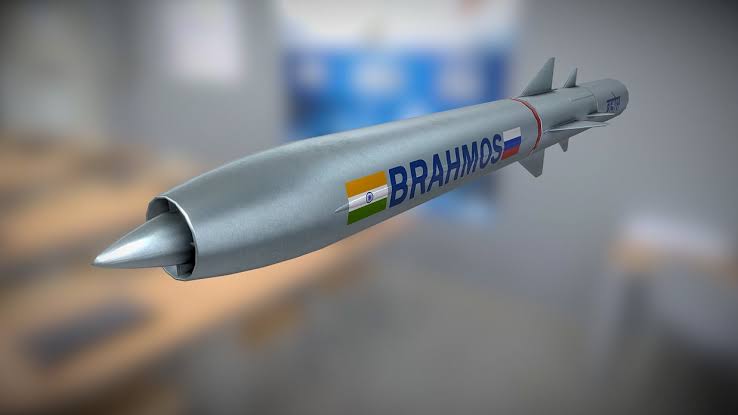
India and the United Arab Emirates (UAE) are in advanced, fast-moving talks regarding the export of India’s flagship defense hardware, according to a recent Reuters investigation.
Abu Dhabi has formally expressed interest in a multi-billion dollar arms bundle headlined by the BrahMos supersonic cruise missile and the Akashteer automated air defense system.
The deal marks a massive step forward for India’s growing “Make in India” defense export push, coming directly on the heels of its landmark BrahMos export shipment to the Philippines.
1. What’s on the Table?
The UAE is targeting two of India’s most technologically advanced defensive and offensive platforms:
- The BrahMos Missile: Jointly developed by India’s DRDO and Russia’s NPO Mashinostroyeniya, the BrahMos is widely recognized as the world’s fastest operational supersonic cruise missile. Capable of being launched from land, sea, or air, the export variant maintains a strike range of approximately 290 km and travels at speeds of up to Mach 2.8.
- The Akashteer System: Developed by state-run Bharat Electronics Limited (BEL) in collaboration with the Indian Army, Akashteer is a cutting-edge, fully automated air defense command-and-control network. It digitizes the airspace fabric, allowing military units to track low-flying aerial threats (like drones and loitering munitions) and seamlessly coordinate defensive missile batteries.
2. Why the UAE is Accelerating Procurement
The Gulf nation is aggressively shifting its defense architecture due to heightened regional instability following recent direct military exchanges between Iran, Israel, and the U.S.
                          ┌──► Protect the critical Strait of Hormuz oil corridor
[Evolving Security Risk] ─┤
                          └──► Neutralize low-cost drone & ballistic missile threats
To counter these emerging aerial vulnerabilities and secure the Strait of Hormuz—the vital maritime transit corridor for its energy exports—the UAE is actively moving away from over-reliance on a single Western arms supplier. Diversifying its arsenal with Indian and South Korean hardware (including a recent $35 billion defense MoU with Seoul) grants Abu Dhabi greater strategic autonomy.
3. The “Moscow-Washington” Balance
Because the BrahMos missile is a joint venture with Russia, any international sale strictly requires Moscow’s institutional sign-off. Defense analysts note that Russia’s clearance is highly unlikely to face hurdles given the strong diplomatic and economic ties currently shared between Moscow and Abu Dhabi.
Furthermore, purchasing weapons from New Delhi allows the UAE to modernize its military without antagonizing its traditional Western allies, as India remains a key strategic partner to the United States in global security frameworks.