India drone warfare push is India’s big plan to build and buy more military drones. Drones are aircraft without a pilot inside. The plan is worth about ₹52,000 crore, or roughly $6.2 billion, and it covers attack drones, surveillance drones, and anti-drone shields.
Key takeaways
- India is preparing a drone and anti-drone plan worth about ₹52,000 crore.
- The effort covers kamikaze drones, surveillance drones, and anti-UAV defence systems.
- Anti-UAV means tools that detect, jam, or destroy hostile drones.
- The push comes as wars abroad show cheap drones can damage costly tanks, ships, and air bases.
- Indian companies could gain if more orders stay within the country.
Why is India making this drone move now?
India drone warfare push comes at a time when drones have changed battlefields fast. In Ukraine and West Asia, small flying machines have hit tanks, radar sites, and fuel depots. Some cost less than a car, but they can damage machines worth crores.
That matters because old air defence systems were built for jets and missiles. They were not always made for swarms. A swarm is a group of many drones attacking together. So armies now need cheaper, quicker ways to spot and stop them.
India also faces a two-front security problem. That means it must stay ready on more than one border. Because drones can cross long distances, watch troop movement, or strike from above, military planners don’t want to wait.
A quotable way to see it is this: India drone warfare push is not just about buying more drones. It is about making sure a cheap enemy drone cannot knock out a much costlier Indian target.
What is included in the India drone warfare push?
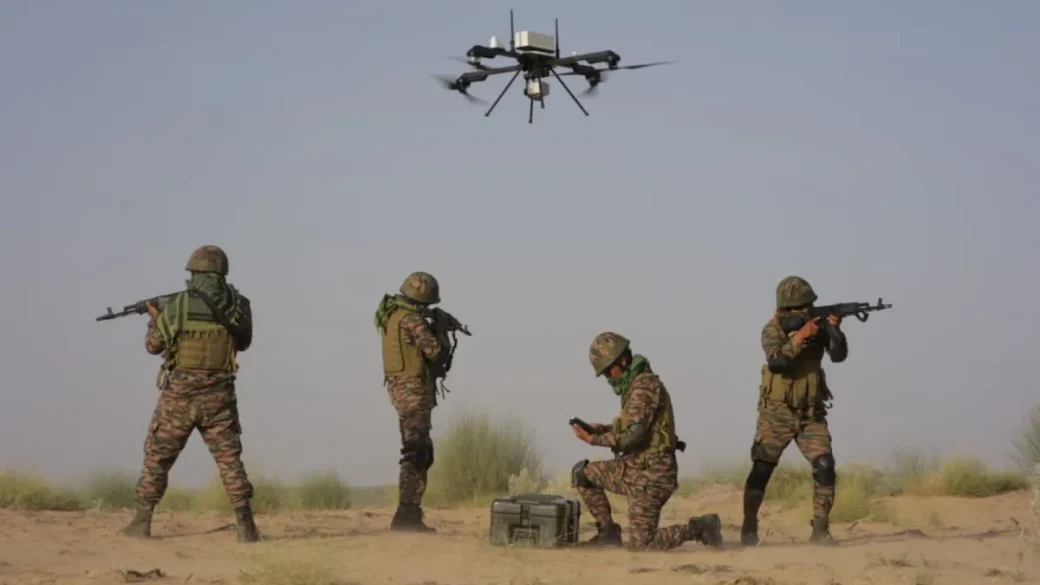
The reported plan spans several types of systems. One part covers attack drones, including kamikaze drones. A kamikaze drone is a one-way drone that crashes into a target with explosives.
Another part covers surveillance drones. Surveillance means watching and collecting information. These drones can track vehicles, scan borders, and help artillery fire more accurately.
The third big part is anti-UAV protection. UAV means unmanned aerial vehicle, which is another word for drone. Anti-UAV systems try to detect drones, jam them, or shoot them down before they strike.
Officials are also looking at electronic warfare tools. Electronic warfare means using signals to block or fool enemy machines. For example, a jammer can break a drone’s link with its operator, so it loses control or drops from the sky.
| System type | What it does | Why it matters |
|---|---|---|
| Attack drones | Hit targets directly | Can strike without risking pilots |
| Kamikaze drones | Crash into a target with explosives | Cheap way to damage costly gear |
| Surveillance drones | Watch, map, and track | Gives commanders live information |
| Anti-UAV systems | Detect, jam, or destroy drones | Protects bases, troops, and equipment |
How big is ₹52,000 crore in real terms?
₹52,000 crore is a huge number. It equals ₹520 billion. At roughly ₹83 to $1, that is around $6.2 billion, though currency moves each day.
That amount could fund several layers of drone capability. One layer watches. Another attacks. A third blocks enemy drones. So the aim is not one gadget, but a full drone network.
Here is a simple snapshot of the headline numbers.
India drone warfare push: key numbers₹52,000 cr₹520 bn~$6.2 bnPlanRupeesDollars
For a reader at home, think of it like this. If one drone costs a few lakh rupees and another system costs many crores, the military must choose carefully. Because threats differ, it needs a mix, not just one model.
What does this mean for India’s military and defence industry?
India drone warfare push could reshape how the army, navy, and air force plan missions. A border patrol may use small drones first. Then a strike drone may attack a target. Meanwhile, anti-drone shields may guard camps, ships, and airfields.
It could also help Indian manufacturers. If orders go to local firms, that supports domestic production. Domestic production means making equipment inside India. That can shorten supply chains and reduce dependence on foreign suppliers.
India has already talked a lot about self-reliance in defence. Self-reliance means building more of your own military gear. This new push fits that wider goal, much like the electronics supply stories behind the display shortage hurting device makers and India’s surge in PCB exports to China.
Still, buying drones is only step one. Soldiers need training, software, repair hubs, and spare parts. They also need clear rules for who can launch what, and when.
Can anti-drone shields really stop attacks?
They can help a lot, but no system is perfect. A strong defence usually uses many layers. One sensor may spot the drone. Then a jammer may cut its signal. If that fails, a gun or missile may try to destroy it.
This layered approach matters because drones come in different sizes and speeds. Some fly low and slow. Others move fast or use smart routes. As a result, one defence tool may work well on Monday and fail badly on Tuesday.
That is why armies now test radar, cameras, radio sensors, and jammers together. Radar is a system that uses radio waves to detect objects. India can also learn from global examples tracked by sources like the International Institute for Strategic Studies and official updates from the Ministry of Defence.
How does this fit with other security and tech shifts?
The India drone warfare push is part of a wider race in smart machines. Countries want tools that are cheaper than fighter jets, but still useful in combat. Drones fit that need because they can scout, strike, and confuse the enemy.
India is not alone here. China, the US, Ukraine, Russia, Israel, and Turkey have all pushed hard on drone systems. Some focus on long-range attack drones. Others focus on small battlefield drones that troops can launch by hand.
For India, the challenge is balance. It must buy fast, but also buy wisely. That same balance shows up in other sectors too, from India’s cautious approval of some Chinese power equipment bids to its tighter digital rules for VPN firms.
If the plan moves ahead quickly, the next few years could bring larger tenders, more field trials, and more local partnerships. A tender is a formal government buying process. So this story is not only about defence. It is also about industry, jobs, and technology.
What should readers watch next?
Watch for three things. First, look for official procurement details. Procurement means government buying. Those papers will show which services get what, and how fast.
Second, watch whether Indian companies win a big share of contracts. Third, look for testing news near borders, bases, and ships. Because that is where anti-drone systems prove if they work under pressure.
The big point is simple. India drone warfare push shows that modern war is getting smaller, faster, and cheaper in the air. But stopping those threats may still cost a lot, and that is why this ₹52,000 crore bet matters.
FAQs
What is India drone warfare push?
It is India’s reported plan to spend about ₹52,000 crore on military drones and anti-drone systems. The goal is to improve attack, surveillance, and defence.
Why are anti-drone systems important?
They protect troops and bases from hostile drones. They can detect, jam, or destroy drones before they hit a target.
Who could benefit from this plan?
India’s armed forces could benefit first. Indian defence makers could also gain if more of the orders go to local companies.