📚 New to this topic? Read our full guide: What Is Fintech?.
IPO-Bound Fibe Doubles Profit to Rs 257 Crore as FY26 Revenue Hits Rs 1,585 Crore
Fibe is a company that gives loans through an app. Giving loans this way, on a phone or website instead of at a bank branch, is called digital lending. Fibe just shared very good yearly results. This is right before it sells its shares to the public for the first time.
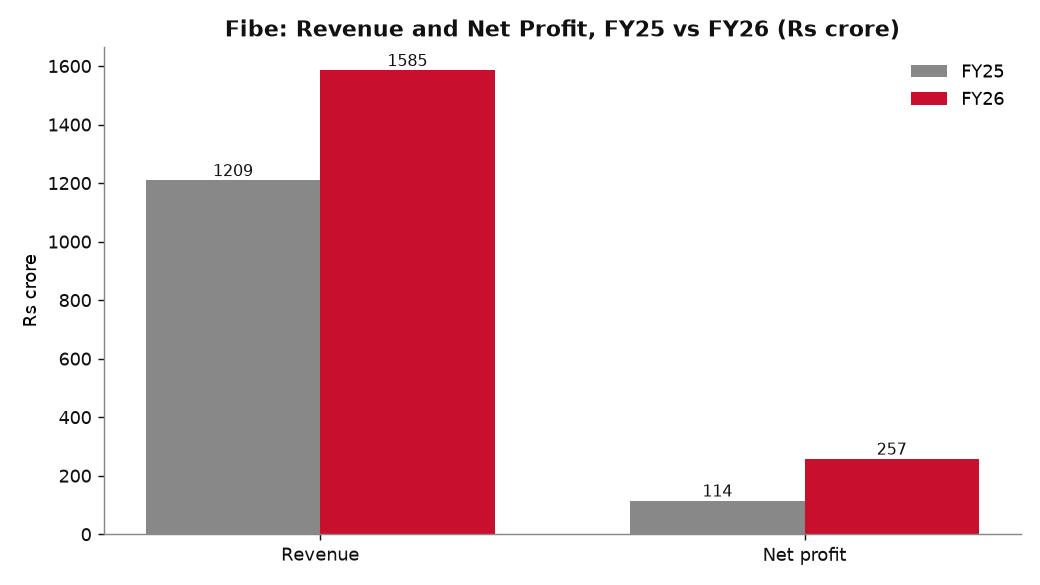
Fibe’s operating revenue went up 31%. Operating revenue is the money a company makes from its main work. It grew to Rs 1,585 crore in the year that ended in March 2026. This year is called FY26. Its net profit was Rs 257 crore. Net profit is the money left after all costs are paid. That profit more than doubled from the year before.
These results come as Fibe gets ready for an IPO. An IPO is the first time a company sells its shares to the public. Fibe is based in Pune. It has already filed a paper called a DRHP with SEBI. A DRHP (Draft Red Herring Prospectus) is a long document a company hands in before an IPO. SEBI is the body that watches over India’s stock markets.
The IPO plan
Fibe wants to raise Rs 750 crore in its IPO. It will do this with a “fresh issue”. A fresh issue means the company makes brand-new shares and sells them. The company keeps that money to grow. Its full-year numbers are written in the DRHP. They are meant to show buyers that the business is growing and making money.
The key numbers
| Detail | FY25 | FY26 |
|---|---|---|
| Revenue from operations | Rs 1,209 crore | Rs 1,585 crore |
| Total income | – | Rs 1,601 crore |
| Net profit | Rs 114 crore | Rs 257 crore |
| Total expenses | Rs 1,068 crore | Rs 1,215 crore |
| Finance cost | – | Rs 288 crore (up 48%) |
| Loans facilitated (cumulative) | – | Over 9.8 million |
| Cumulative disbursements | – | Over Rs 48,000 crore |
Where the money comes from
Interest is Fibe’s biggest earner. Interest is the extra money people pay back on top of the loan they took. It makes up almost 65% of the operating revenue. This income grew more than 33% to Rs 1,023 crore.
Fibe also earns from fees and commissions. A fee or commission is a small charge for a service. This came to Rs 393.5 crore. The company earned Rs 146 crore more from “guarantee premiums”. This is money Fibe gets for promising to cover some losses. If a borrower does not pay back a lending partner, Fibe helps pay for it.
Fibe was started in 2015 by Akshay Mehrotra and Ashish Goyal. It gives many kinds of loans. These include personal loans, long-term loans, loans against mutual funds, and fixed deposits. A mutual fund is a pool of money from many people that is invested together. A fixed deposit is money kept in a bank for a set time to earn interest. Fibe lends for things like health care, education, and putting solar panels on roofs. It says it has given out more than 9.8 million loans. In total it has lent more than Rs 48,000 crore.
The cost side
Growth was not free. Fibe set aside Rs 420 crore for loans that may not be paid back. This set-aside money is called impairment. It included Rs 203 crore in loans it gave up on getting back. Giving up on a loan like this is called a write-off.
Fibe also has to borrow money itself to lend to others. The cost of borrowing that money is called finance cost. It went up 48% to Rs 288 crore. Even so, Fibe’s money coming in grew faster than its costs. That is why its profit doubled. In March 2026, Fibe had current assets of Rs 4,837 crore. Current assets are things a company can turn into cash within a year. This included Rs 490 crore in cash and bank money.
Why it matters (especially for India and founders)
Fibe’s report shows that digital lending can grow fast and make money too. It does not have to just burn cash. That is a strong message for buyers, especially before an IPO. For people who start companies, the mix matters. Money from interest, fees, and guarantees spreads out the risk. Fibe is one of many companies planning an IPO this year. Another is OYO, which is trying for its third time. More Indian startups are going public with real profits in hand.
FAQ
What is a DRHP? It stands for Draft Red Herring Prospectus. It is the long paper a company gives to SEBI before its IPO.
How much does Fibe want to raise? About Rs 750 crore by selling new shares.
Is Fibe making money? Yes. Its net profit more than doubled to Rs 257 crore in FY26.
How Fibe fits India’s digital lending boom
Digital lending has grown fast in India. More people now use smartphones and UPI. UPI is India’s system for sending money right away. Apps can now check a person’s details and say yes to a small loan in minutes. A bank branch could never work that fast. This ease has made millions of people take a loan for the first time.
But easy loans bring risk too. If too many people fail to pay back, losses grow fast. That is why Fibe’s Rs 420 crore set aside for bad loans matters. India’s main bank is the RBI. It has made stricter rules for digital lenders. These rules protect people from hidden charges and harsh ways of getting money back. Buyers trust companies that grow, keep unpaid loans low, and follow the rules. Fibe’s doubled profit hints that it is handling this balance well for now. That is just what a company heading for an IPO wants to show.
For everyday people, companies like Fibe mean faster loans. This helps with things like medical bills, courses, or home solar panels. But there is a catch. Easy loans must be used with care. A missed payment hurts both the borrower and the lender. A healthy lender that makes money is usually a safer partner. That is one more reason Fibe’s strong numbers matter, not just its IPO.
The takeaway
Fibe is going to the market with more revenue and double the profit. Buyers may like this mix of growth and profit. If they do, its IPO could be one of the big fintech listings of the year. Fintech means using technology to give money services like loans and payments.